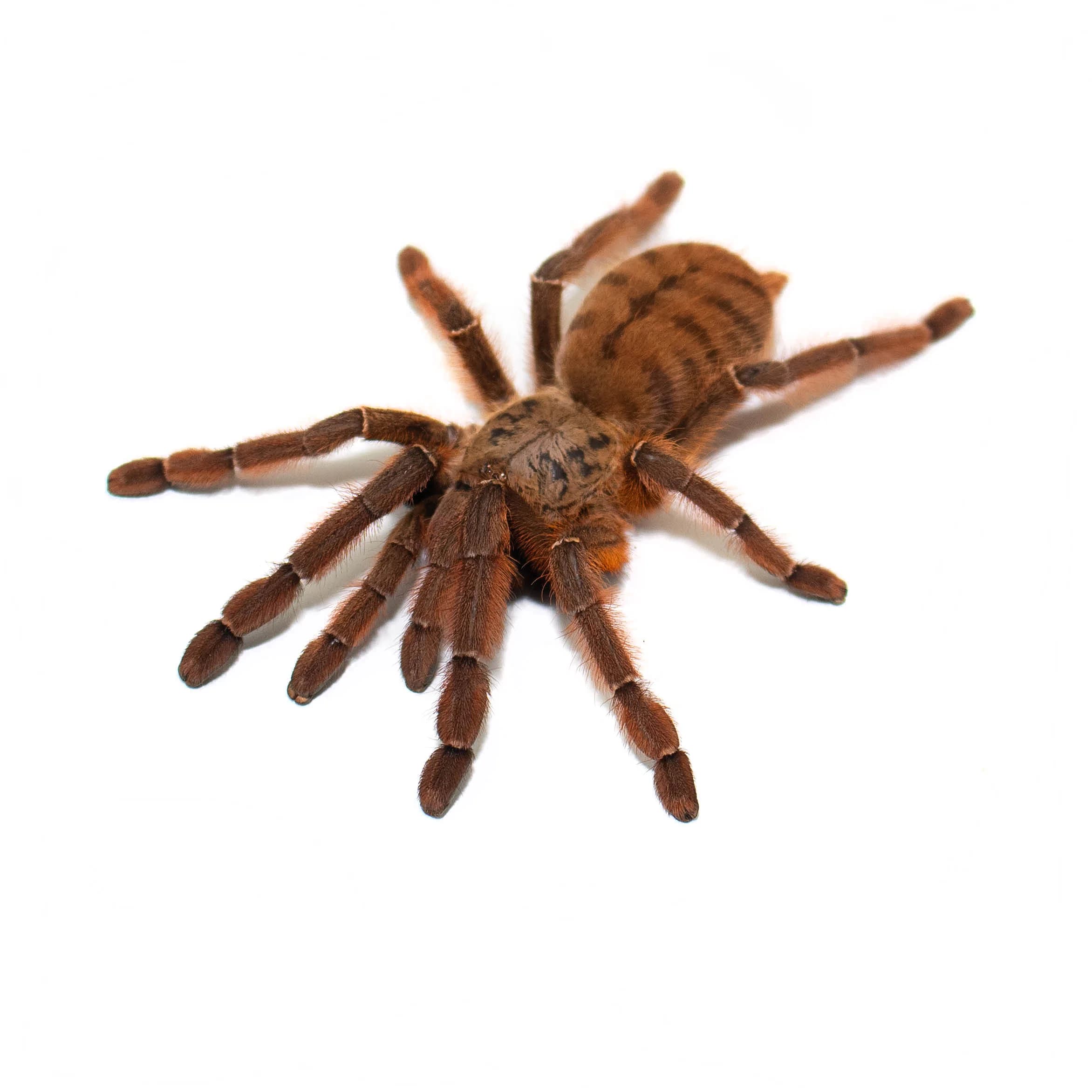
Aspinochilus (formerly Phormingochilus) rufus (tree tarantula) – for advanced keepers
Automatically translated ·
Phormingochilus sp. Rufus
Available: 10 pcs.
130.00 PLN
reptilesbrothers.pl
Description
Aspinochilus rufus – Why is this tarantula worth having in your collection?
Aspinochilus rufus (known in the terrarium hobby for years under its former name, Phormingochilus rufus) is a true gem straight from Asia. First and foremost, this spider captivates with its extraordinary reddish-gold coloration, from which it derives its name. Specifically, right after molting, its colors become incredibly vivid. Furthermore, it is a very agile and defensive species. This is because Old World spiders lack stinging hairs on their abdomen, so their first and main line of defense is to attack or flee. However, this species’ venom is relatively potent. For this reason, this spider is recommended exclusively for experienced keepers who are already familiar with fast-moving arboreal arachnids.
Where does Aspinochilus rufus occur in the wild?
This stunning tarantula inhabits Asian rainforests, particularly the islands of Indonesia. Furthermore, in its natural, humid habitat, it leads a typically arboreal lifestyle. It is usually found high up in tree canopies, in bark crevices, and in natural tree hollows. Consequently, this spider builds spacious nests there out of strong web, from which it emerges mainly at night, waiting in hiding for passing prey.
What terrarium conditions does Aspinochilus rufus require?
Terrarium and Setup
Due to its arboreal lifestyle, an adult specimen requires a relatively tall enclosure. For this reason, the ideal terrarium for a tarantula should measure approximately 20x20x30 cm or 20x20x40 cm. In addition, the bottom should be covered with a thick layer of substrate (about 5 cm)—coconut peat, which retains moisture well, is ideal here. It’s especially a good idea to place vertical cork tubes inside the terrarium, which will serve as a sturdy base for creating hiding spots. As for additional decorative elements, it’s a good idea to add branches and artificial plants. This will provide the spider with adequate shelter and a sense of security.
Temperature and Humidity
The climate requirements for Asian species are quite strict. Therefore, the optimal daytime temperature should range from 25–28°C, while natural drops to 22–23°C are acceptable at night. Equally important, humidity should be maintained at a very high level, around 75–85%. You can achieve this by regularly and generously misting the walls and substrate. However, it is essential to ensure that the enclosure has good cross-ventilation to prevent the growth of harmful mold.
Size and Feeding of the Juveniles We Offer
It’s worth noting that Aspinochilus rufus is a spider with an impressive appetite and a rapid growth rate. We currently have larger, sexed specimens available in our selection. Specifically, these are beautifully colored 2.5/3DC females and slightly smaller 2/2.5DC males (body length excluding legs).
For juveniles of this size, the target enclosure may still be a bit too large. This means that tall breeding containers (e.g., tall acrylic tubes or larger Braplast containers), with properly designed ventilation, will work perfectly for them. As for feeding at these stages, it is completely trouble-free. For example, suitable feeder insects for sizes 2–3DC include medium-sized crickets, Argentine cockroaches, or Turkish cockroaches, fed on average 1–2 times a week. On the other hand, adults have no trouble hunting large Dubia roaches and grasshoppers.
Sexual Dimorphism
Differences between the sexes become clearly apparent as they grow. First and foremost, adult females are much more robust, reach larger sizes, and live quite a long time (up to 12–15 years). Meanwhile, adult males are much slimmer and have disproportionately long legs. Additionally, after their final molt, copulatory organs (bulbi) develop on their pedipalps. Unfortunately, their lifespan as adults is usually only a few to a dozen or so months.
At a Glance
Lifestyle: Arboreal
Venom potency: Strong (Asian species)
Stinging hairs: None
Target terrarium size: 20x20x30 cm or 20x20x40 cm
Temperature: 25–28°C
Humidity: 75–85% (with good ventilation)
Difficulty level: Difficult (for advanced keepers only)
Are you curious about just how incredibly fast and voracious these Asian tarantulas can be in action? Be sure to check out our [Facebook page] and join the ReptilesBrothers community!
Specification
Subcategory
TarantulasDelivery options
Local pickup
FreeLocal pickup only
Expert card
Species:Phormingochilus sp. Rufus
OriginIndonesia
LifestyleArboreal
Venom strengthStrong
Difficulty levelAdvanced
Size:DLS ok. 3-3,5DC cm
Gender:Female
Availability:10 pcs.
Difficulty level
Advanced
Origin
Indonesia
Lifestyle
Arboreal
Venom strength
Strong
Breeder

Quick information
Origin:Indonesia
Lifestyle:Arboreal
Venom strength:Strong
CITES required:No