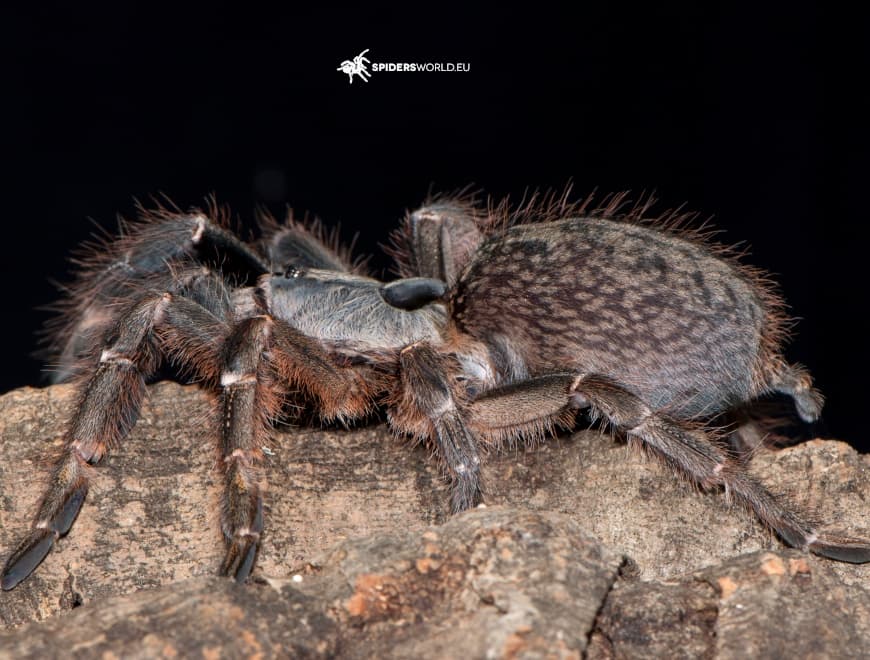
Ceratogyrus darlingi (1cm)- East African Horned Baboon
Ceratogyrus darlingi
Available: 2 pcs.
20.00 PLN
spidersworld.eu
Description
Ceratogyrus darlingi, also known as the East African Horned Baboon, is a classic representative of African fauna that has enjoyed enduring popularity over the years. Its most unique feature is the horn that grows from the carapace, which in this species is clearly slanted toward the abdomen. This spider presents elegant, subdued colors - shades of gray, beige and black, which form a striking pattern across the body.
Behavior and venom: This species, as befits an Old World spider, is very fast and defensive. Unlike American spiders, it has no scabbing hairs, so it relies on its venom and speed in a stressful situation. It has a medically relevant venom, so it should be kept by those who already have some experience with dynamic birders. Although sometimes secretive, it can be very spectacular when hunting.
Breeding conditions: Although many sources classify it as a digger, in breeding C. darlingi behaves like a typical terrestrial birder that readily uses ready-made hiding places. It loves to densely weave a web over its territory, creating showy structures around its burrow. It requires a dry substrate and very good ventilation. All it needs is a few inches of peat-sand mixture and a piece of cork bark as shelter. Constant access to fresh water in a bowl is essential.
Specification
Subcategory
TarantulasDelivery options
Local pickup
FreeShipping (Domestic)
20.00 PLNExpert card
Species:Ceratogyrus darlingi
Venom strengthWeak
Difficulty levelBeginner
Size:DLS ok. 1 cm
Developmental status:Sling
Availability:2 pcs.
Difficulty level
Beginner
Venom strength
Weak
Breeder
Quick information
Venom strength:Weak
CITES required:No