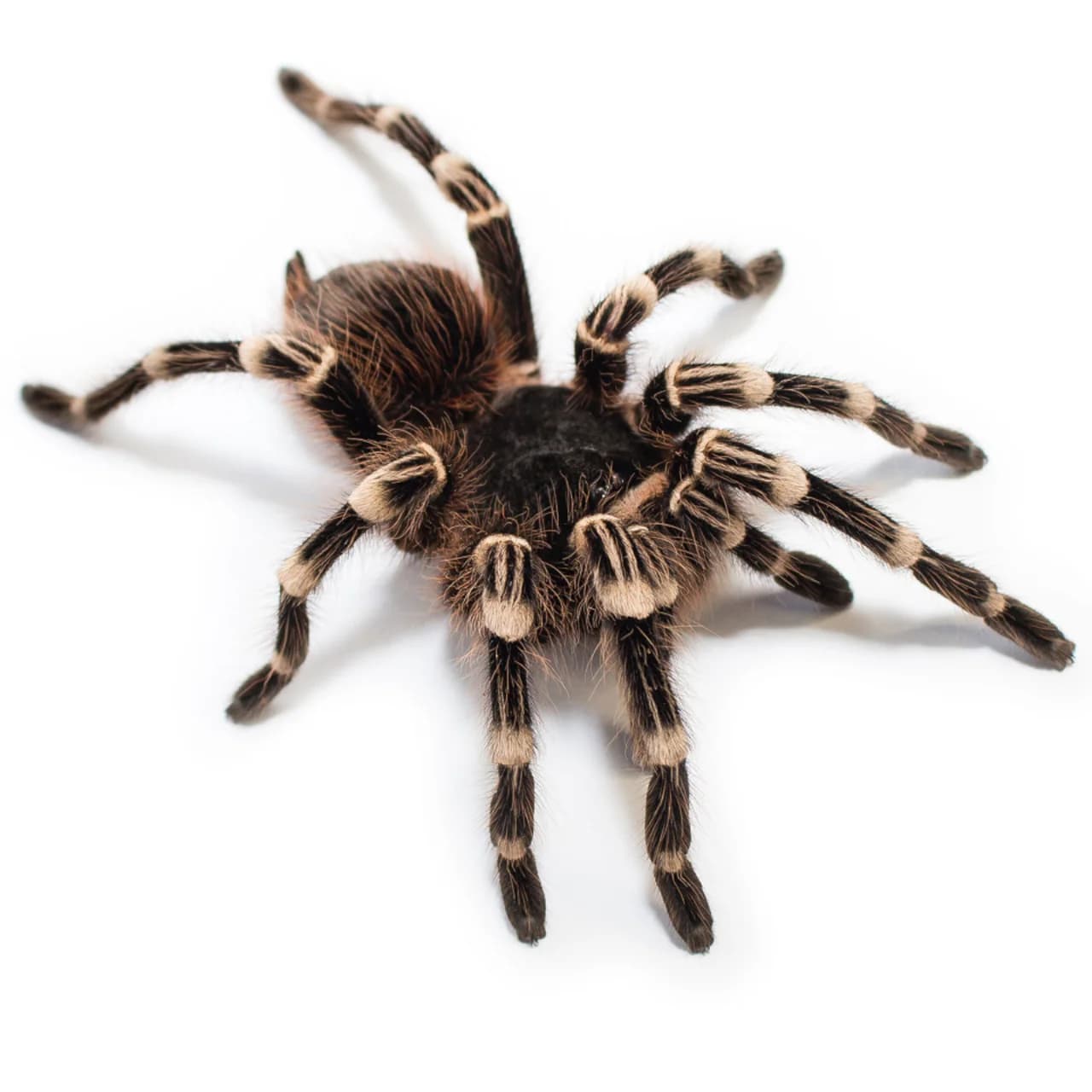
Acanthoscurria geniculata (white-kneed tarantula) – for beginners
Automatically translated ·
Acanthoscurria geniculata
Available: 1 pcs.
150.00 PLN
reptilesbrothers.pl
Description
Acanthoscurria geniculata – White-kneed Tarantula
A Brief Introduction
Acanthoscurria geniculata, commonly known as the white-kneed tarantula, is an absolute classic that has reigned supreme in breeders’ collections around the world for years. First and foremost, it’s hard to blame them—it’s a massive spider with impressive coloration. Specifically, the black of its body contrasts sharply with the bright white stripes on its leg joints and the red hairs on its abdomen. What’s more, this species is an excellent choice for beginner terrarium keepers. This is because it has a weak venom (comparable to a bee sting), so its main line of defense is brushing stinging hairs from its abdomen. However, it can be voracious and quite confident. Therefore, when handling it in the enclosure, it’s important to exercise caution so the spider doesn’t mistake the tweezers for its dinner.
Distribution and Habitat of Acanthoscurria geniculata
This beautiful tarantula inhabits the rainforests of northern Brazil, particularly the Amazon basin. Furthermore, in its natural tropical habitat, it leads a typically terrestrial lifestyle. It is usually found in the forest understory. It is there that it hides in natural depressions in the ground, under tree roots, decaying trunks, or pieces of bark. Consequently, it spends its time waiting in hiding for passing prey.
What terrarium conditions does Acanthoscurria geniculata require?
Terrarium and Setup
Due to its considerable size, an adult specimen requires adequate space. For this reason, the ideal terrarium for this species of tarantula should measure approximately 30x30x25 cm or 30x30x30 cm. In addition, a sufficiently thick layer of substrate (at least 5–7 cm) is essential for successful breeding. Pure coconut peat or special forest-based mixes work particularly well here, as they allow the spider to dig freely. As for hiding spots, coconut halves or cork tubes work great. Additionally, you can add natural decorative elements, such as dry oak leaves or roots. This will not only improve the aesthetics but, most importantly, provide the spider with a sense of security.
Temperature and Humidity
Remember that Acanthoscurria geniculata absolutely requires tropical conditions. Therefore, the optimal daytime temperature should range between 24–28°C, while slight drops to around 22°C are acceptable at night. Equally important, humidity should be maintained at a relatively high level of 70–80%. You can achieve this by regularly misting one side of the enclosure (leaving the other side drier). Additionally, it’s a good idea to place a shallow bowl of water, from which the spider will readily drink.
Size and Feeding
Acanthoscurria geniculata is a spider that grows relatively quickly and is known for its legendary appetite. For this reason, we currently offer subadult specimens whose sex is easily identifiable.
We currently have females measuring 2.5/3DC and males measuring 2/2.5DC (body length excluding legs). Larger Braplast-type breeding containers (approx. 3–5 liters) or small transitional terrariums are ideal for these juveniles. However, in the case of the largest specimens we offer—females measuring 5/5.5DC—these are already large spiders. This means they can be successfully placed directly into their final 30×30 cm terrariums.
As for feeding, it’s completely hassle-free. Specifically, at these stages, we already feed the spiders specific, live prey. For example, appropriately sized feeder insects for 2.5–3DC specimens include medium-sized crickets and smaller Argentine or Turkish cockroaches. On the other hand, large females (5DC+) can easily handle adult locusts, large Dubia roaches, or wood-eating roaches. In summary, we feed them an average of 1–2 times a week.
Sexual Dimorphism
Noticeable differences emerge as they grow. First and foremost, adult females are significantly more robust and stocky, reaching a body length of 8–9 cm (with a leg span of nearly 20 cm). In addition, they live very long lives, up to 15–20 years. Meanwhile, males, once they reach maturity, become slimmer, with longer legs and smaller abdomens. They also have hooks on the tibiae of their first pair of legs (which aid in mating) and bulbus structures on their tarsi. Unfortunately, their lifespan after their final molt rarely exceeds 2 years.
Acanthoscurria geniculata – at a glance
Lifestyle: Terrestrial
Venom potency: Weak (comparable to bee venom)
Target terrarium size: 30x30x30 cm
Temperature: 24–28°C
Humidity: 70–80%
Difficulty level: Easy (ideal for beginners)
Do you have additional questions about keeping this species, or would you like to see more photos of our specimens? Check out our [Facebook page]—we regularly post interesting facts, guides, and behind-the-scenes glimpses of our work there!
Specification
Subcategory
TarantulasDelivery options
Local pickup
FreeLocal pickup only
Expert card
Species:Acanthoscurria geniculata
OriginBrazil
LifestyleTerrestrial
Venom strengthWeak
Difficulty levelBeginner
Size:DLS ok. 5-5,5DC cm
Gender:Female
Availability:1 pcs.
Difficulty level
Beginner
Origin
Brazil
Lifestyle
Terrestrial
Venom strength
Weak
Breeder

Quick information
Origin:Brazil
Lifestyle:Terrestrial
Venom strength:Weak
CITES required:No