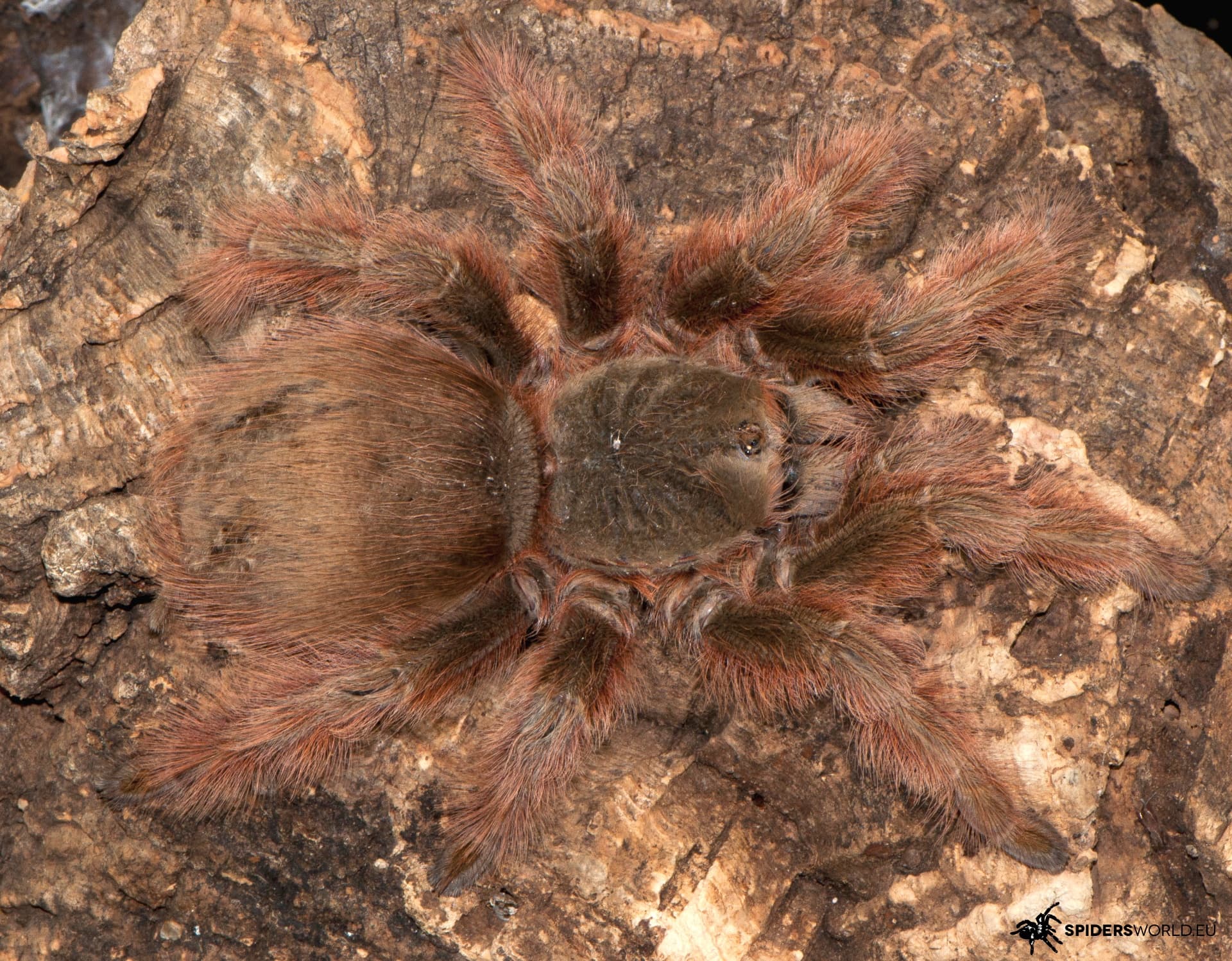
Nhandu tripepii Male (6 cm)
Automatically translated ·
Nhandu tripepii
Available: 8 pcs.
35.00 PLN
spidersworld.eu
Description
Appearance and Characteristics Nhandu tripepii (formerly known as Nhandu vulpinus) is a powerfully built ground-dwelling tarantula native to Brazil. This species stands out from other members of the genus due to its unique pinkish-beige coloration and an almost unprecedented abundance of long, light-colored hairs on its legs and abdomen. This makes the spider appear much larger and more massive than it actually is. Adult females can reach impressive sizes, often exceeding 20 cm in leg span, which places them among the world’s largest spiders.
Behavior and Venom In terms of temperament, this is a confident and defensive species. Although its venom poses no threat to the health of a healthy human, Nhandu tripepii does not hesitate to defend itself aggressively. Its most common defense mechanism is vigorously brushing stinging hairs (types III and IV) from its abdomen, which can cause severe itching and allergic reactions. It rarely adopts a threatening posture, but its great speed when attacking feeder insects requires the keeper to remain focused during feeding.
Housing Requirements Keeping this species is relatively simple, making it a suitable choice even for those just starting out in terrarium keeping. It requires a horizontally oriented terrarium with a thick layer of substrate (e.g., coconut fiber), as these spiders enjoy digging and remodeling their environment. Humidity should be maintained at approximately 75% by regularly misting part of the substrate. The optimal temperature is 25–28°C during the day, with a slight drop at night. This species is known for its voracious appetite and eagerly hunts crickets, cockroaches, and grasshoppers.
Specification
Subcategory
TarantulasDelivery options
Local pickup
FreeShipping (Domestic)
20.00 PLNExpert card
Species:Nhandu tripepii
OriginBrazil
LifestyleTerrestrial
Venom strengthWeak
Difficulty levelIntermediate
Size:DLS ok. 6 cm
Developmental status:Juvenile
Gender:Male
Availability:8 pcs.
Difficulty level
Intermediate
Origin
Brazil
Lifestyle
Terrestrial
Venom strength
Weak
Breeder

Quick information
Origin:Brazil
Lifestyle:Terrestrial
Venom strength:Weak
CITES required:No