Eublepharis macularius
Leopard gecko
1 active listing · Reptiles · Lizards
Category
Reptiles
Origin
Afghanistan, Pakistan, India and Nepal
Lifestyle
Terrestrial
Difficulty
Beginner
About the species
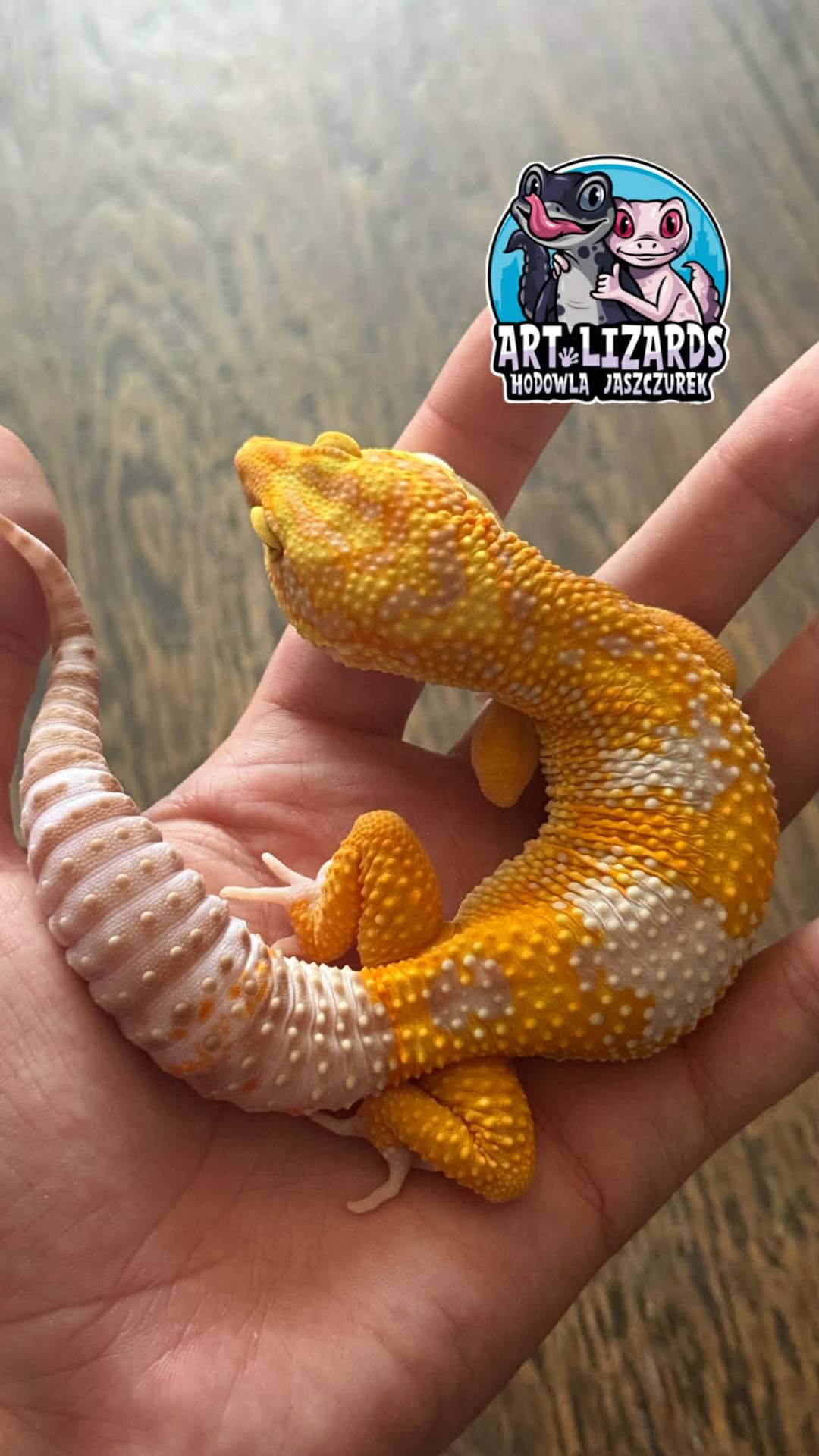
The leopard gecko (Eublepharis macularius) is a terrestrial eyelid gecko native to dry and semi-arid country in Afghanistan, Pakistan, north-western India, and Nepal. It is not a vague “Asian gecko” and it is not a Middle Eastern species; the supported native range is this south-western Central Asian and adjacent subcontinental belt. In captivity it is one of the most widely kept reptiles; colour morphs do not change the species’ needs. Adults usually reach about 18–25 cm total length and can live well over 10–15 years with correct care.
Origin and distribution
Afghanistan, Pakistan, India and Nepal
It occurs naturally in Afghanistan, Pakistan, India and Nepal.
Current listings
Tools for this species
Care at a glance
Size
Adults usually approx. 18–25 cm; the tail stores fat
Enclosure type
Terrestrial, horizontal, dry/semi-arid, with hides plus one humid hide
Temperature
Warm side approx. 30–32°C; cool side approx. 24–26°C; a modest night drop
Humidity
Generally low to moderate; a humid hide for shedding
Furnishings
Two dry hides, one humid hide, a shallow water dish, and rough surfaces for sheds
Characteristics
Nocturnal and terrestrial, usually calm; the tail can be dropped under stress
Care and behaviour
This gecko does not need a rainforest tank. The enclosure is dry, with a temperature gradient and a solid floor. A typical minimum for one adult is about 60×40 cm of floor, preferably more. Loose sand that is swallowed with prey is a common husbandry error — keepers more often use soil mixes, slate, mats, or paper. Hides are needed on both sides of the gradient, plus a separate humid hide (moss or damp substrate in a box) for shedding.
Food is mainly insects: crickets, roaches, and larvae, always with calcium and periodic vitamins. Juveniles eat more often; adults usually several times a week. Prepared diets do not replace insects for this species. Water in a shallow dish. Males are not housed together. A pair is a breeding decision, not décor.
The species is nocturnal and terrestrial: it rests in a hide by day and hunts in the evening. A well-kept animal is usually calm in the hand, but the tail is fragile — never lift by the tail. Morphs (albino, super hypo, tangerine and others) are captive variants; this page is not a morph catalogue. Wash hands after contact with the animal or furnishings.
Good to know
Eublepharis macularius is not currently listed on the CITES Appendices. That does not waive national rules on keeping and trade. The species is non-venomous; the practical risks are hygiene and tail injury, not venom.