Brachypelma boehmei
Mexican Fireleg
9 active listings · Spiders
Category
Spiders
Origin
Mexico (Guerrero)
Lifestyle
Terrestrial
Difficulty
Beginner
Venom potency
Weak
About the species
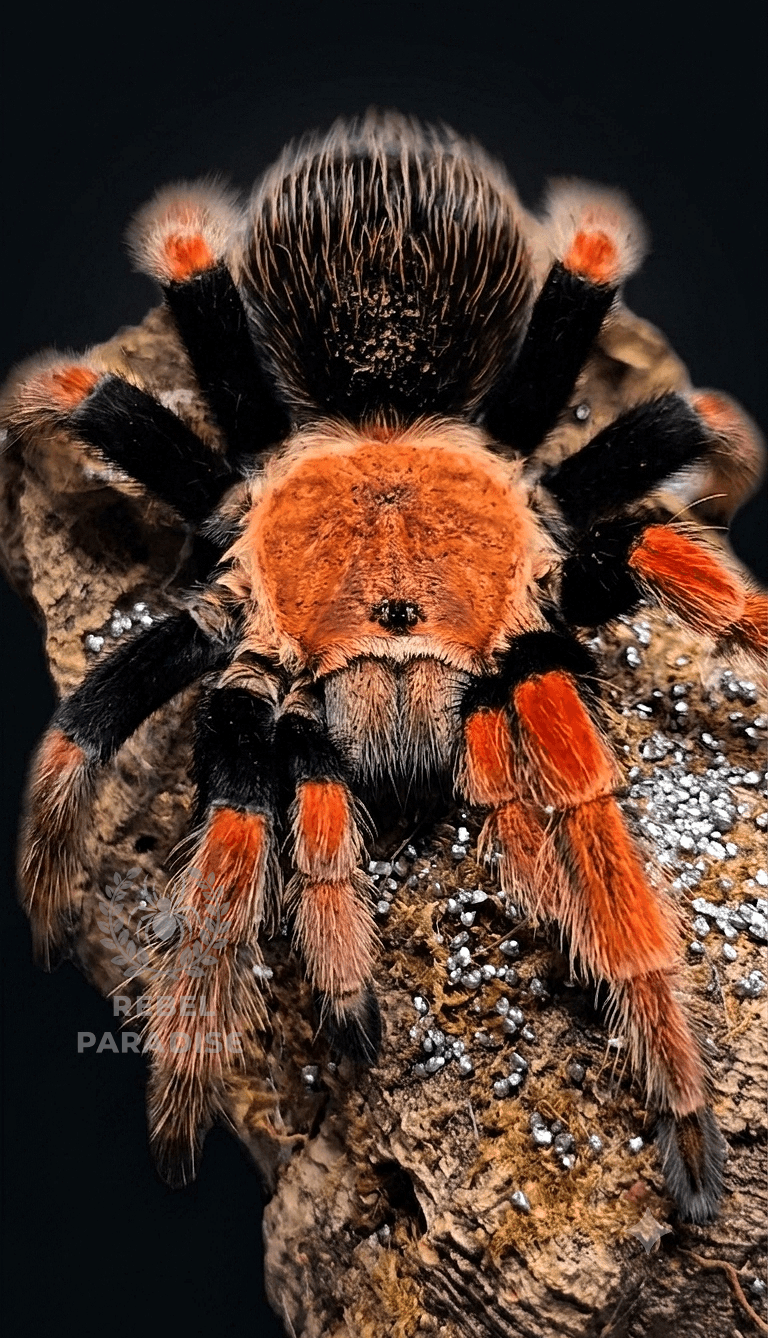
Mexican Fireleg (Brachypelma boehmei) is a terrestrial tarantula occurring naturally in Mexico, primarily in the western part of the state of Guerrero. It inhabits dry forests and thorn scrub, where it uses existing hollows or digs burrows itself. Adult females reach about 6–7.5 cm in body length. The species is distinguished by intensely orange-red leg colouration contrasting with a dark abdomen and is among the most characteristic members of the genus Brachypelma.
Origin and distribution
Mexico (Guerrero)
The species is endemic to Guerrero (Mexico).
Current listings
 TRUSTED
Brachypelma boehmei tarantula, L2
30.00 PLN
Available: 50 pcs.UnsexedL2Rebel Paradise- TRUSTED
Brachypelma boehmei Female Tarantula 3DC
180.00 PLN
Available: 5 pcs.FemaleRebel Paradise  TRUSTED
25x Brachypelma Boehmei L3
450.00 PLN
Available: 3 pcs.Unsexedl3szamatanimals TRUSTED
10x Brachypelma Boehmei L3
210.00 PLN
Available: 10 pcs.UnsexedL3szamatanimals TRUSTED
5x Brachypelma Boehmei L3
120.00 PLN
Available: 10 pcs.UnsexedL3szamatanimals TRUSTED
Brachypelma Boehmei L3
35.00 PLN
Available: 100 pcs.UnsexedL3szamatanimals TRUSTED
Brachypelma boehmei l1 - pack of 5
150.00 PLN
Available: 5 pcs.Unsexed0.5 cm2Adrian Ra TRUSTED
Brachypelma boehmei Female (6cm)
220.00 PLN
Available: 2 pcs.6 cmspidersworld.eu TRUSTED
Brachypelma boehmei (1 cm)
35.00 PLN
Available: 10 pcs.Unsexed1 cmspidersworld.eu
Care at a glance
Size
Females approx. 6–7.5 cm body length
Enclosure type
Horizontal, for a terrestrial species with the option to dig
Substrate
A stable, thicker substrate layer that allows shallow digging
Furnishings
A hide and constant access to fresh water
Conditions
Rather dry; good ventilation, with locally slightly more humid substrate
Characteristics
Slower growth, a tendency to use hides, and urticating hairs
Care and behaviour
Brachypelma boehmei is a terrestrial species that readily uses hides and may also deepen a prepared retreat. The enclosure should provide a stable substrate layer that allows digging, as well as a secure hide and constant access to fresh water. Because of its massive build, the height of the enclosure should not be excessive.
In nature the species occurs in dry forests and scrub of Mexico, so in captivity most of the substrate may remain rather dry. A good solution is to keep one small area slightly more humid, while still providing good ventilation. A constantly wet and stuffy enclosure should be avoided.
Brachypelma boehmei is mainly nocturnal and often stays near the entrance of the hide or burrow. It is a rather calm species during observation, but individual animals may react nervously to disturbance. Growth is relatively slow, so this is a species that requires patience, especially with young animals.
Good to know
Brachypelma boehmei has urticating hairs that it may use when threatened. Contact with skin, eyes, or mucous membranes can cause irritation. When working in the enclosure it is worth being cautious, limiting sudden movements, and avoiding direct contact with the spider. The species is also covered by CITES regulations, so when acquiring it attention should be paid to the required documents and legal origin.