
Grammostola rosea – Chilean rose tarantula
2 active listings · Spiders
- Category
- Spiders
- Origin
- Chile, Bolivia and Argentina
- Lifestyle
- Terrestrial
- Difficulty
- Beginner
- Venom potency
- Weak
About the species
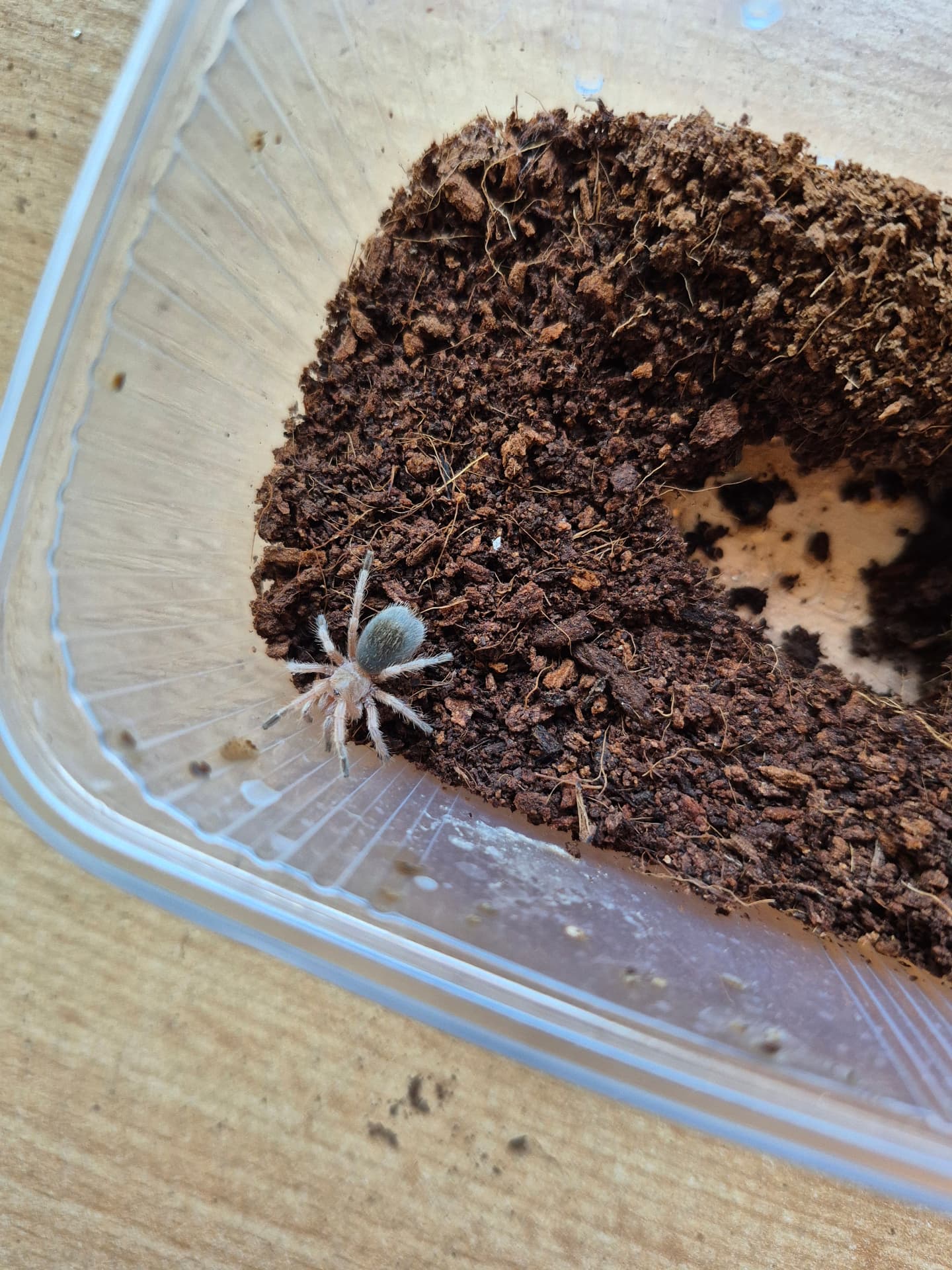
Grammostola rosea, the Chilean rose tarantula, is one of the best-known tarantulas in the world. It comes from the dry scrub and semi-desert of Chile, and some sources also list Bolivia and Argentina. It has a brown body covered in pinkish or coppery setae, reaches a leg span of about 12–15 cm and grows very slowly. Females often live more than 20 years. Since 2022 Grammostola porteri has been treated as a synonym of G. rosea, so both names refer to the same species. It is a calm, hardy spider that copes well with dry conditions and can refuse food for months.
Care at a glance
Size
Females about 12–15 cm leg span
Enclosure type
Terrestrial, horizontal
Substrate
6–10 cm, dry, one corner slightly moist
Furnishings
Cork hide, water dish
Conditions
20–26°C, dry, good ventilation
Characteristics
Calm, very slow-growing, long-lived
Current listings

Origin and distribution
Chile, Bolivia and Argentina
It occurs naturally in Chile, Bolivia and Argentina.
Appearance and colour forms
The body is brown to grey-brown, and the carapace and legs are covered in paler, pinkish or coppery setae that give the species its name. The hobby keeps colour forms: the typical grey-brown form with a pink sheen and the RCF (red colour form) with a clearly reddish carapace and legs.
Adult females reach a leg span of about 12–15 cm. Males are slimmer, longer-legged and carry tibial hooks after the final moult.
G. rosea or G. porteri?
For years G. rosea and G. porteri were confused in the trade, and some keepers believed most spiders sold as G. rosea were actually G. porteri. In 2022 Aguilera, Montenegro and Casanueva synonymised G. porteri with G. rosea, which the World Spider Catalog adopted.
Listings may still use both names. They now refer to the same species, but colour forms (such as RCF) are best bred separately.
Enclosure and substrate
An adult female needs an enclosure with a floor of about 30 × 30 cm. Use 6–10 cm of dry substrate (soil with sand or coco fibre) with one slightly moist corner. The spider usually uses a ready-made hide and rarely digs deep.
Keep the gap between substrate and lid small to reduce the risk of falls. A cork hide and a water dish are enough.
Temperature and humidity
The species comes from dry country and handles 20–26°C well. An overly humid enclosure does not suit it: the spider then often sits on the walls or the cork to avoid wet substrate.
A permanent water dish is enough as a moisture source. Good ventilation matters more than misting.
Feeding, fasting and growth
Juveniles eat small crickets or roaches every 5–7 days, adults once every 1–3 weeks. Grammostola rosea is famous for long fasts: adult females may refuse food for several months, especially in winter and before a moult. If the spider has water and a full abdomen, there is usually no reason to worry.
Growth is very slow. Females mature after several years, often 5–8, and live more than 20 years. Males mature earlier and live much shorter.
Behaviour and handling
Grammostola rosea is considered calm and predictable, although nervous individuals do occur. When disturbed it is more likely to kick urticating hairs or rear up than to bite.
Do maintenance with tongs. Handling a tarantula always risks a fall and injury to the spider, even with calm species.
Good to know
Grammostola rosea has urticating hairs that can irritate skin, eyes and airways. Avoid touching your face during maintenance. The species is not listed in the CITES appendices; obligations may depend on the country and the transaction, and this information is not legal advice.
Frequently asked questions
Is Grammostola rosea good for beginners?
Yes, it is a classic first tarantula: calm, hardy and undemanding. Just accept very slow growth and long fasts.
My tarantula has not eaten for months. Is that normal?
For G. rosea, yes. Adult females may not eat for several months, especially in winter or before a moult. Make sure water is available and the abdomen is not visibly shrunken.
Is Grammostola porteri the same species?
Yes. Since 2022 G. porteri has been treated as a synonym of G. rosea. Both names are still used in listings.
How long does Grammostola rosea live?
Females often more than 20 years. Males usually live one or two years after maturing.
What conditions does Grammostola rosea need?
Dry substrate with one slightly moist corner, 20–26°C, a water dish and good ventilation.
Similar species
Written by the Terra Market team ·