Caribena versicolor
Antilles Pinktoe
8 active listings · Spiders
Category
Spiders
Origin
Martinique
Lifestyle
Arboreal
Difficulty
Beginner
Venom potency
Weak
About the species
Antilles Pinktoe (Caribena versicolor) is an arboreal tarantula endemic to Martinique in the Caribbean. It spends most of its life above ground, using trunks, branches, and vegetation as sites for building extensive web retreats and hides. Adult females reach about 5–6 cm in body length, and the leg span may reach about 15–16 cm. Juveniles are distinguished by intense blue colouration, which with maturity changes into the characteristic combination of green, red, and violet tones.
Origin and distribution
Martinique
The species is endemic to Martinique.
Current listings
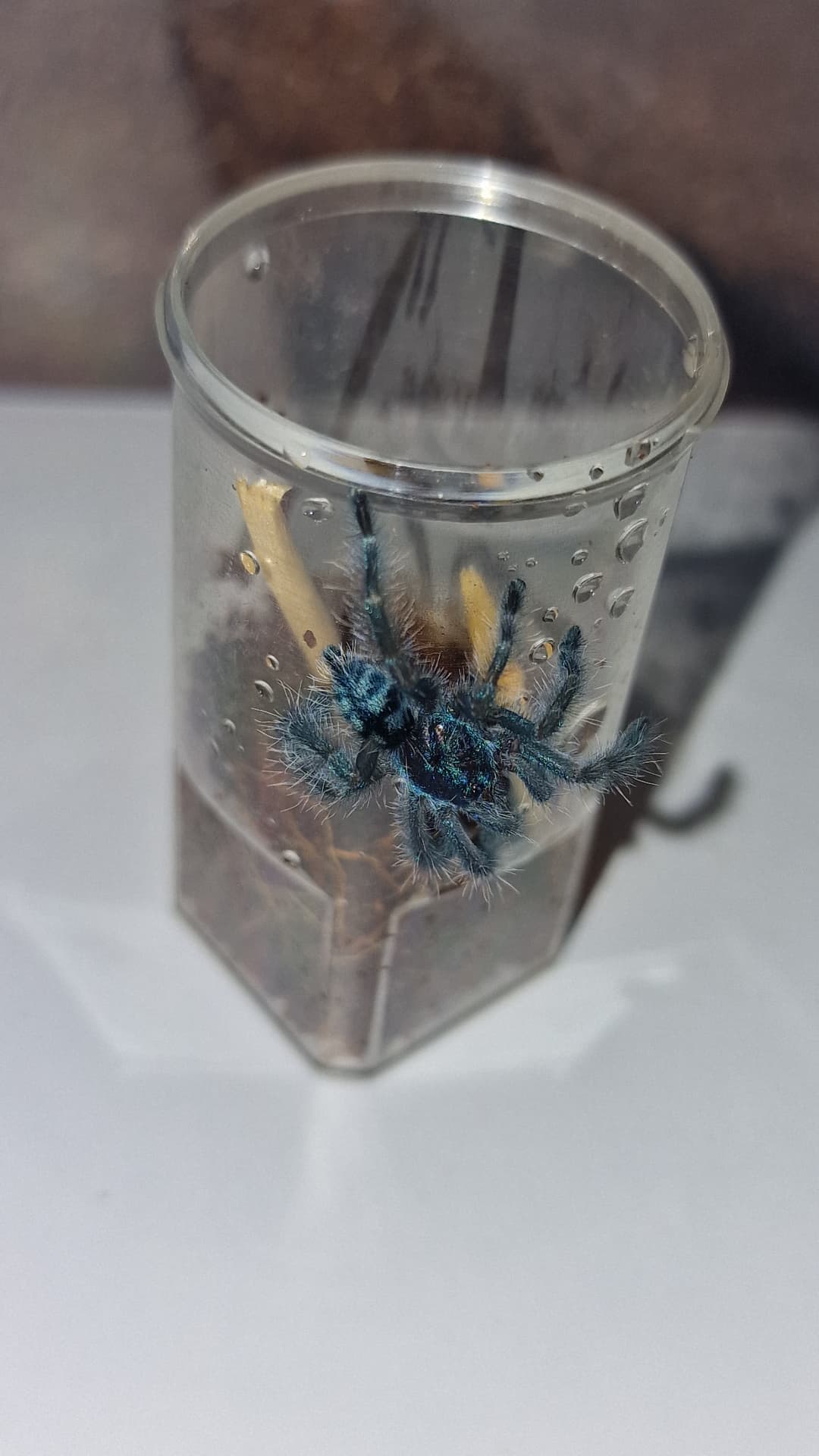
A beautifully colored arboreal tarantula for beginners
70.00 PLN
Available: 5 pcs.UnsexedL4streammobile5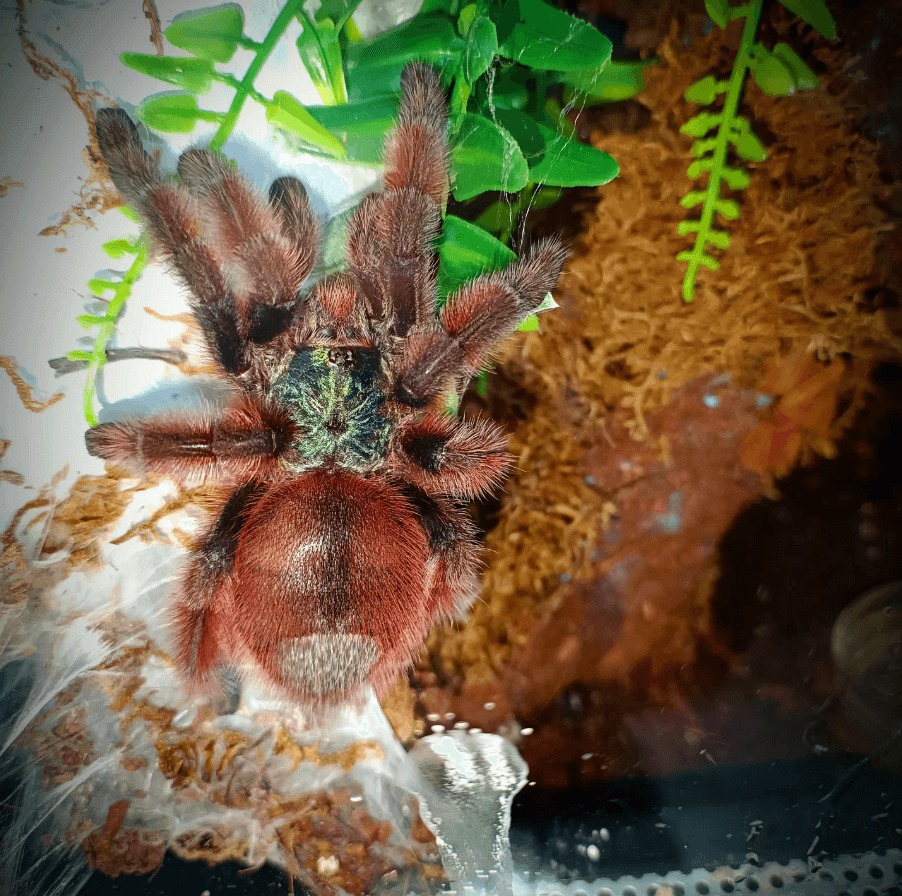 TRUSTED
Caribena versicolor hatchlings
30.00 PLN
Available: 70 pcs.UnsexedL1/L2W sieci Natury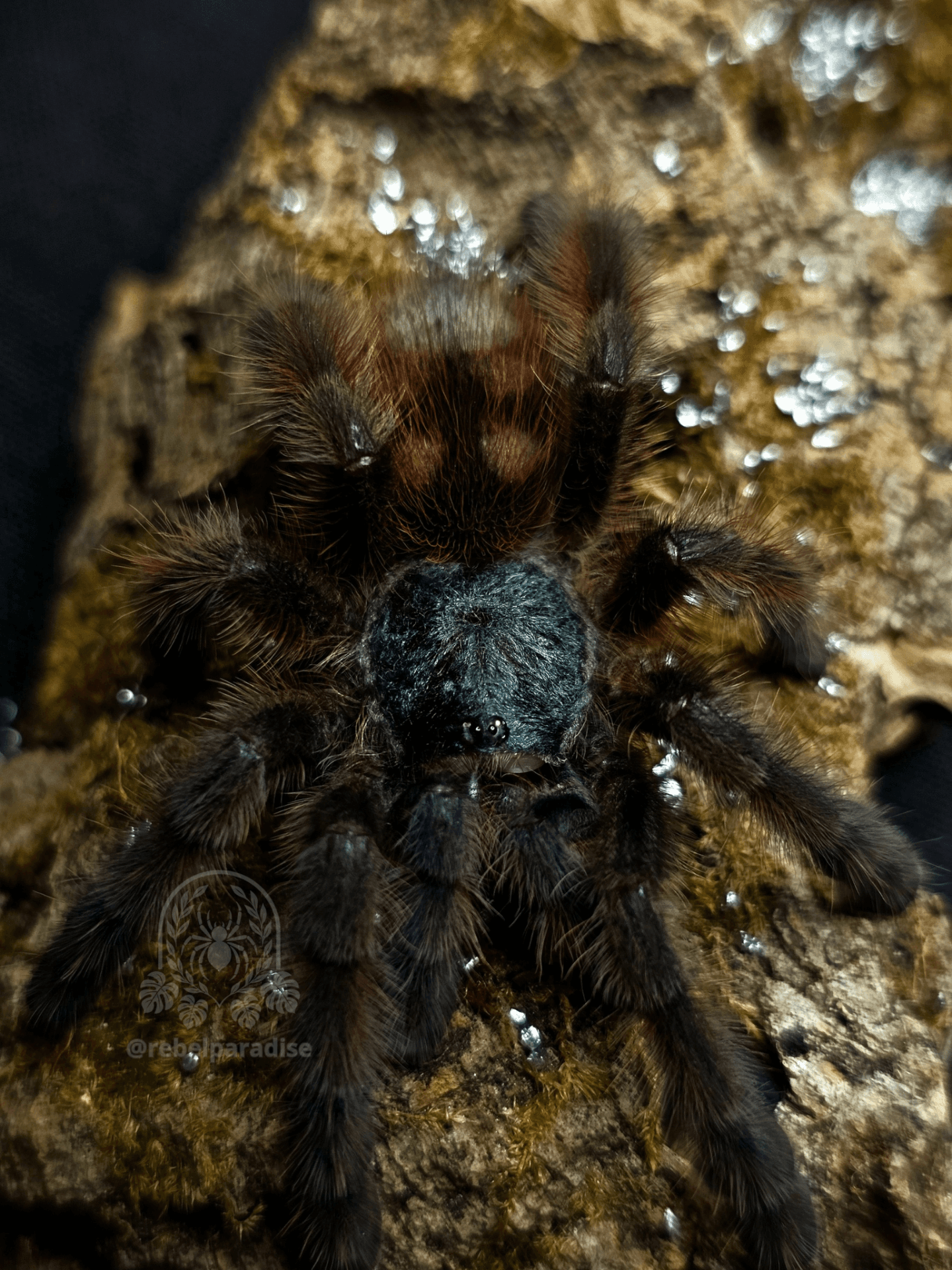 TRUSTED
Caribena versicolor Tarantula, L3
30.00 PLN
Available: 30 pcs.UnsexedL3Rebel Paradise TRUSTED
25x Caribena Versicolor
450.00 PLN
Available: 3 pcs.UnsexedL2szamatanimals TRUSTED
10x Caribena Versicolor L2
200.00 PLN
Available: 10 pcs.UnsexedL2szamatanimals TRUSTED
5x Caribena Versicolor L2
115.00 PLN
Available: 10 pcs.UnsexedL2szamatanimals TRUSTED
Caribena Versicolor L2
35.00 PLN
Available: 150 pcs.UnsexedL2szamatanimals TRUSTED
Caribena versicolor L2
40.00 PLN
Available: 20 pcs.UnsexedL1Zobacz pająka
Care at a glance
Size
Females approx. 5–6 cm body length; leg span up to approx. 15–16 cm
Enclosure type
Vertical, intended for an arboreal species
Substrate
A substrate layer that retains some moisture without remaining constantly wet
Furnishings
A vertical piece of cork, branches or plants, and constant access to fresh water
Conditions
Moderate humidity and very good ventilation, especially cross ventilation
Characteristics
An arboreal species that produces extensive webbing and undergoes a striking colour change as it matures
Care and behaviour
Caribena versicolor is an arboreal species, so the enclosure should provide height above all, as well as stable vertical elements on which the spider can build a web retreat. Cork bark pieces, branches, and plants that create additional attachment points work well.
For this species, combining appropriate humidity with very good ventilation is particularly important. The substrate should not remain constantly wet, and humid, still air must not linger in the enclosure. Constant access to fresh water and localized moistening are a safer solution than continuous intensive spraying.
The spider spends much of its time in a web retreat built in the upper part of the enclosure, but it can move quickly on vertical surfaces. It is a very attractive species to observe; however, during maintenance work its arboreal lifestyle and the possibility of sudden, rapid movement should be taken into account.
Good to know
Caribena versicolor has type II urticating hairs, located on the abdomen. When threatened it may use them defensively, so when working in the enclosure it is worth avoiding direct contact with the spider and contact of the hairs with skin, eyes, and mucous membranes. Because of the arboreal lifestyle and great agility, particular attention should also be paid to securing the enclosure against escape.