
Ephebopus cyanognathus – Blue fang tarantula
3 active listings · Spiders
- Category
- Spiders
- Origin
- French Guiana
- Lifestyle
- Fossorial
- Difficulty
- Advanced
- Venom potency
- Medium
About the species
Ephebopus cyanognathus is a fossorial tarantula from French Guiana, described by West and Marshall in 2000. The species name means “blue-jawed” and refers to its iridescent blue chelicerae, which also gave it the English name “blue fang”. Adult females reach a leg span of about 10–12 cm and spend most of their lives in deep burrows. The genus Ephebopus is unusual in carrying urticating hairs on the pedipalps rather than the abdomen. The species is nervous, fast and defensive, so it suits experienced keepers better.
Care at a glance
Size
Females about 10–12 cm leg span; about 5 cm body length
Enclosure type
Terrestrial with a very deep layer of substrate for burrowing
Substrate
15–20 cm for adults, lower part kept moist
Furnishings
Cork or half-tube as burrow start, water dish
Conditions
24–28°C, moister substrate, ventilation
Characteristics
Burrower, nervous, urticating hairs on pedipalps
Current listings

Origin and distribution
French Guiana
The species is endemic to French Guiana.
Appearance and size
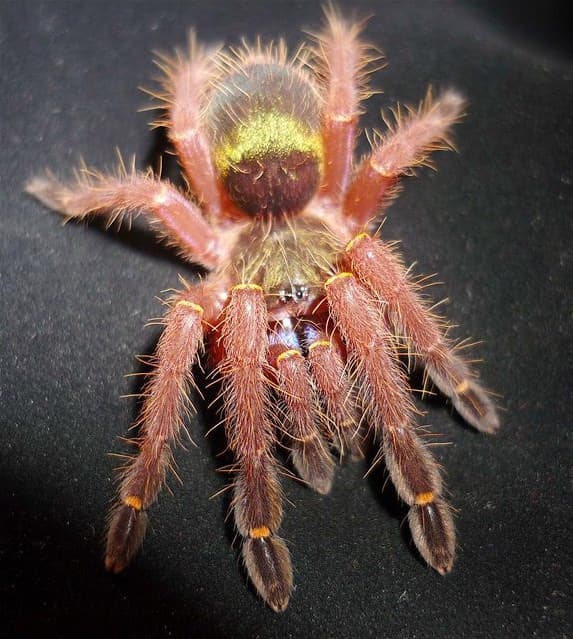
Ephebopus cyanognathus has a dark brown to black body and legs, often with paler rings at the joints. Its most distinctive feature is the chelicerae covered in iridescent blue setae, clearly visible when the spider sits in its burrow entrance.
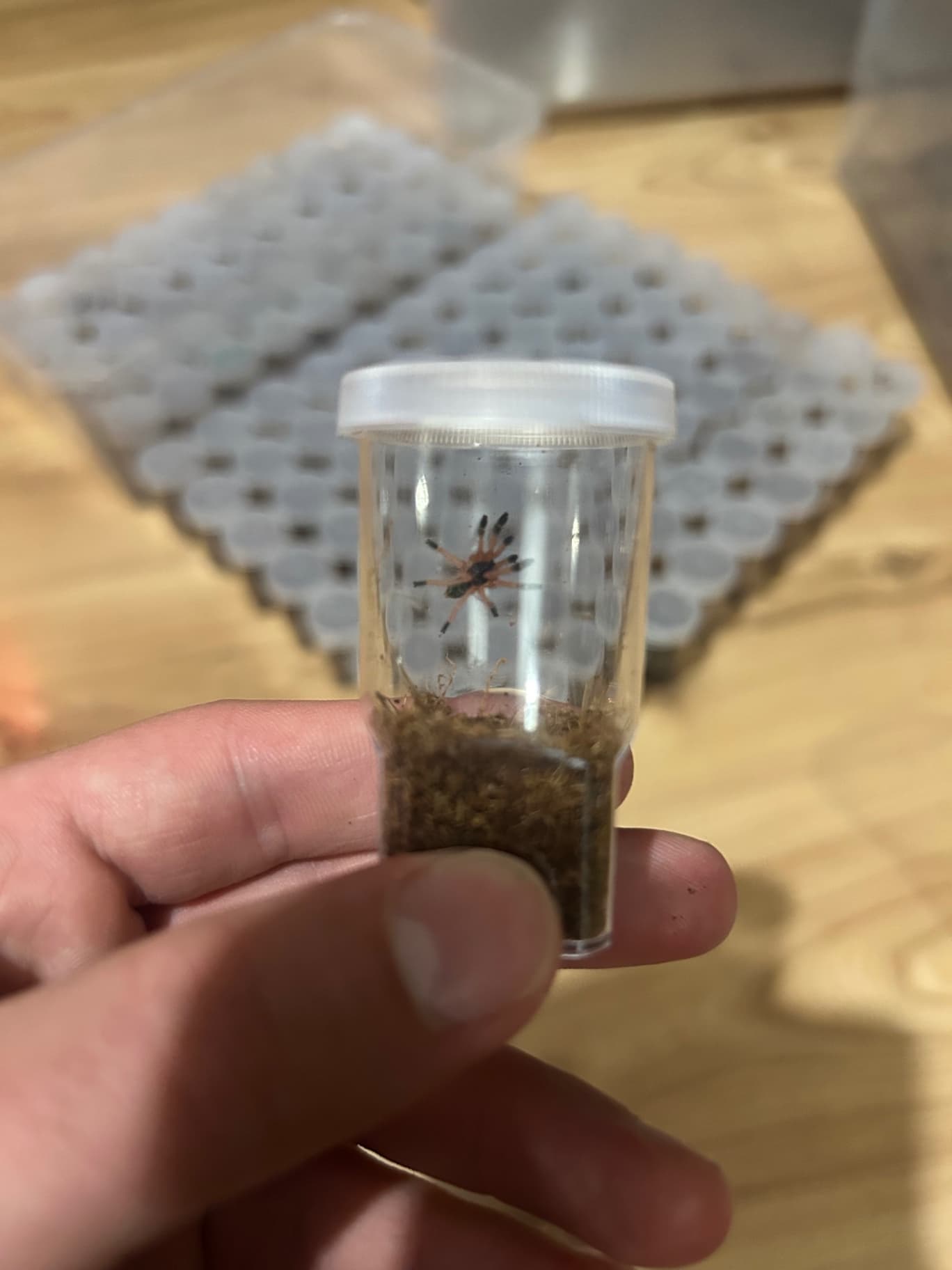
Adult females measure about 5 cm in body length with a leg span of 10–12 cm. Males are slimmer, longer-legged and carry palpal bulbs after the final moult. Juveniles can be lighter and more contrasting.
Origin and name
The species was described in 2000 from a holotype from the Roura district of French Guiana. The World Spider Catalog gives the range as French Guiana, and it remains the only confirmed country. Other Ephebopus species are also known from Suriname, Guyana and Brazil.
A special feature of the genus is its urticating hairs on the pedipalps. The spider rubs them off with its chelicerae and can flick them towards a threat. This is a different mechanism from the abdominal hair-kicking of most South American tarantulas.
Enclosure and substrate
This is a burrowing species that builds deep, silk-lined tunnels. An adult female needs a floor of about 30 × 20 cm but a deep substrate layer of 15–20 cm. A mix of coco fibre with soil or peat holds tunnel shape well. A piece of cork or a half-tube pressed into the substrate helps the spider start its burrow.
In clear-walled enclosures the spider often runs a tunnel along the glass. That allows observation, but suddenly uncovering the tunnel stresses the spider. Keep juveniles in containers with deep substrate from the start, as they grow less well without the chance to dig.
Temperature and humidity
Ephebopus cyanognathus comes from humid tropical forest. The ideal temperature is 24–28°C. The lower layers of substrate should stay moist while the surface may dry slightly. Water along the edge so moisture soaks down, rather than misting the burrow entrance.
Moist substrate must go hand in hand with ventilation. Overly wet, compacted substrate without air exchange encourages mould and mites, while young Ephebopus are sensitive to drying out, so steady, moderate moisture deep in the substrate is key.
Feeding and growth
The spider usually hunts from its burrow entrance and at night sits just outside it. Juveniles eat small crickets or roaches every 4–6 days, adults every one to two weeks. Offer prey near the burrow entrance and remove uneaten insects after a day.
Growth is moderate. Males usually mature within 2–3 years, females later. Before a moult the spider seals its burrow with silk and may stay out of sight for weeks, which is normal.
Behaviour and handling
Ephebopus cyanognathus is nervous and fast. It reacts to disturbance by retreating into its burrow, taking a threat posture or biting, and it can flick urticating hairs from its pedipalps. Adults are rarely visible, so this is a species for keepers who value watching a burrow and feeding strikes more than a spider on display.
Do not dig the spider out without need. For rehousing, wait for it to come to the surface or carefully lift it out together with substrate into a container. Do maintenance with long tongs.
Good to know
Ephebopus cyanognathus has urticating hairs on its pedipalps that can irritate skin and eyes. The species can be quick to bite; take a bite seriously, and note that this page is not medical advice. It is not listed in the CITES appendices; obligations may depend on the country and the transaction, and this information is not legal advice.
Frequently asked questions
Why is Ephebopus cyanognathus called the “blue fang”?
Because of its iridescent blue chelicerae. The species name cyanognathus also means “blue-jawed”.
Is Ephebopus cyanognathus suitable for beginners?
Not really. It is nervous, fast and defensive, and rarely visible. It suits keepers with experience of burrowing species.
How deep should the substrate be for Ephebopus cyanognathus?
An adult female needs 15–20 cm of firm substrate that stays moist lower down. Juveniles should also have a deep layer to dig in.
Where are the urticating hairs of Ephebopus cyanognathus?
On the pedipalps, not on the abdomen. The spider rubs them off with its chelicerae and can flick them towards a threat.
Where does Ephebopus cyanognathus come from?
From French Guiana, the only country where the species is confirmed.
Similar species
Written by the Terra Market team ·