Ceratogyrus marshalli
Straight-horned Baboon
4 active listings · Spiders
Category
Spiders
Origin
Zimbabwe and Mozambique
Lifestyle
Fossorial
Difficulty
Advanced
Venom potency
Strong
About the species
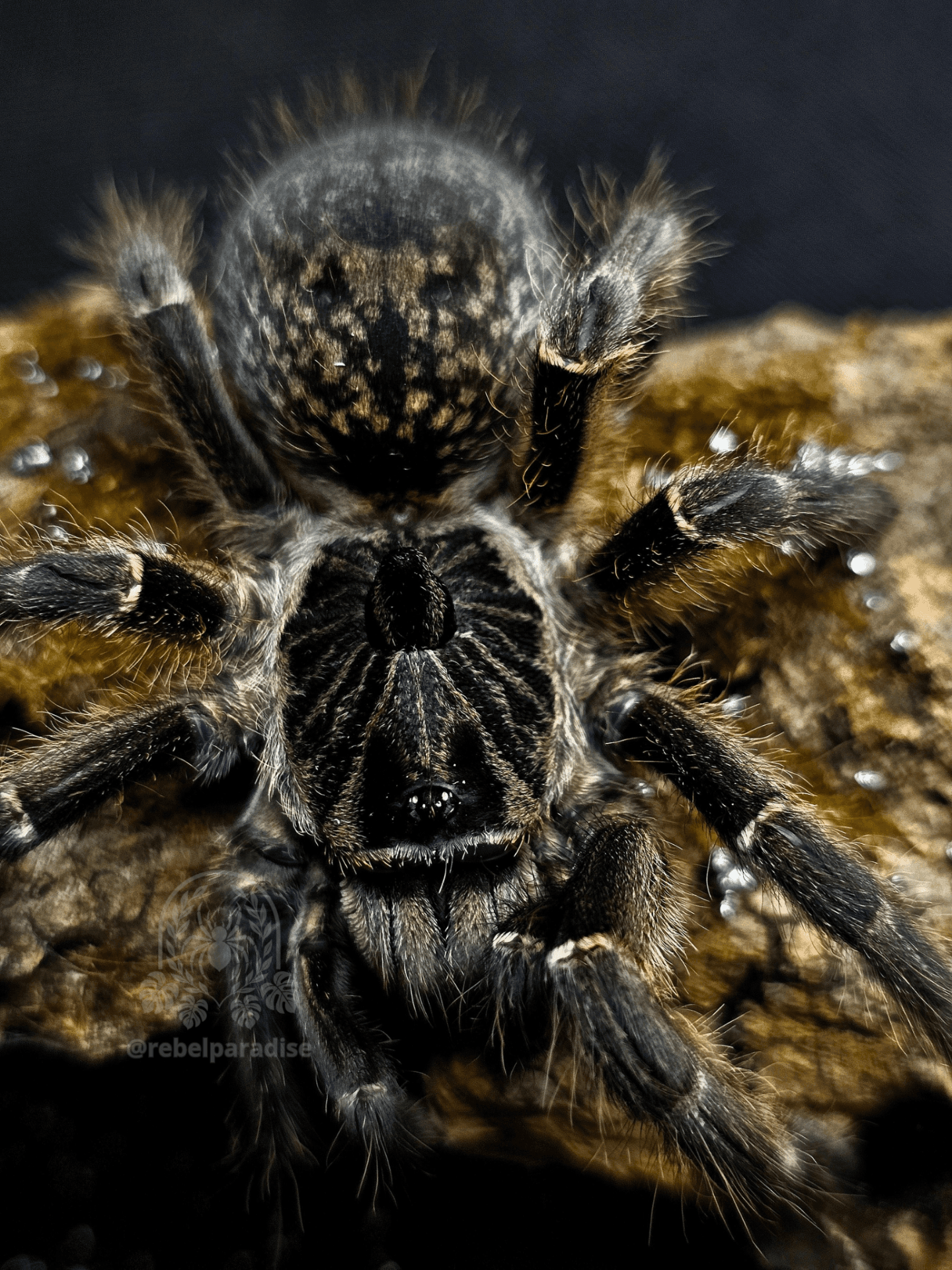
Straight-horned Baboon (Ceratogyrus marshalli) is a fossorial Old World tarantula of south-eastern Africa. The World Spider Catalog accepts the species described by Pocock in 1897 and gives the distribution as Zimbabwe and Mozambique. Adult females usually reach about 5–6 cm in body length. The carapace bears a more upright, relatively straight foveal horn, unlike the more rear-curved horn of Ceratogyrus darlingi. The horn is not an ornament for close display: the species is fast, digs, and may bite.
Origin and distribution
Zimbabwe and Mozambique
It occurs naturally in Zimbabwe and Mozambique.
Current listings
 TRUSTED
Ceratogyrus marshalli Tarantula, L3
20.00 PLN
Available: 20 pcs.UnsexedL3Rebel Paradise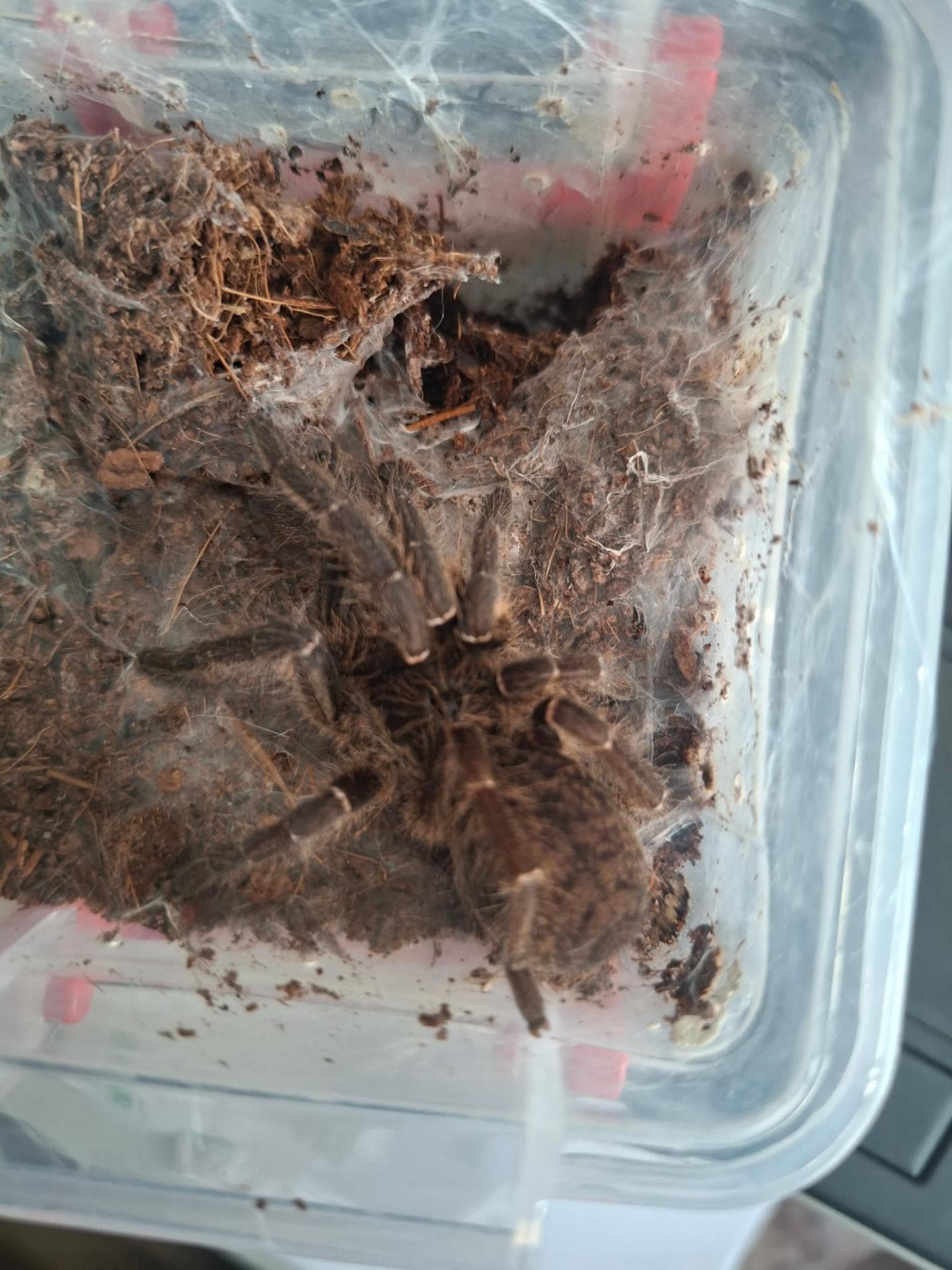 TRUSTED
Female Ceratogyrus marshali 4DC
99.99 PLN
Available: 3 pcs.Female4 cmMichał Kownacki TRUSTED
Ceratogyrus marshalli Female (6cm) - Straight Horned Baboon
200.00 PLN
Last piece!Female6 cmspidersworld.eu TRUSTED
Ceratogyrus marshalli L4
25.00 PLN
Available: 14 pcs.UnsexedL3reptilesbrothers.pl
Care at a glance
Size
Females approx. 5–6 cm body length
Enclosure type
For a burrowing species, with a deep layer of substrate
Substrate
A deep, stable layer that allows a burrow to be built
Furnishings
A starter burrow, web anchor points, and constant fresh water
Conditions
Rather dry to moderate; good ventilation and a slight moisture gradient
Characteristics
A straighter carapace horn, strong digging, fast defensive reactions
Care and behaviour
Ceratogyrus marshalli is strongly tied to a burrow. Fill the enclosure with stable substrate deep enough for a tunnel, not only a cork hide on the surface. A slightly recessed starter hole helps, but the animal usually rebuilds the retreat.
A Zimbabwe–Mozambique range points to seasonally dry and semi-dry country, not a permanently wet jungle. Most of the substrate may dry; one side can stay slightly more humid. Air exchange and standing water in a shallow dish matter more than daily spraying. Do not treat a single temperature figure as a standard.
Individuals may stay unseen by day and appear at the burrow mouth in the evening. When disturbed they react quickly; they have no urticating hairs. Do maintenance calmly, without trying to move the spider by hand. This is not a beginner species.
Good to know
Ceratogyrus marshalli has no urticating hairs. Venom of African Harpactirinae can be medically significant; treat a bite seriously, and this page is not medical advice. The species is not listed on the CITES Appendices. Obligations may depend on the country and transaction; this is not legal advice. Require legally sourced captive-bred animals.