Caribena laeta
Puerto Rican Pinktoe
7 active listings · Spiders
Category
Spiders
Origin
Puerto Rico, Cuba and U.S. Virgin Islands
Lifestyle
Arboreal
Difficulty
Intermediate
Venom potency
Weak
About the species
Puerto Rican Pinktoe (Caribena laeta) is an arboreal tarantula of the Caribbean. The World Spider Catalog gives the distribution as Puerto Rico, Cuba, and the U.S. Virgin Islands; the species is accepted and is the type species of Caribena. It spends most of its life above ground, in web retreats on trunks, in bark crevices, and among vegetation. Adult females usually reach about 5–6 cm in body length and about 13–15 cm in leg span. Adults are typically rusty orange to brown, with paler “pink” tarsi, and they do not undergo the dramatic colour change seen in Caribena versicolor.
Origin and distribution
Puerto Rico, Cuba and U.S. Virgin Islands
It occurs naturally in Puerto Rico, Cuba and U.S. Virgin Islands.
Current listings
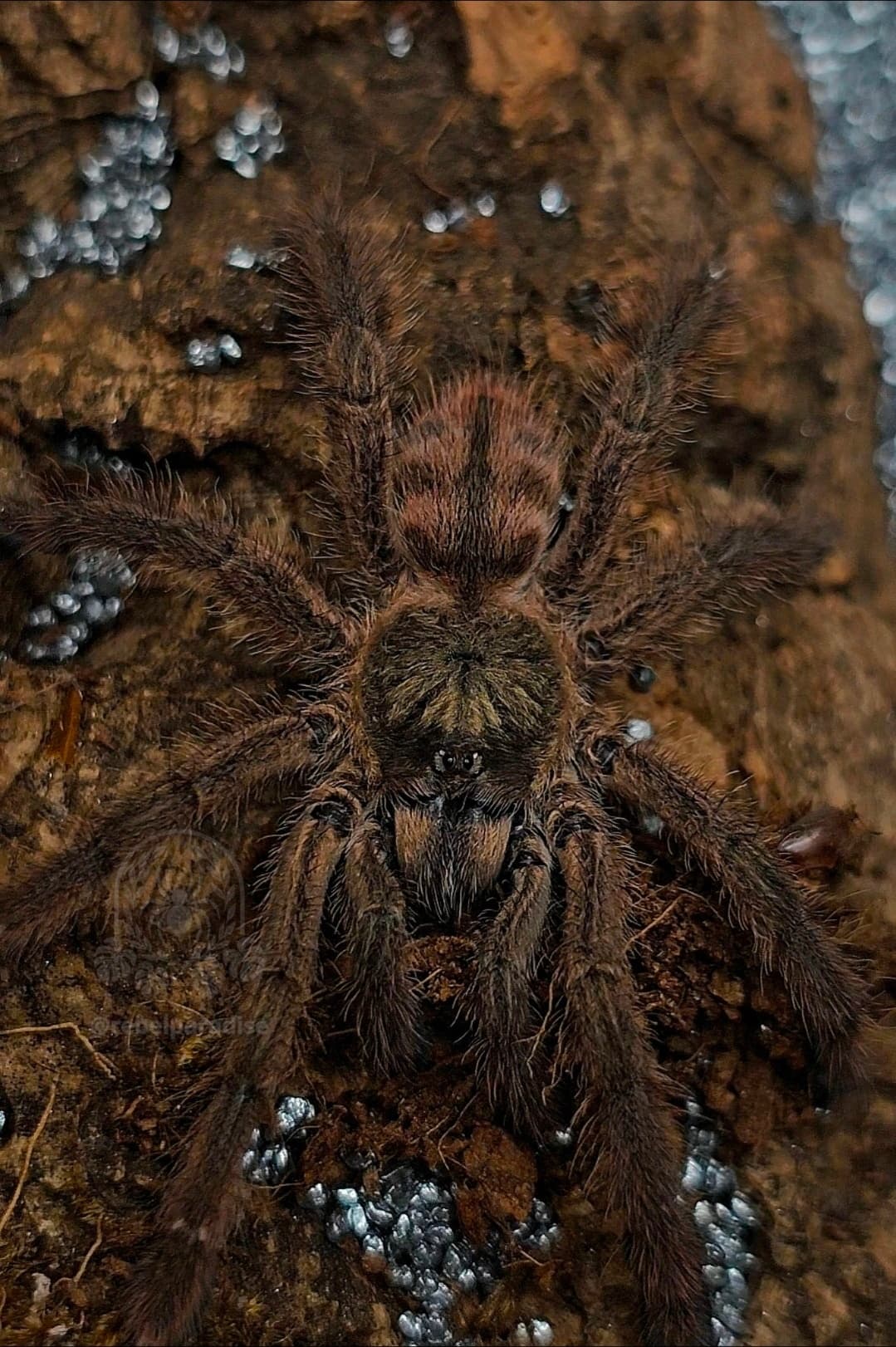 TRUSTED
Caribena laeta Female Tarantula 3DC
100.00 PLN
Available: 10 pcs.FemaleRebel Paradise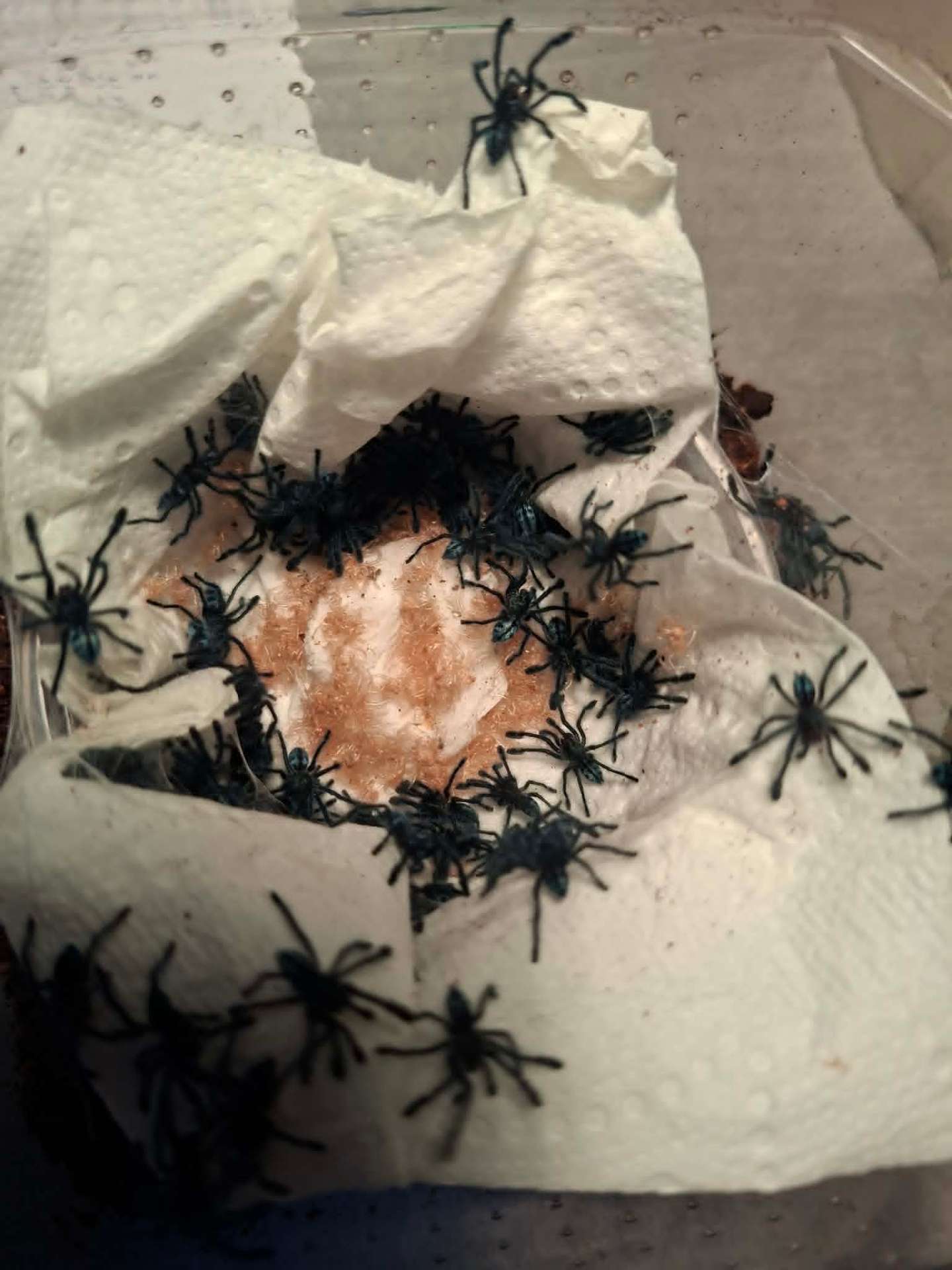 TRUSTED
Pack of 10 L1 units
200.00 PLN
Available: 3 pcs.Unsexed0,5 cmL1Michał Kownacki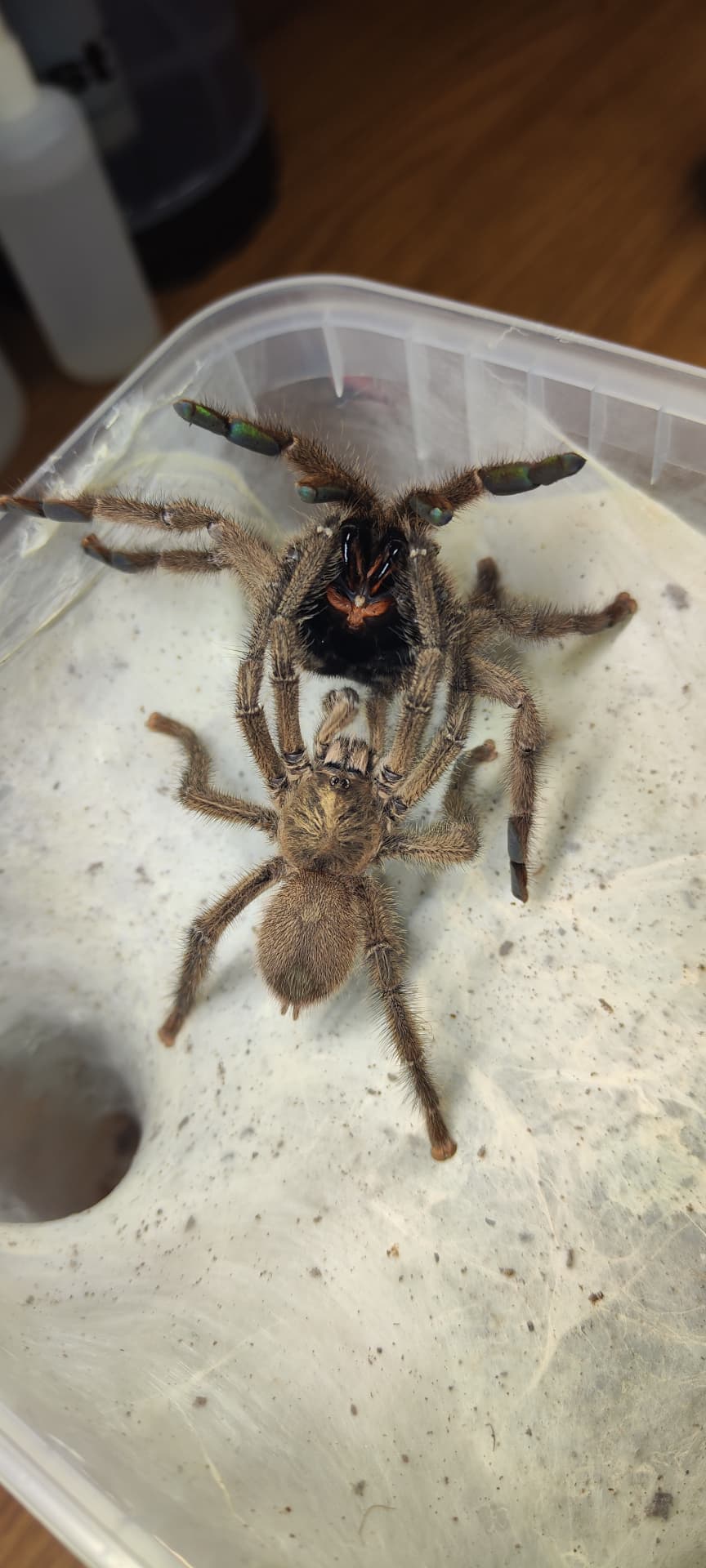 TRUSTED
Caribena laeta L1 10 pieces
220.00 PLN
Available: 3 pcs.Unsexed1cm cmL2Zobacz pająka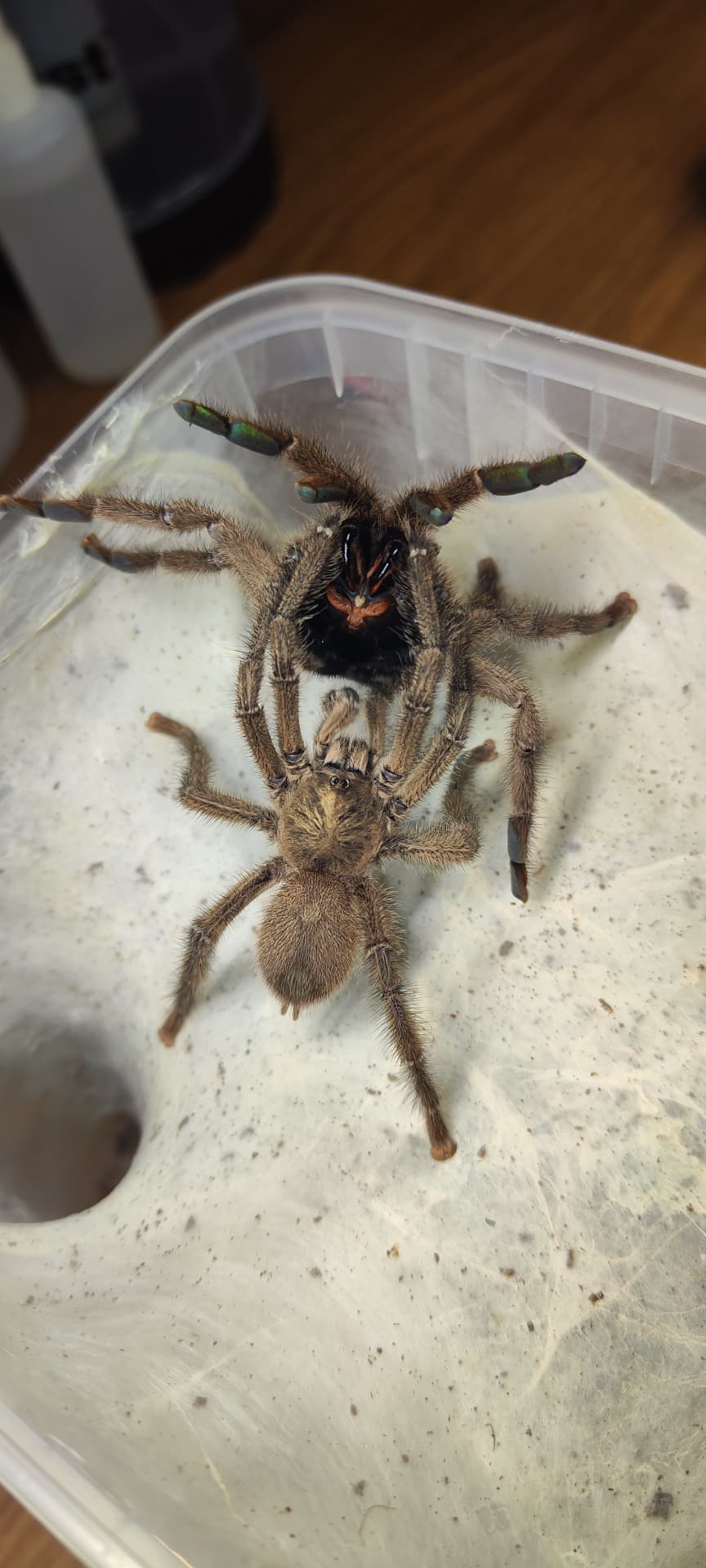 TRUSTED
Caribena laeta L1
30.00 PLN
Available: 20 pcs.Unsexed1cm cmL2Zobacz pająka TRUSTED
Caribena laeta SAMICA 2.5DC
130.00 PLN
Available: 2 pcs.Female2,5DC cmreptilesbrothers.pl TRUSTED
Caribena laeta
50.00 PLN
Last piece!UnsexedL5reptilesbrothers.pl- TRUSTED
Caribena laeta
40.00 PLN
Available: 2 pcs.UnsexedL4reptilesbrothers.pl
Care at a glance
Size
Females approx. 5–6 cm body length; leg span approx. 13–15 cm
Enclosure type
Vertical, intended for an arboreal species
Substrate
A moderate layer; it need not stay constantly wet
Furnishings
Vertical cork or branches for webbing and constant access to fresh water
Conditions
Moderate humidity and very good ventilation, without stuffy air
Characteristics
Arboreal, agile, and prone to escape; not a first tarantula
Care and behaviour
Caribena laeta is arboreal, so the enclosure should be tall first and securely closed. Stable vertical surfaces — cork, branches, plants — give the spider a place to build a tubular web retreat. Floor area matters less than height and security against escape.
Humidity should remain moderate, with very good ventilation. The substrate should not stay constantly wet; constant access to fresh water in a shallow dish is more important than frequent, heavy spraying of the whole enclosure. Stagnant warm, humid air favours problems rather than welfare.
Individuals can move quickly on vertical surfaces and often react to an opened lid by trying to leave. Plan maintenance calmly, with the area around the enclosure secured. This is not a species for handling and not a typical first tarantula.
Good to know
Caribena laeta has type II urticating hairs on the abdomen and may use them when threatened. Contact can irritate the skin, eyes, and mucous membranes. The species is not listed on the CITES Appendices; do not confuse it with Caribena versicolor, which is subject to additional EU wildlife-trade rules. Obligations may depend on the country and transaction type, and this page is not legal advice. Prefer legally sourced captive-bred animals.