Poecilotheria metallica
Gooty Sapphire
4 active listings · Spiders
Category
Spiders
Origin
India — Eastern Ghats (Andhra Pradesh)
Lifestyle
Arboreal
Difficulty
Advanced
Venom potency
Strong
About the species
Gooty Sapphire (Poecilotheria metallica) is an arboreal tarantula endemic to India, with a very restricted natural range. The World Spider Catalog accepts the species and gives the distribution as India. Adults usually reach about 15–18 cm in leg span. The metallic blue colouration is characteristic, especially after a moult, set against a contrasting abdominal pattern. This is an Old World tarantula: it has no urticating hairs, moves very fast, and has venom that is stronger than that of typical New World terrestrial species kept as first tarantulas.
Origin and distribution
India — Eastern Ghats (Andhra Pradesh)
The species is endemic; its range is restricted to Eastern Ghats (Andhra Pradesh) within India.
Current listings
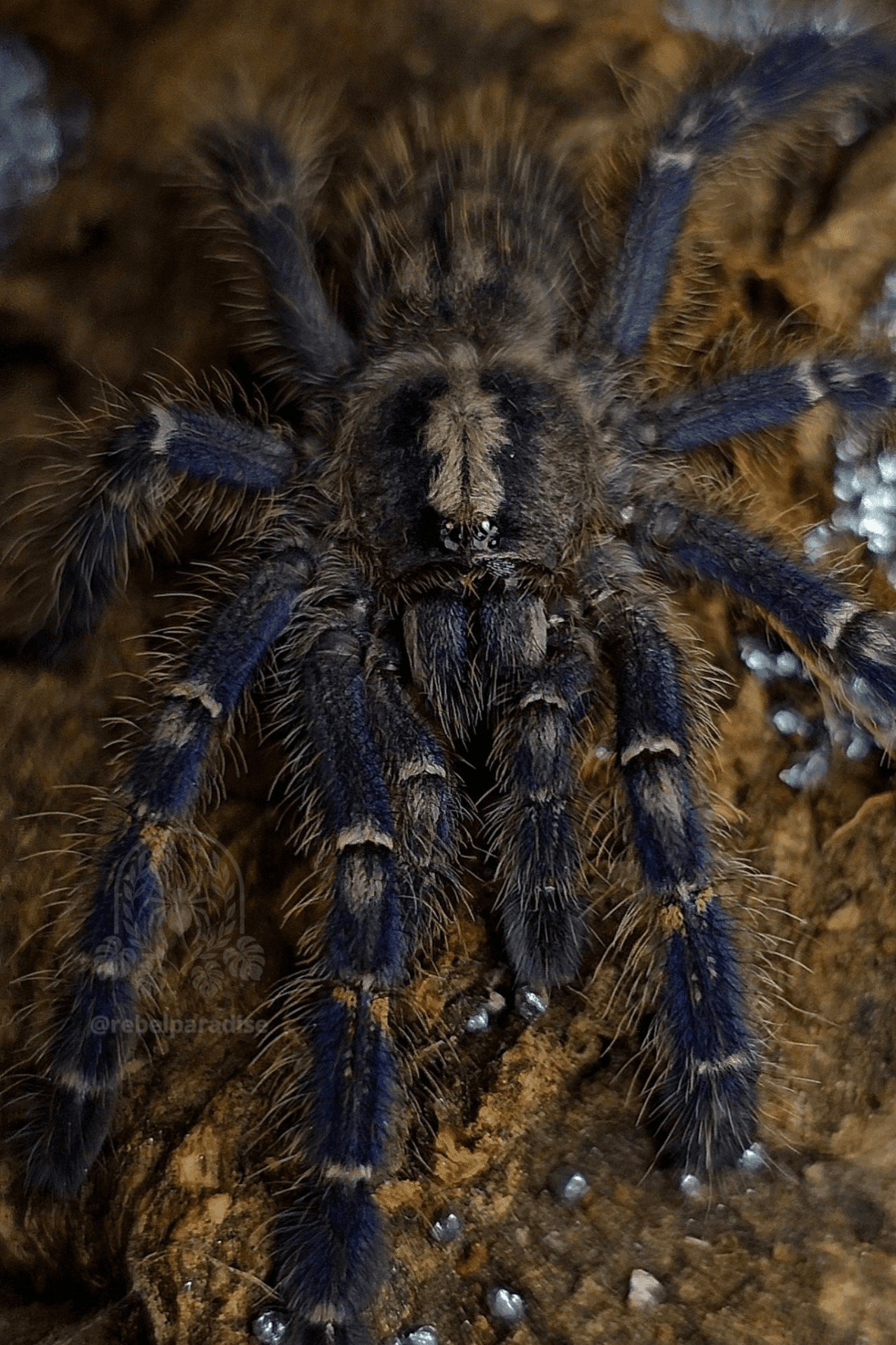 TRUSTED
Poecilotheria metallica female tarantula, 2DC
250.00 PLN
Available: 5 pcs.Female2 cmRebel Paradise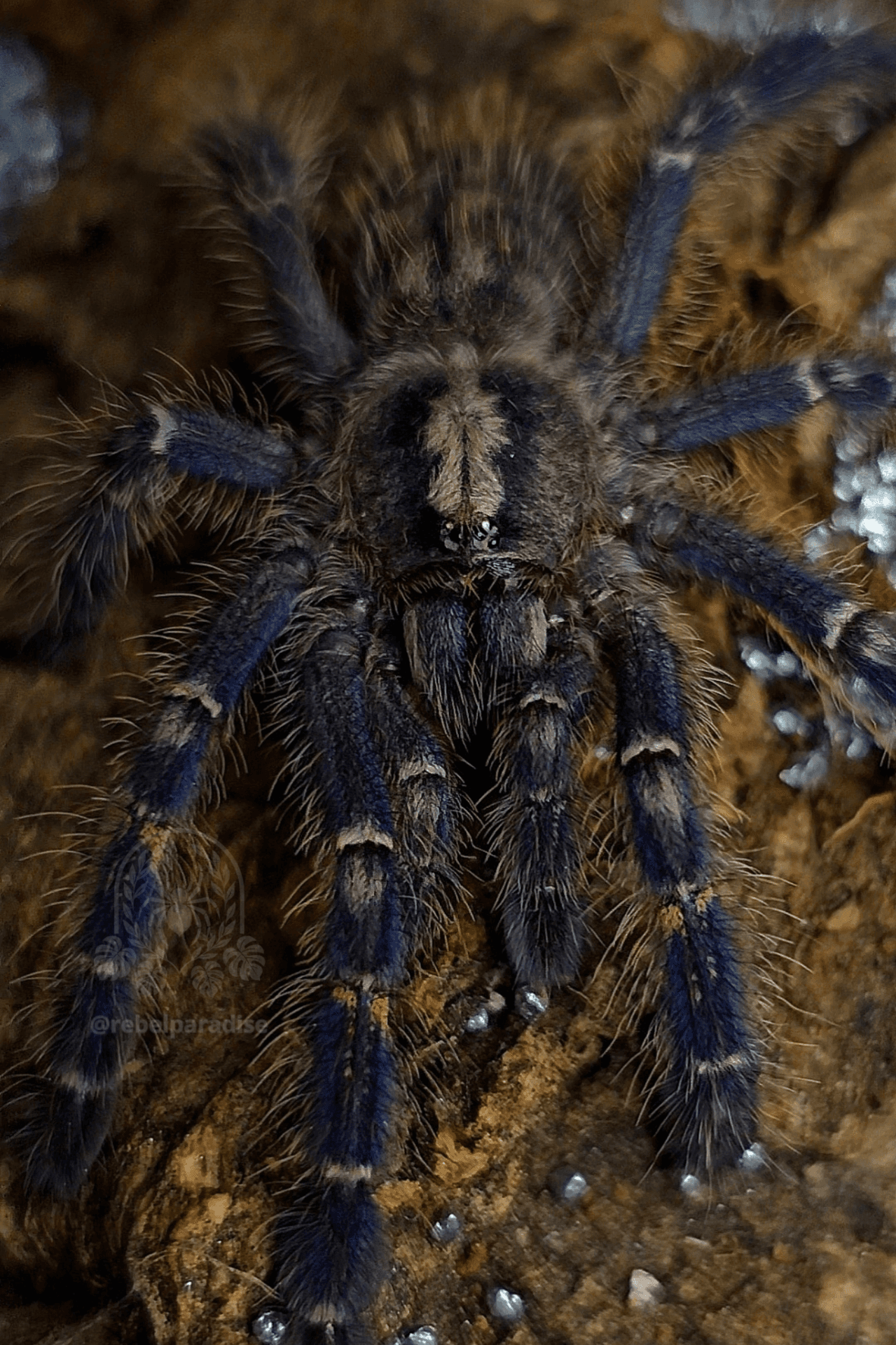 TRUSTED
Poecilotheria metallica Tarantula L4
100.00 PLN
Available: 3 pcs.UnsexedL4Rebel Paradise TRUSTED
Poecilotheria metallica L4
135.00 PLN
Available: 2 pcs.Unsexed1 cmL4SpiderHouse TRUSTED
Poecilotheria metallica 2.5DC male
100.00 PLN
Last piece!Malespidersgodeu
Care at a glance
Size
Leg span approx. 15–18 cm
Enclosure type
Vertical, intended for a fast arboreal species
Substrate
A moderate layer; it need not stay wet, and the surface may dry
Furnishings
Vertical structures for webbing, a retreat above the substrate, and constant access to water
Conditions
Moderate; very good ventilation and the possibility for surfaces to dry
Characteristics
A very fast arboreal species with stronger venom, for experienced keepers only
Care and behaviour
Poecilotheria metallica spends most of its time above the substrate, in tubular web retreats and crevices. The enclosure should be tall and tightly closed, with vertical surfaces (cork, branches) on which the spider can build a hide. Substrate is secondary; anchor points and escape-proofing matter more.
Conditions should remain moderate, with very good ventilation. Web surfaces and décor may dry out; constantly soaking the enclosure does not replace fresh water in a shallow dish. A single rigid temperature or humidity percentage should not be treated as a universal requirement.
When disturbed the species may bolt and leave the retreat quickly. It is not a beginner tarantula. Service work should be planned calmly, with the area around the enclosure secured, and without attempting prolonged handling.
Good to know
Poecilotheria metallica has no urticating hairs. Defence relies on speed and a bite; the venom is stronger than in most popular New World terrestrial tarantulas and can be medically significant. The entire genus Poecilotheria is listed on CITES Appendix II, so cross-border trade may require documents — exact duties depend on the country and transaction type, and this page is not legal advice. IUCN assesses the species as Critically Endangered because of its very restricted range and habitat pressure. Prefer legally sourced captive-bred animals, not specimens of unclear origin.