Kochiana brunnipes
4 active listings · Spiders
Category
Spiders
Origin
Brazil — Northeastern Atlantic Forest (Paraíba / Alagoas)
Lifestyle
Terrestrial
Difficulty
Beginner
Venom potency
Weak
About the species
Kochiana brunnipes is a small terrestrial New World tarantula, the type species of Kochiana. The World Spider Catalog accepts the taxon (C. L. Koch, 1841) and gives the distribution as Brazil. Fukushima, Nagahama and Bertani (2008) transferred it from Avicularia and tied it to fragments of northeastern Atlantic Forest in Paraíba and Alagoas — it is not a species of “all Brazil”. A separate species, Kochiana fukushimae, was described in 2024; do not mix them. Adult females are clearly smaller than Lasiodora: body length is usually about 3–4.5 cm, leg span about 8–11 cm. Urticating hairs and a small size do not make it a generic first tarantula.
Origin and distribution
Brazil — Northeastern Atlantic Forest (Paraíba / Alagoas)
The species is endemic; its range is restricted to Northeastern Atlantic Forest (Paraíba / Alagoas) within Brazil.
Current listings
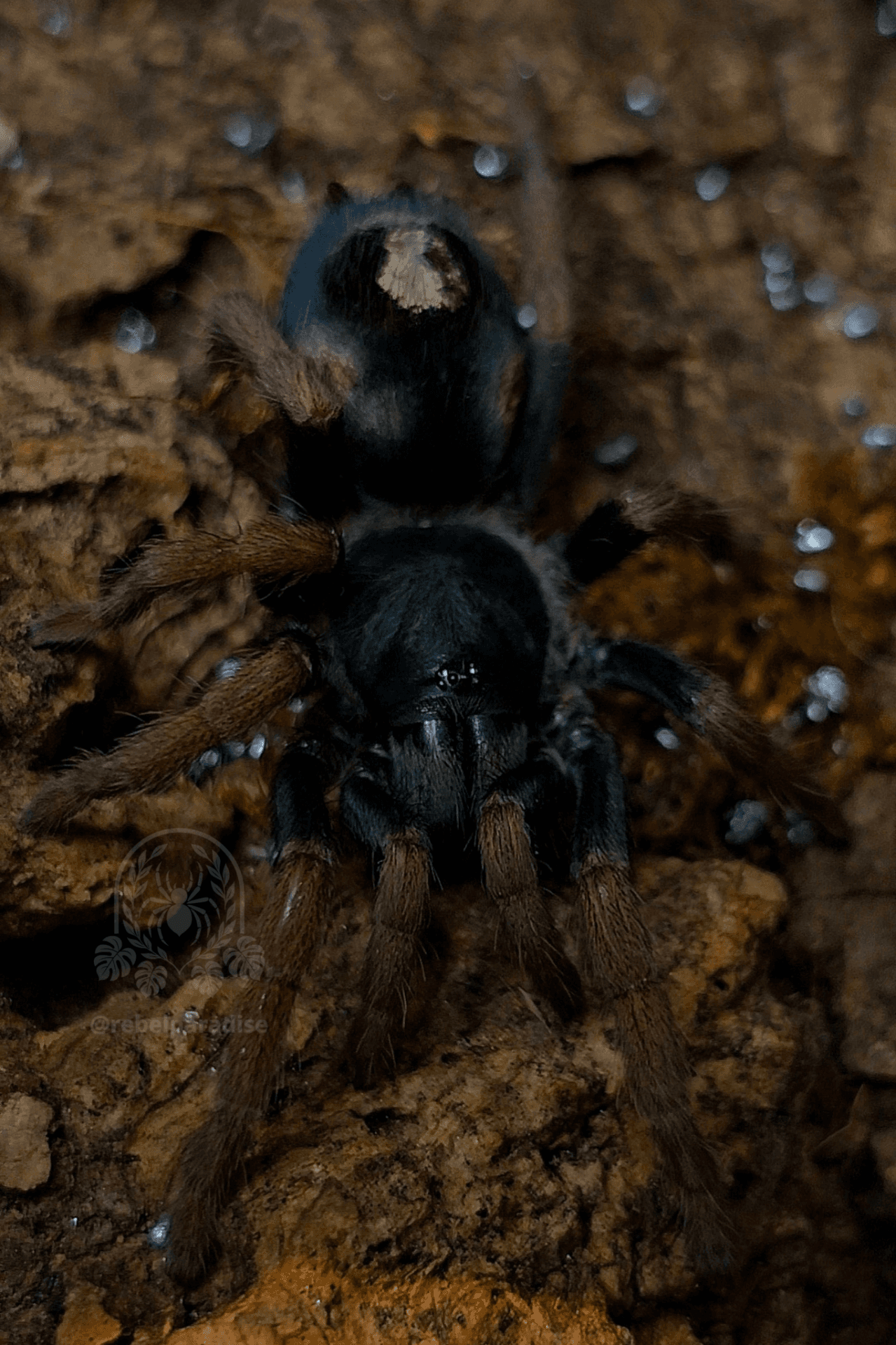 TRUSTED
Kochian's Tarantula (Brunnipes l3)
20.00 PLN
Available: 30 pcs.UnsexedL3Rebel Paradise- TRUSTED
Kochiana brunnipes Tarantula, Female, 2.5DC
80.00 PLN
Available: 3 pcs.FemaleRebel Paradise  TRUSTED
Darling brunnipes Female SubAdult
100.00 PLN
Available: 5 pcs.Femalespidersworld.eu TRUSTED
Kochiana brunnipes L6
30.00 PLN
Available: 2 pcs.UnsexedL6reptilesbrothers.pl
Care at a glance
Size
Females usually about 3–4.5 cm body length; leg span about 8–11 cm
Enclosure type
Low and secure, with deep substrate for a burrow
Substrate
A stable layer for digging; the surface may dry
Furnishings
Cork or a starter hide and constant fresh water
Conditions
Moderate; lower layers more humid, good ventilation
Characteristics
A small, burrowing Atlantic Forest Theraphosinae; not “all Brazil”
Care and behaviour
Kochiana brunnipes digs and uses substrate retreats. The enclosure should be low, deep, and secure first. Cork laid at an angle helps a burrow start. Do not excavate the retreat without reason. Height does not replace a digging layer and raises the risk of a fall.
Atlantic Forest fragments in Paraíba and Alagoas do not mean a permanent swamp in the tank. The surface may dry; lower layers may stay more humid. Constant water in a shallow dish matters more than frequent misting of the décor. One humidity figure does not describe the whole species.
Individuals can be quicker than large, slow Lasiodora and may kick urticating hairs. Do not identify the species from a “dwarf pinkleg” trade label alone, and do not confuse it with Kochiana fukushimae. A small size does not make it a calm stand-in for Mexican redknees.
Good to know
Kochiana brunnipes has urticating hairs typical of many Theraphosinae; contact can irritate skin, eyes, and mucous membranes. The species is not listed on the CITES Appendices. Obligations may depend on the country and transaction; this is not legal advice. Require legally sourced captive-bred animals.