
Avicularia minatrix
2 active listings · Spiders
- Category
- Spiders
- Origin
- Venezuela and Brazil
- Lifestyle
- Arboreal
- Difficulty
- Intermediate
- Venom potency
- Weak
About the species
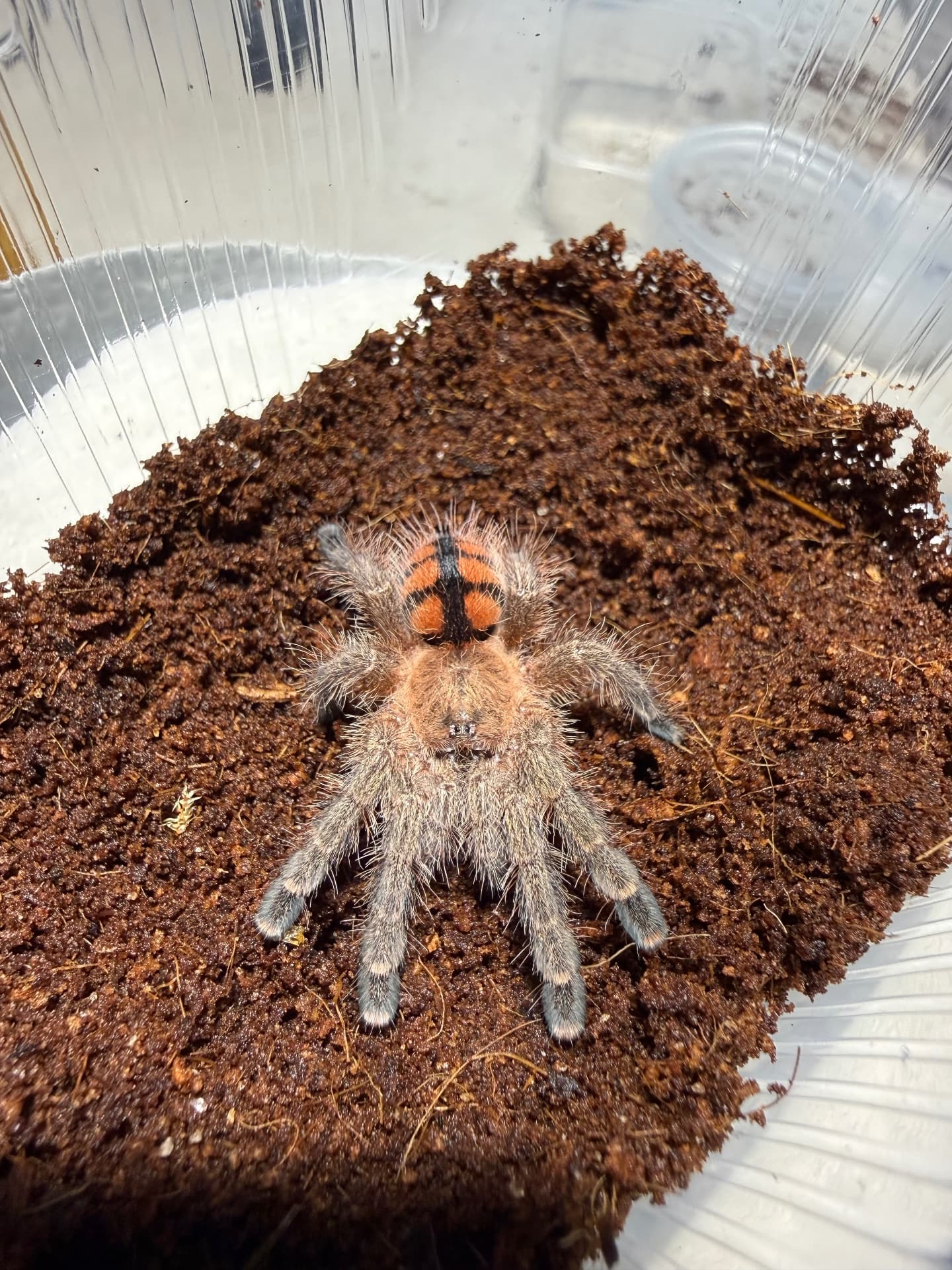
Avicularia minatrix is one of the smaller members of the genus Avicularia, the arboreal “pinktoe” tarantulas. Described by Pocock in 1903 from Duaca in Lara state, Venezuela, it occurs in Venezuela and Brazil according to the World Spider Catalog. It stands out for its black abdomen with vivid orange lateral spots, which according to the 2017 revision by Fukushima and Bertani separates it from other Avicularia. It is calm but skittish and jumpy. Like other Avicularia it does poorly in stale air, so good ventilation is essential.
Care at a glance
Size
A smaller member of the genus, usually about 8–10 cm leg span
Enclosure type
Tall, arboreal, with cross ventilation
Substrate
4–6 cm, mostly dry
Furnishings
Vertical cork, twigs, plants, water dish
Conditions
23–27°C, moderate humidity, very good ventilation
Characteristics
Calm, jumpy, urticating hairs, sensitive to stale air
Current listings

Origin and distribution
Venezuela and Brazil
It occurs naturally in Venezuela and Brazil.
Appearance and size
Body and legs are dark, almost black, and the leg tips show the paler pinkish or orange “toes” typical of Avicularia. The abdomen is the most distinctive feature: black with vivid orange spots along the sides. Juveniles have a bold, contrasting pattern that becomes less striped with age.
It is one of the smaller species of the genus; adult females usually reach a leg span of about 8–10 cm. Males are slimmer and carry tibial hooks after the final moult.
Origin and taxonomy
Pocock described the species in 1903 from a holotype from Duaca in Lara state, Venezuela. In their comprehensive 2017 revision of Avicularia, Fukushima and Bertani updated its range; the World Spider Catalog now lists Venezuela and Brazil.
The same revision moved many former Avicularia species to other genera (including Caribena, Ybyrapora and Typhochlaena). A. minatrix remained in Avicularia.
Enclosure
As an arboreal species it needs height more than floor space. An adult female does well in an enclosure of about 20 × 20 × 30 cm with vertical cork, twigs and plants, among which the spider builds its retreat, usually up high.
Ventilation is key: vents low at the front and high at the back or in the lid keep air moving. Front doors make maintenance easier without disturbing the retreat.
Temperature and humidity
23–27°C is enough. The most common mistake with Avicularia is an overly wet, stuffy enclosure, which encourages disease and moulting problems. Keep the substrate mostly dry and mist part of a wall or the cork every few days so the spider can drink droplets.
A water dish placed higher up or on the substrate is a good addition.
Feeding and growth
Juveniles eat small crickets or roaches every 4–6 days, adults every 7–10 days. The spider catches prey near its retreat, so offer climbing insects or feed with tongs.
Growth is moderate. Males usually mature after about 1.5–2 years, females later.
Behaviour and handling
Avicularia minatrix is usually calm but skittish and may suddenly jump or bolt. It rarely bites; when threatened it may squirt faeces. It has urticating hairs but does not kick them like terrestrial species – it may rub them on contact.
Open the enclosure calmly and keep a catch cup ready. Handling always risks a fall.
Good to know
Avicularia minatrix has urticating hairs that can irritate skin on contact, although it does not actively kick them like terrestrial species. It is jumpy and may escape when the enclosure is opened. It is not listed in the CITES appendices; obligations may depend on the country and the transaction, and this information is not legal advice.
Frequently asked questions
How do I recognise Avicularia minatrix?
By its black abdomen with vivid orange lateral spots. It is one of the smaller Avicularia species.
Is Avicularia minatrix suitable for beginners?
It can be, if you provide good ventilation. The spider is calm but jumpy, and the most common mistake is an overly wet, stuffy enclosure.
What enclosure does Avicularia minatrix need?
A tall one, about 20 × 20 × 30 cm for an adult female, with vertical cork, plants and cross ventilation.
Where does Avicularia minatrix come from?
From Venezuela (around Duaca in Lara state) and Brazil.
Does Avicularia minatrix bite?
Rarely. It usually flees or jumps; in defence it may also squirt faeces.
Similar species
Written by the Terra Market team ·