Avicularia purpurea
Purple Pinktoe
4 active listings · Spiders
Category
Spiders
Origin
Colombia, Ecuador and Peru
Lifestyle
Arboreal
Difficulty
Intermediate
Venom potency
Weak
About the species
Purple Pinktoe (Avicularia purpurea) is an arboreal New World tarantula. The World Spider Catalog accepts the species described by Kirk in 1990 and gives the distribution as Colombia, Ecuador, and Peru. The 2017 Avicularia revision (Fukushima and Bertani) retained northern and southern forms in one species and documents retreats in tree holes, epiphytes, palms, and around buildings. Adult females usually reach about 5–6 cm in body length and about 12–14 cm in leg span. A purple sheen does not make it a calm “pinktoe” for handling — individuals are agile and prone to leave the enclosure.
Origin and distribution
Colombia, Ecuador and Peru
It occurs naturally in Colombia, Ecuador and Peru.
Current listings
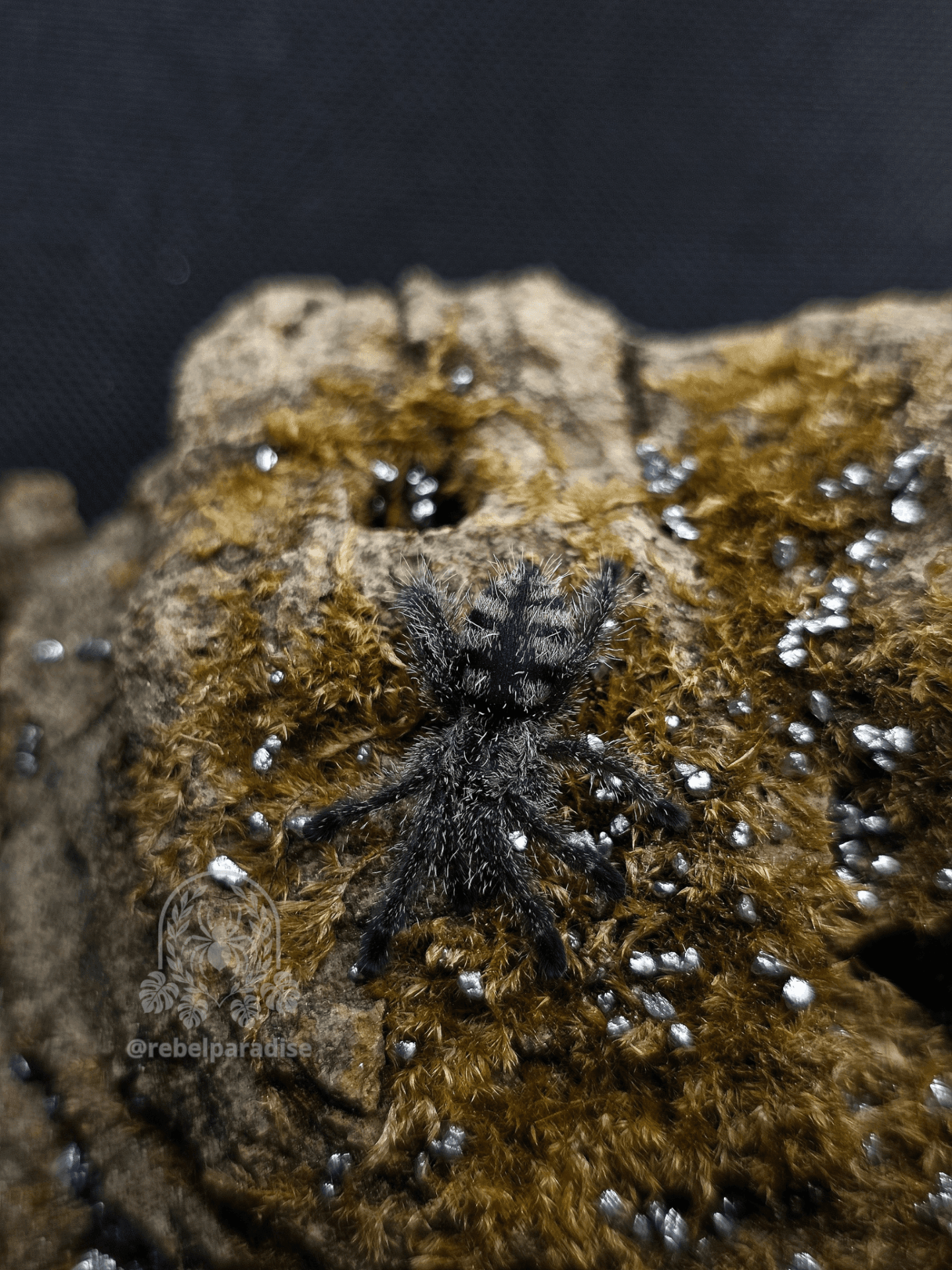 TRUSTED
Avicularia purpurea Tarantula, L3
80.00 PLN
Available: 18 pcs.UnsexedL3Rebel Paradise TRUSTED
Avicularia purpurea L2/L3
79.00 PLN
Available: 10 pcs.UnsexedL2/L3szamatanimals TRUSTED
Avicularia purpurea (1cm) - Purple Pinktoe
90.00 PLN
Available: 8 pcs.Unsexed1 cmspidersworld.eu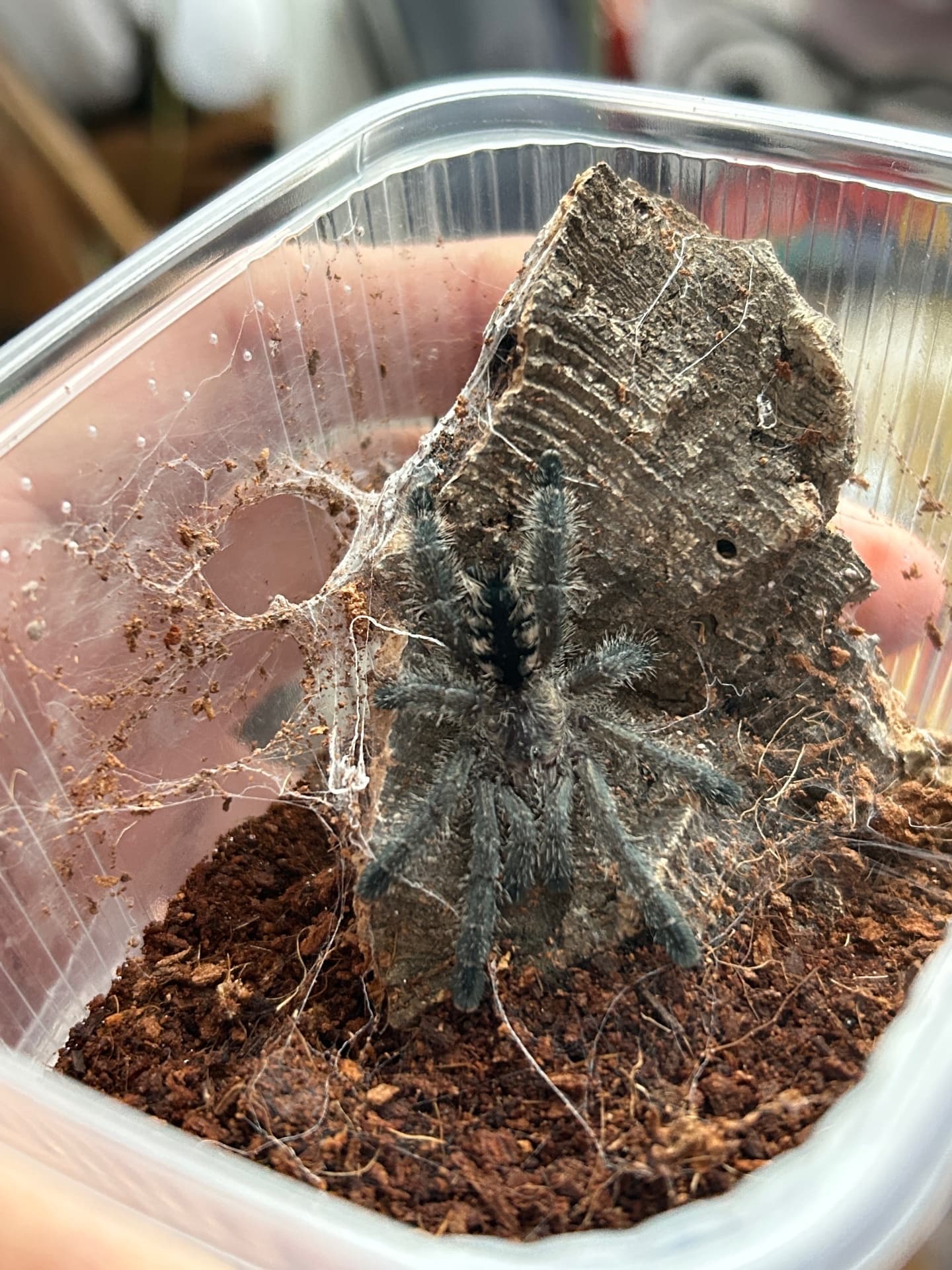 TRUSTED
Avicularia purpurea L3/4
100.00 PLN
Available: 3 pcs.Unsexed1,5/2 cmL3/4tartosik
Care at a glance
Size
Females approx. 5–6 cm body length; leg span approx. 12–14 cm
Enclosure type
Tall, securely closed, intended for an arboreal species
Substrate
A moderate layer; it need not stay constantly wet
Furnishings
Vertical cork or a tube for webbing and constant fresh water
Conditions
Moderate humidity and very good ventilation, without stuffy air
Characteristics
Arboreal, agile, and escape-prone; not a first tarantula
Care and behaviour
Avicularia purpurea spends most of its time in a tubular web retreat above ground. The enclosure should be tall and tightly closed; lid gaps are a common escape route. Vertical cork or a tube gives a start, but the spider chooses the retreat site. Floor area matters less than height and security.
Humidity should go with air movement. Persistent, stuffy vapour favours moult problems and mould more than a short drier spell. A shallow water dish and occasional, localized misting of cork are safer than daily flooding of the tank. Do not treat one humidity figure as a standard for the whole genus Avicularia.
Individuals often react to an opened lid by leaving quickly rather than by a threat display. Plan maintenance with the surroundings secured, and do not try to “calm” the spider in the hand. After a moult the purple tone can be lighter or darker — colour alone does not authenticate the species.
Good to know
Avicularia purpurea has urticating hairs typical of many New World tarantulas; contact can irritate skin, eyes, and mucous membranes. The species is not listed on the CITES Appendices (do not confuse this with proposals covering other Avicularia). Obligations may depend on the country and transaction; this is not legal advice. Prefer legally sourced captive-bred animals.