Psalmopoeus irminia
Venezuelan Suntiger
7 active listings · Spiders
Category
Spiders
Origin
Venezuela, Guyana and Brazil
Lifestyle
Arboreal
Difficulty
Intermediate
Venom potency
Medium
About the species
Venezuelan Suntiger (Psalmopoeus irminia) is an arboreal tarantula whose accepted World Spider Catalog distribution includes Venezuela, Guyana, and Brazil. Adults usually reach about 12–14 cm in leg span. The abdomen and legs show a contrasting, often fiery orange pattern on a darker background. Geographically this is a New World species, but like other Psalmopoeinae it lacks typical urticating hairs; defence relies on speed, a web retreat, and a readiness to bite.
Origin and distribution
Venezuela, Guyana and Brazil
It occurs naturally in Venezuela, Guyana and Brazil.
Current listings
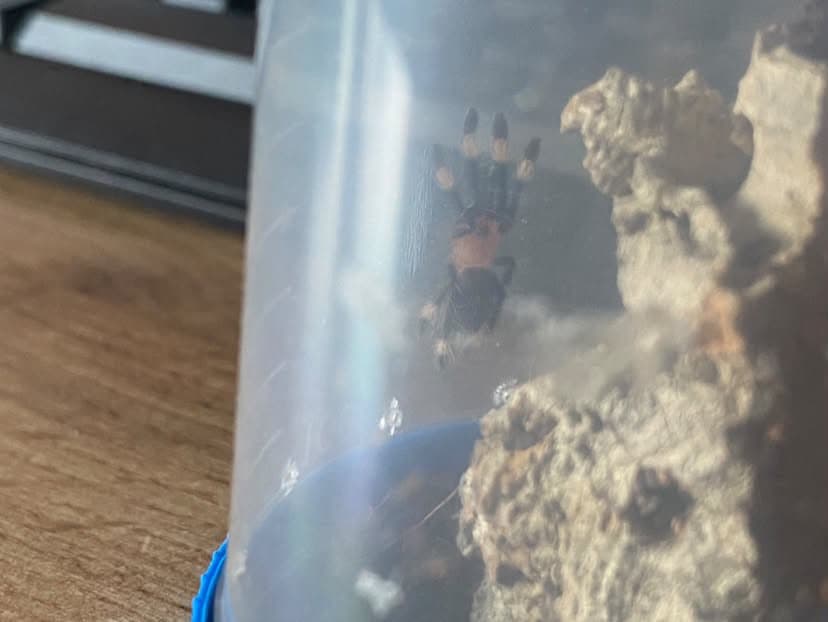
Psalmopoeus irminia L3
1.00 PLN
Last piece!UnsexedL3nikola0nikola123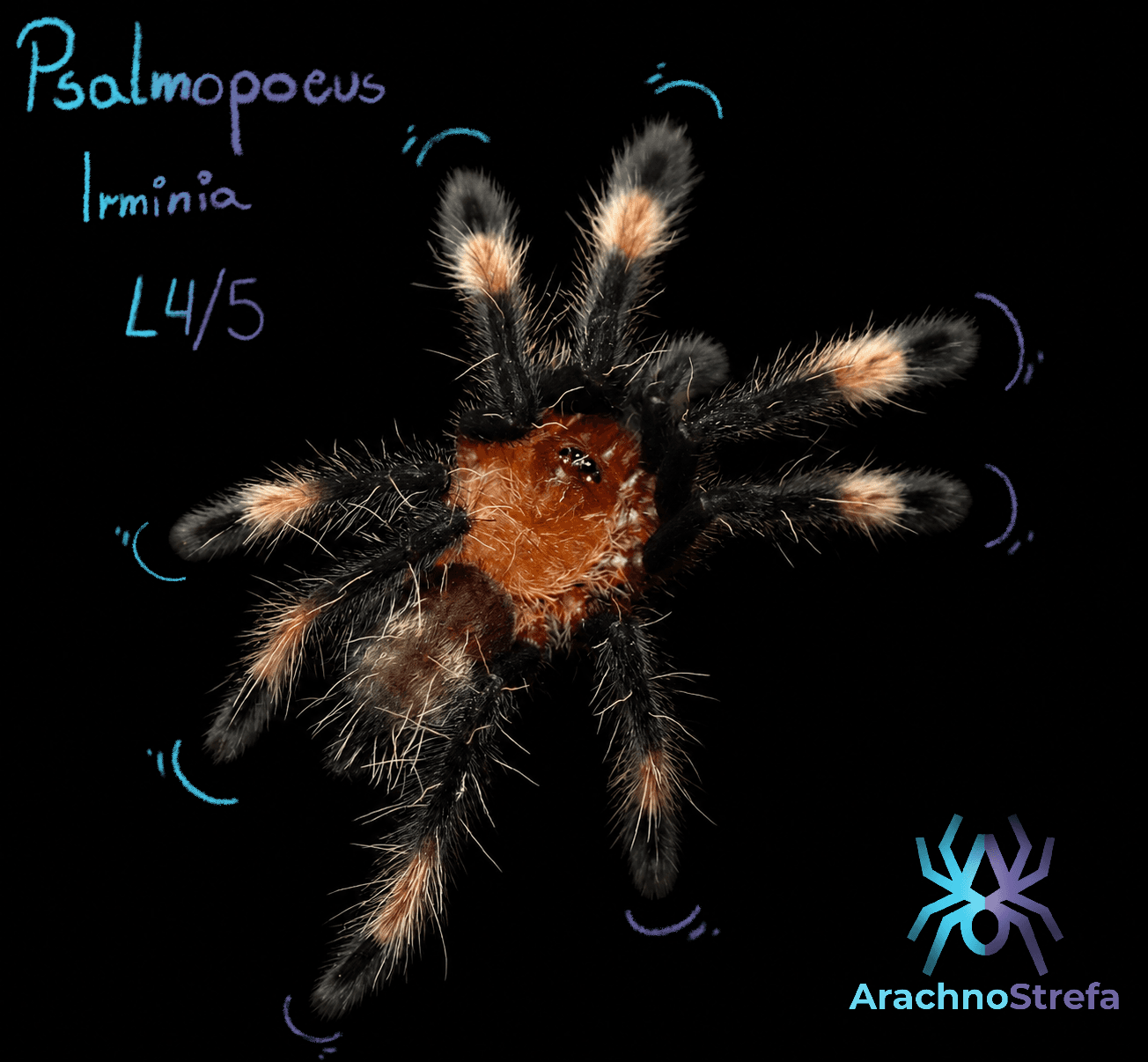 TRUSTED
Psalmopoeus Irminia tarantula
30.00 PLN
Available: 5 pcs.UnsexedL4/L5ArachnoStrefa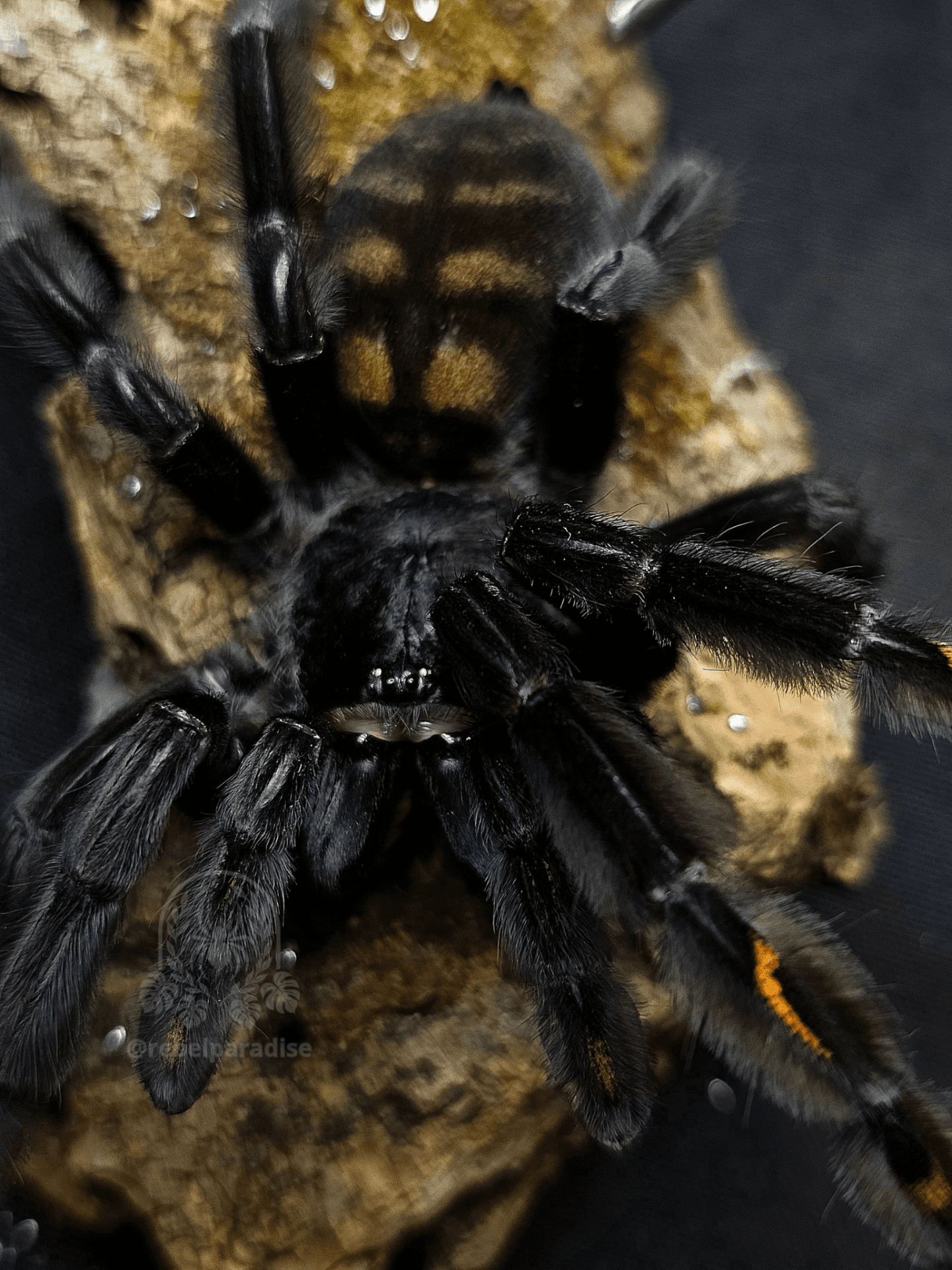 TRUSTED
Psalmopoeus irminia L3 tarantula
20.00 PLN
Available: 10 pcs.UnsexedL3Rebel Paradise TRUSTED
Psalmopoeus irminia (1.5 cm)
20.00 PLN
Available: 4 pcs.1,5 cmspidersworld.eu TRUSTED
Psalmopoeus irminia L3
25.00 PLN
Available: 5 pcs.UnsexedL3spidersgodeu TRUSTED
Psalmopoeus irminia L2
20.00 PLN
Available: 5 pcs.UnsexedL2spidersgodeu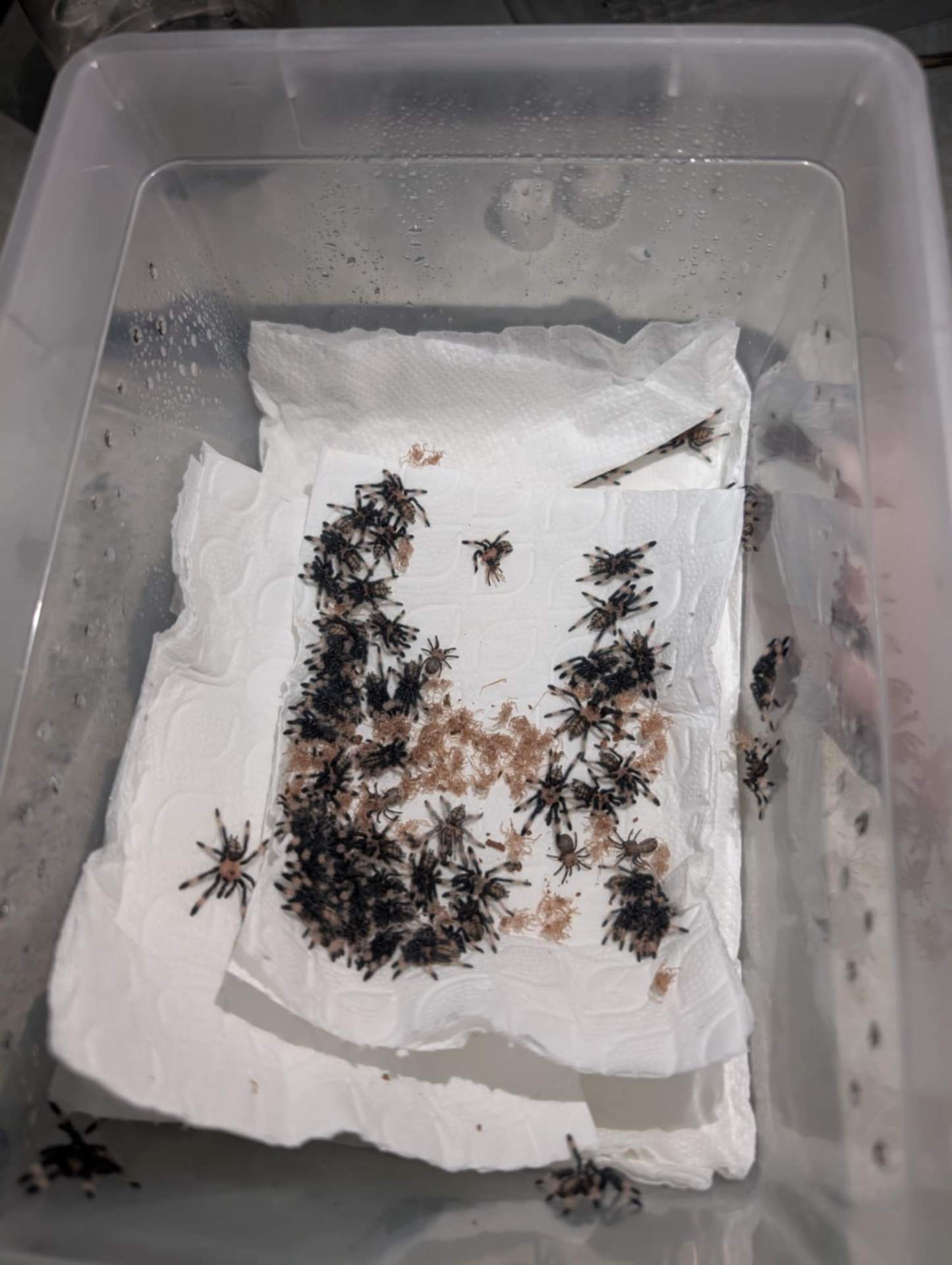 TRUSTED
Psalmopoeus irminia L2
12.00 PLN
Available: 10 pcs.UnsexedL2hellspiders
Care at a glance
Size
Leg span approx. 12–14 cm
Enclosure type
Vertical, for a fast arboreal species
Substrate
A moderate layer; the surface may dry, the lower parts slightly more humid
Furnishings
Vertical cork or branches for webbing, a retreat above the substrate, and constant access to water
Conditions
Moderate; very good ventilation, without a stuffy, constantly wet atmosphere
Characteristics
A fast arboreal species without urticating hairs, requiring careful handling of the enclosure
Care and behaviour
Psalmopoeus irminia spends most of its time in webbing built on vertical surfaces, often in a bark crevice or in the upper corners of the enclosure. The tank should be tall, tight-fitting, and fitted with stable structures for silk. Substrate does not replace the retreat; the spider may still come lower, especially as a juvenile.
Conditions should be moderate, with clear ventilation. A slight moisture gradient (drier surface, slightly moister lower layers) is safer than constantly misting the entire décor. Fresh water in a dish is constant, even when the web looks dry.
The species moves fast and may leave the retreat abruptly. It is not a typical calm terrestrial tarantula for beginners, though it is often rated intermediate rather than extreme. Service work should be planned, with the surroundings secured and without attempts to pin the animal for long.
Good to know
Psalmopoeus irminia lacks the urticating hairs typical of many New World terrestrial Theraphosinae. Defensive behaviour resembles Old World tarantulas: a fast run and a bite. Venom is catalogued as medium — stronger than in many slow terrestrial species, but not in the same class as the most potent arboreal Poecilotheria. The species is not listed on the CITES Appendices; local rules may still apply. This page is not legal advice.