Psalmopoeus cambridgei
Trinidad Chevron
4 active listings · Spiders
Category
Spiders
Origin
Trinidad and Tobago
Lifestyle
Arboreal
Difficulty
Intermediate
Venom potency
Medium
About the species
Trinidad Chevron (Psalmopoeus cambridgei) is an arboreal tarantula, the type species of Psalmopoeus (Pocock, 1895). The World Spider Catalog gives the distribution as Trinidad and Tobago. Some accounts tie wild populations mainly to Trinidad; that does not extend the range onto mainland Venezuela. Adult females usually reach about 5–6 cm in body length and about 13–16 cm in leg span. Geographically this is a New World species, but like other Psalmopoeinae it lacks typical urticating hairs; defence relies on speed, a web retreat, and a readiness to bite. It is not a calm arboreal first tarantula.
Origin and distribution
Trinidad and Tobago
The species is endemic to Trinidad and Tobago.
Current listings
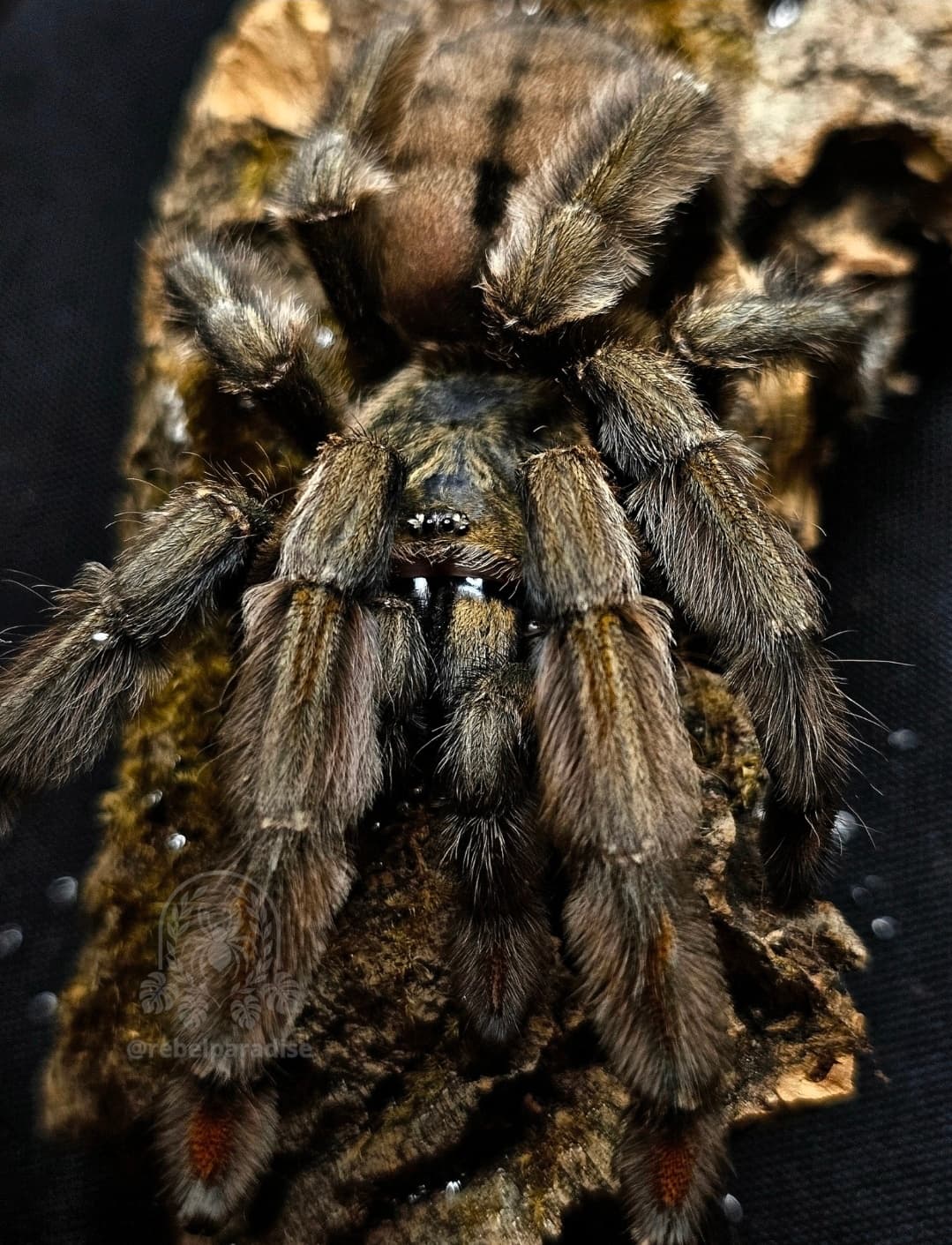 TRUSTED
Psalmopoeus cambridgei L3 tarantula
20.00 PLN
Available: 10 pcs.UnsexedL3Rebel Paradise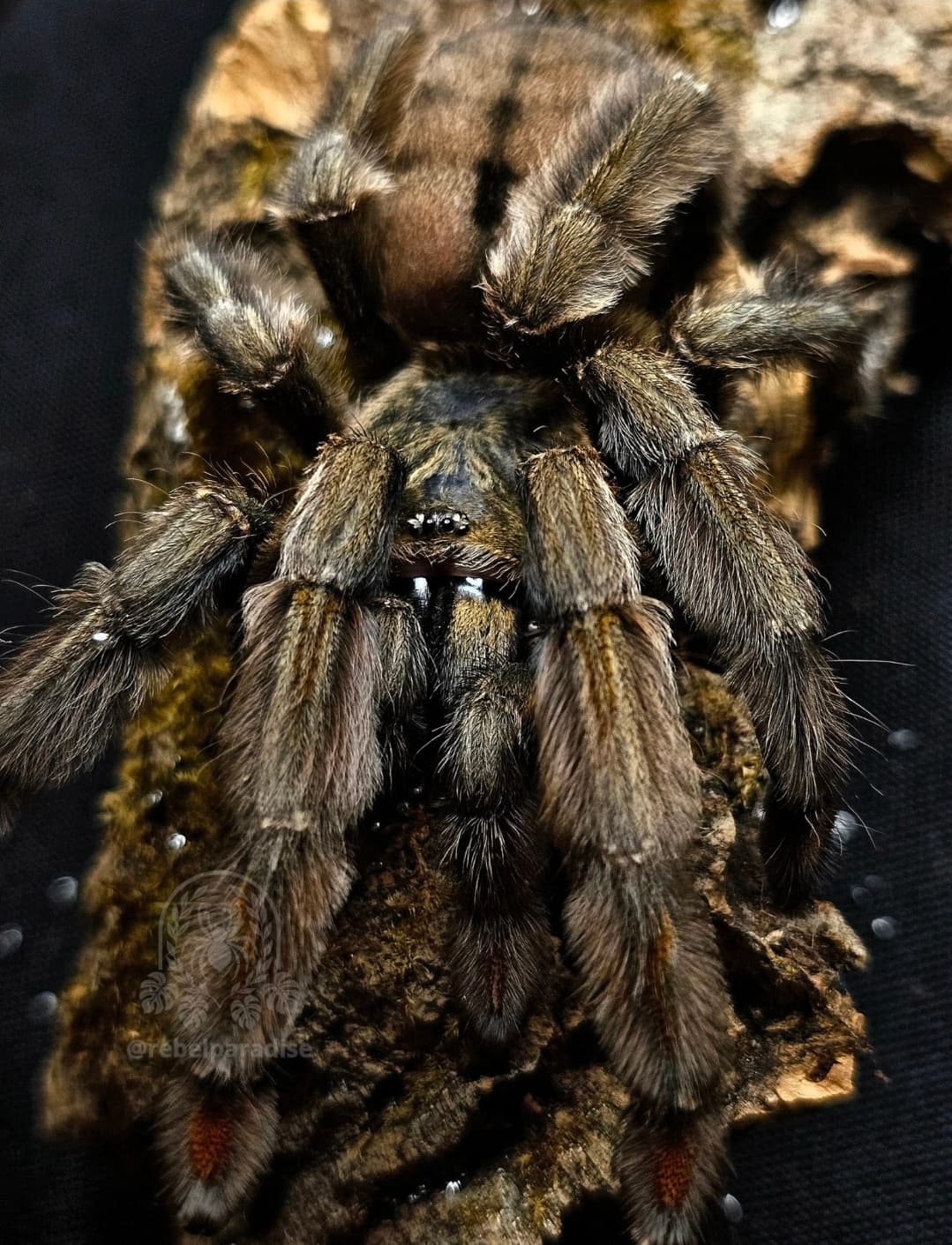 TRUSTED
Female Psalmopoeus cambridgei tarantula, 3DC
120.00 PLN
Available: 10 pcs.FemaleRebel Paradise TRUSTED
P.Cambridgei
150.00 PLN
Last piece!FemaleDonRenice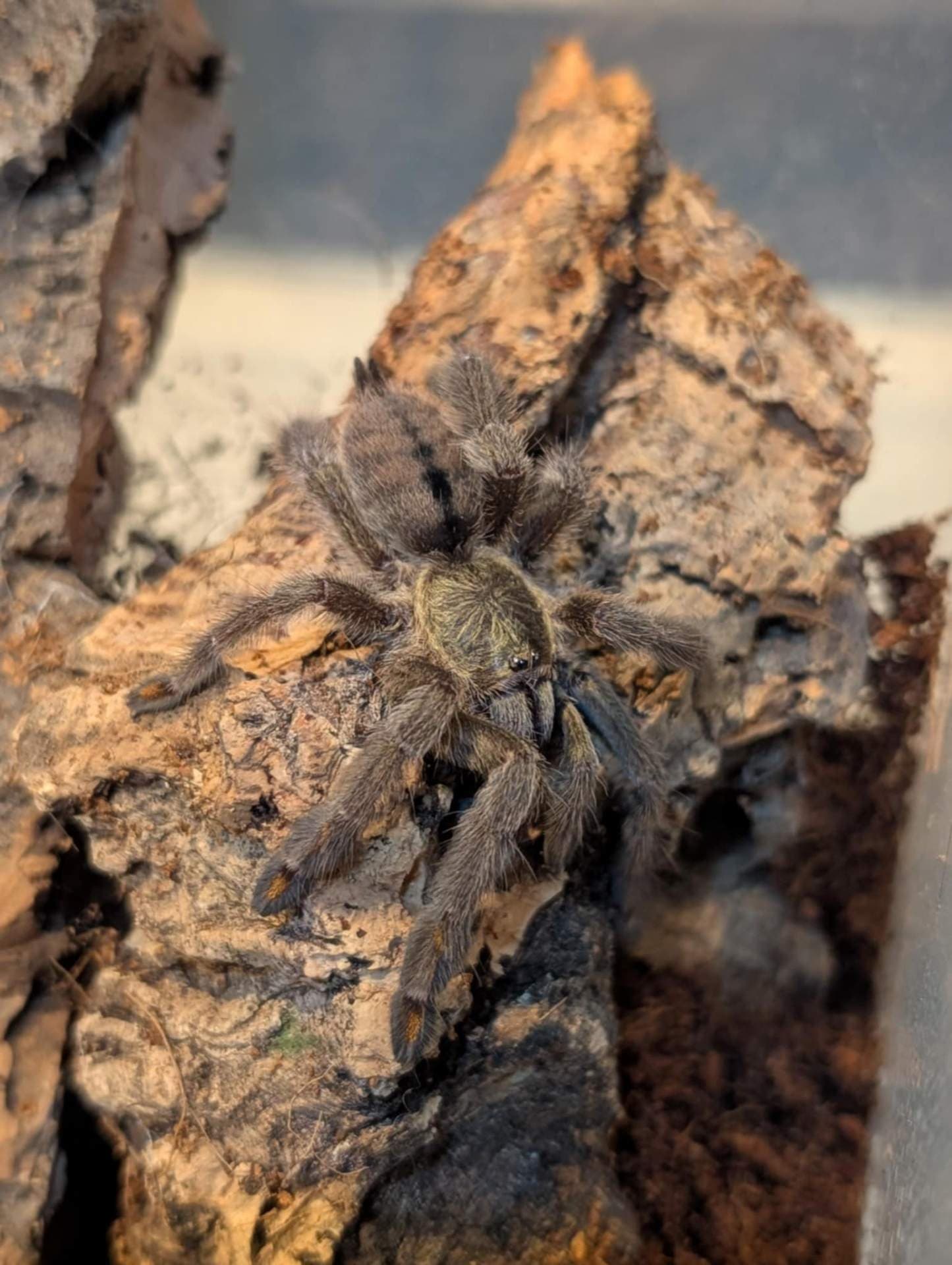 TRUSTED
Psalmopoeus cambridgei L4
15.00 PLN
Available: 3 pcs.UnsexedL4hellspiders
Care at a glance
Size
Females usually about 5–6 cm body length; leg span about 13–16 cm
Enclosure type
Vertical and secure, for a fast arboreal species
Substrate
A moderate layer; the surface may dry, the lower parts slightly more humid
Furnishings
Vertical cork or branches for webbing, a retreat above the substrate, and constant water
Conditions
Moderate; very good ventilation, without a stuffy, constantly wet atmosphere
Characteristics
A fast arboreal Psalmopoeinae without urticating hairs; not for beginners
Care and behaviour
Psalmopoeus cambridgei spends most of its time in webbing on vertical surfaces, often in a bark crevice or in the upper part of the enclosure. The tank should be tall, tight-fitting, and opened with an escape plan. Substrate does not replace the retreat; juveniles may sit lower, but adults do not switch from arboreal life to terrestrial burrows.
A Caribbean climate does not mean permanent steam. A slight moisture gradient and clear ventilation are safer than constantly misting the entire décor. Fresh water in a shallow dish remains constant, even when the web looks dry. One humidity figure does not describe all of Trinidad and Tobago.
The species moves fast and may leave the retreat abruptly. Do not treat it as a calm Avicularia or as irminia with the same temperament. Plan service work with the surroundings secured and without pinning the animal for long. This is a watch-only species for keepers who already handle fast arboreal Psalmopoeinae.
Good to know
Psalmopoeus cambridgei lacks the urticating hairs typical of many New World terrestrial Theraphosinae. Defensive behaviour resembles Old World tarantulas: a fast run and a bite. Venom is usually rated medium — stronger than in many slow terrestrial species, but not in the class of the most potent Poecilotheria. The species is not listed on the CITES Appendices; local rules may still apply. This page is not legal advice.