Davus pentaloris
Guatemalan Tiger Rump
4 active listings · Spiders
Category
Spiders
Origin
Mexico, Guatemala, El Salvador and Honduras
Lifestyle
Terrestrial
Difficulty
Beginner
Venom potency
Weak
About the species
Guatemalan Tiger Rump (Davus pentaloris) is a terrestrial New World tarantula of Central America. The World Spider Catalog accepts the species (Simon, 1888) and gives Mexico, Guatemala, El Salvador, and Honduras. Estrada-Alvarez (2014) transferred it from Cyclosternum to Davus; Gabriel (2016) synonymized Davus mozinno. Candia-Ramírez and Francke (2021) document unexpected variation in the striped abdomen across a wide range — it is not one hobby pattern. Adult females are clearly smaller than Brachypelma: body length is usually about 4–5 cm, leg span about 10–12 cm. Tiger banding and urticating hairs do not make it a calm stand-in for Mexican redknees.
Origin and distribution
Mexico, Guatemala, El Salvador and Honduras
It occurs naturally in Mexico, Guatemala, El Salvador and Honduras.
Current listings
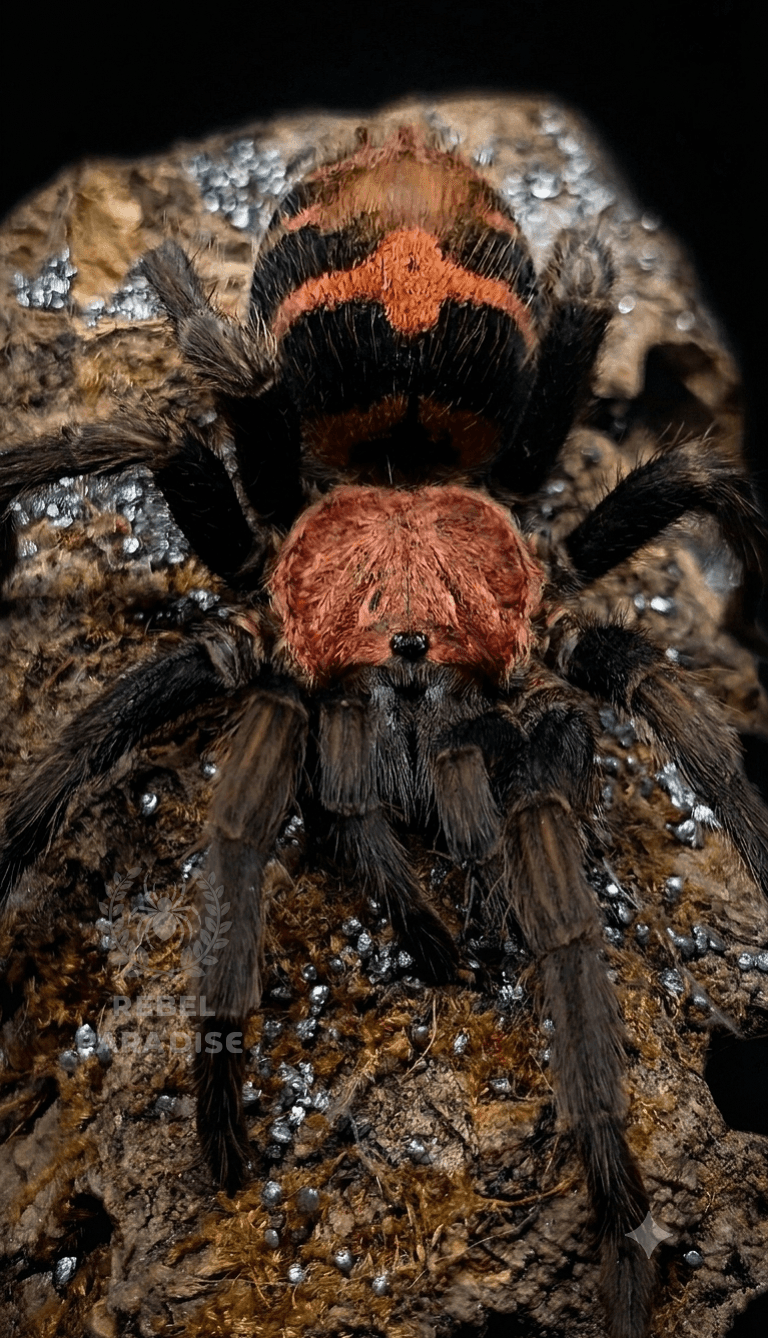 TRUSTED
Female Davus pentaloris Tarantula 3DC
100.00 PLN
Available: 10 pcs.FemaleRebel Paradise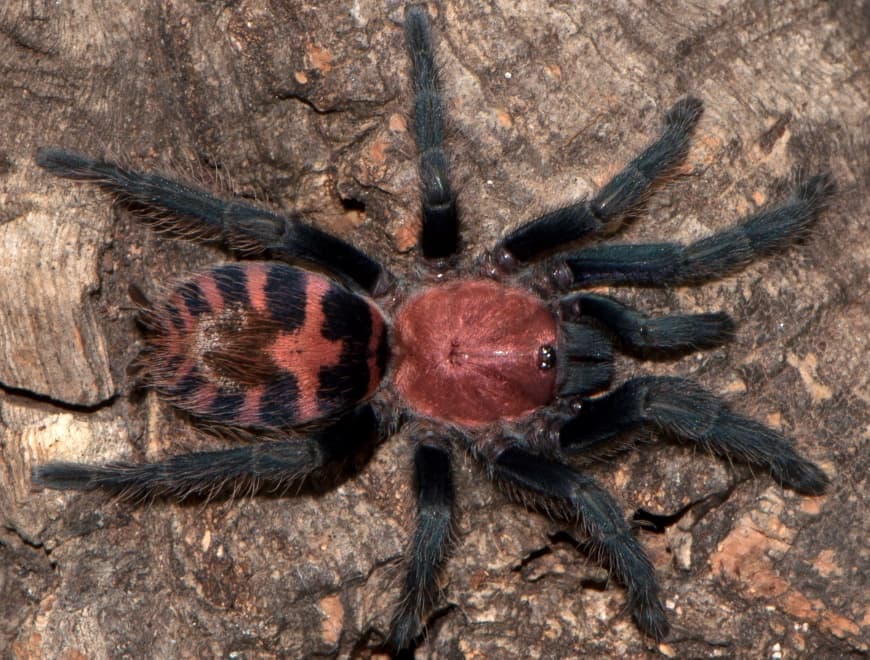 TRUSTED
Davus pentaloris (1cm) - Tiger birdwort
18.00 PLN
Available: 10 pcs.Unsexed1 cmspidersworld.eu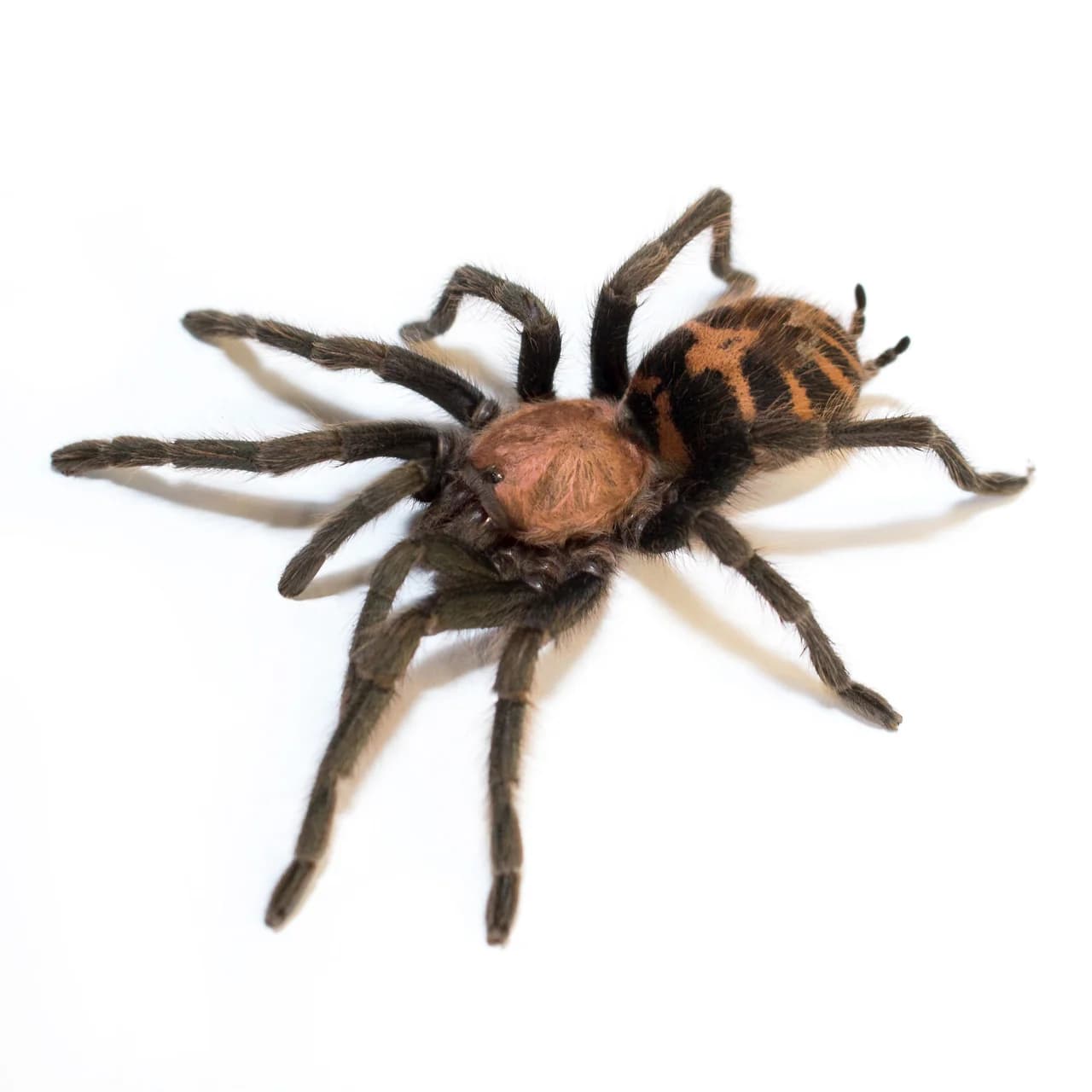 TRUSTED
Davus pentaloris L4
25.00 PLN
Available: 15 pcs.UnsexedL4reptilesbrothers.pl- TRUSTED
Davus pentaloris L5
30.00 PLN
Available: 10 pcs.UnsexedL5reptilesbrothers.pl
Care at a glance
Size
Females usually about 4–5 cm body length; leg span about 10–12 cm
Enclosure type
Horizontal, with deep substrate for a burrow, not tall
Substrate
A stable layer for digging; the surface may dry
Furnishings
Cork or a starter hide and constant fresh water
Conditions
Moderate; lower layers more humid, good ventilation
Characteristics
A quicker, burrowing Theraphosinae; not a calm first Brachypelma
Care and behaviour
Davus pentaloris digs and uses substrate retreats more than typical slow Brachypelma. The enclosure should be deep and secure first. Cork laid at an angle helps a burrow start. Do not excavate the retreat without reason. Height does not replace a digging layer.
The range from Mexico to Honduras covers varied microhabitats, so do not keep the tank as a permanently wet jungle or as a desert. The surface may dry; lower layers may stay more humid. Constant water in a shallow dish matters more than frequent misting. One humidity figure does not describe the whole species.
Growth can be faster than in emilia or hamorii, and individuals may bolt and kick urticating hairs. Abdominal striping varies — do not identify the species from a single “tiger rump” photo. Urticating hairs alone do not make it a generic New World beginner tarantula.
Good to know
Davus pentaloris has urticating hairs typical of many Theraphosinae; contact can irritate skin, eyes, and mucous membranes. The species is not listed on the CITES Appendices. Obligations may depend on the country and transaction; this is not legal advice. Require legally sourced captive-bred animals. The trade name “Guatemalan tiger rump” does not restrict the range to Guatemala.