Amazonius burgessi
Ghost Tree Spider
4 active listings · Spiders
Category
Spiders
Origin
Venezuela, Colombia and Peru
Lifestyle
Arboreal
Difficulty
Intermediate
Venom potency
Weak
About the species
Ghost Tree Spider (Amazonius burgessi) is an arboreal Psalmopoeinae tarantula of Amazonian lowlands, not an Aviculariinae pinktoe. Hüsser described it in 2018 as Pseudoclamoris burgessi; Cifuentes and Bertani (2022) transferred it to Amazonius. The World Spider Catalog currently treats burgessi as a junior synonym of Amazonius subcaeruleus (Bauer and Antonelli, 1997; Peñaherrera-R. et al., 2025) and lists Venezuela, Colombia, and Peru for the burgessi combination. On Terra Market the catalog identity remains Amazonius burgessi. Adult females are clearly smaller than typical Avicularia: body length is usually about 4–5 cm. Grey, “ghostly” setae do not make it a calm pinktoe — individuals are agile and escape-prone.
Origin and distribution
Venezuela, Colombia and Peru
It occurs naturally in Venezuela, Colombia and Peru.
Current listings
 TRUSTED
Amazonian Tarantula (Amazonius germani) L3
20.00 PLN
Available: 10 pcs.UnsexedL3Rebel Paradise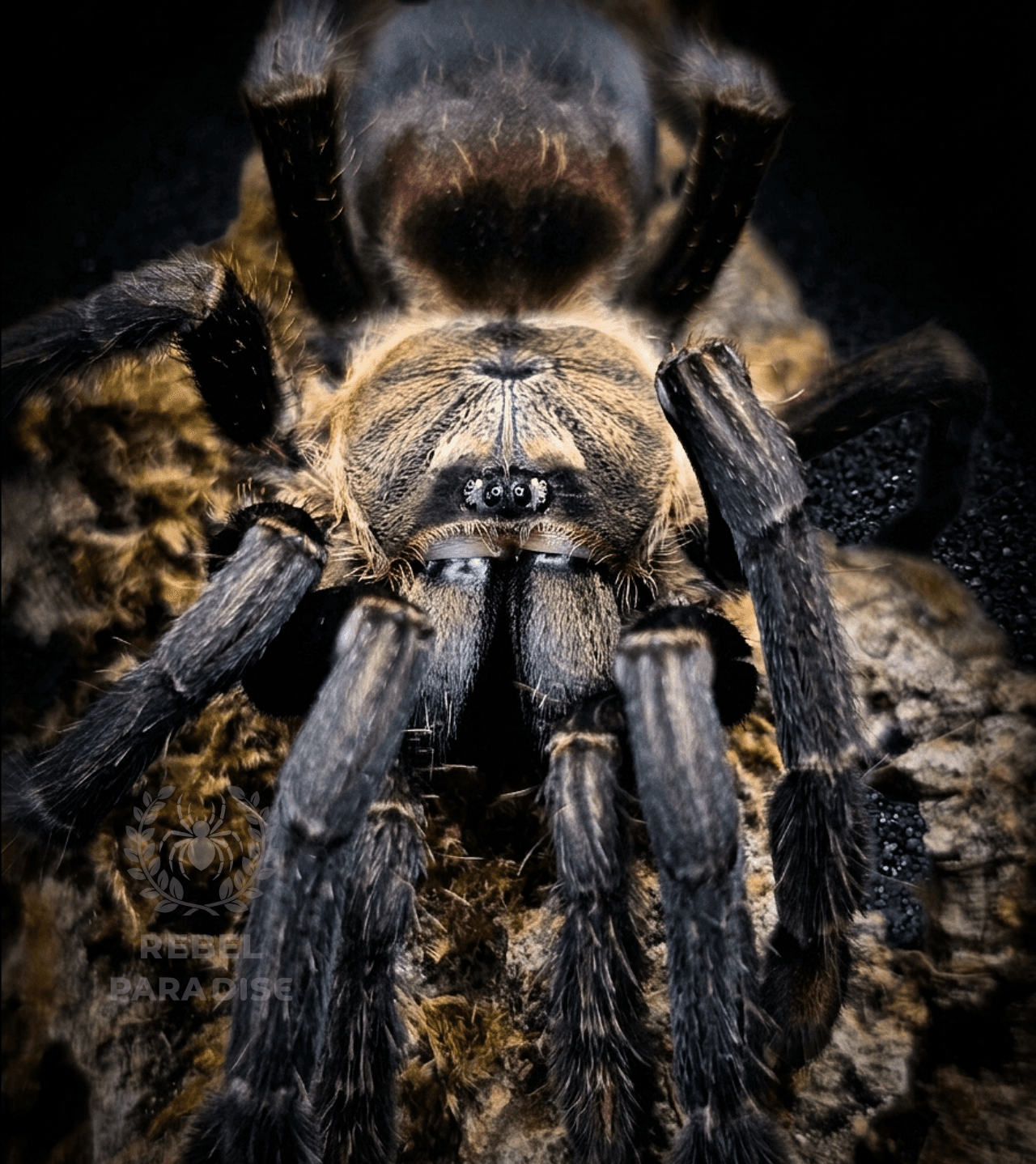 TRUSTED
Amazonian Tarantula (Amazonius burgessi) L3
40.00 PLN
Available: 2 pcs.UnsexedL3Rebel Paradise TRUSTED
Amazonius burgessi (arboreal birder) - for the intermediate
45.00 PLN
Available: 6 pcs.UnsexedL4reptilesbrothers.pl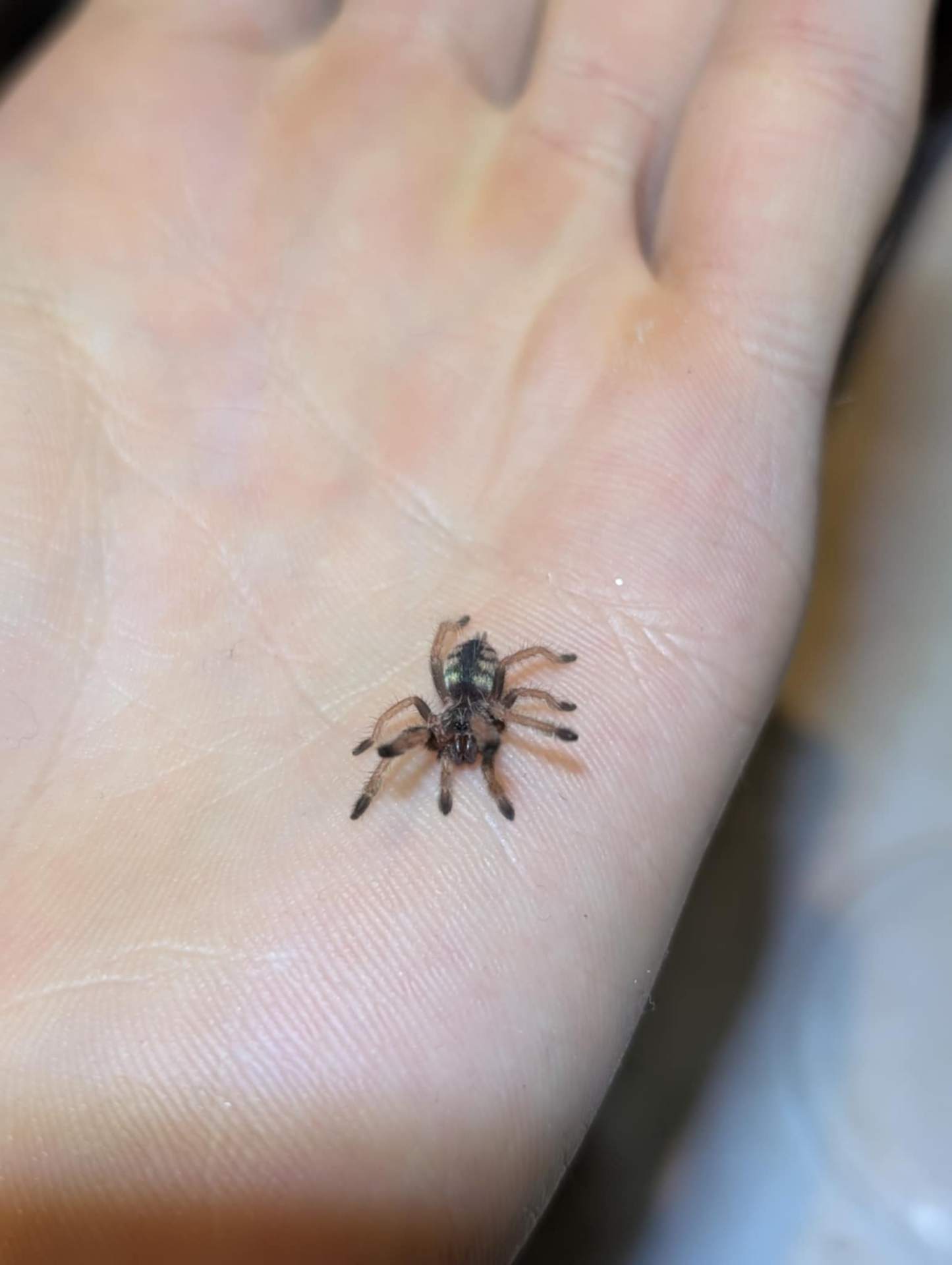 TRUSTED
Amazonius burgessi L3
35.00 PLN
Available: 5 pcs.UnsexedL3hellspiders
Care at a glance
Size
Females usually about 4–5 cm body length; a smaller arboreal Psalmopoeinae
Enclosure type
Tall, securely closed, for an arboreal species with a web retreat
Substrate
A moderate layer; it need not stay constantly wet
Furnishings
Vertical cork or a tube for webbing and constant fresh water
Conditions
Moderate humidity with very good ventilation, without stuffy air
Characteristics
Arboreal, agile Psalmopoeinae; not a first tarantula
Care and behaviour
Amazonius burgessi spends most of its time in a tubular web retreat on vertical surfaces, more like Tapinauchenius and Psalmopoeus than a terrestrial Avicularia in a low tank. The enclosure should be tall and tightly closed; lid gaps are an escape route. Vertical cork gives a start, but the spider chooses the retreat site.
Humidity must go with air movement. Persistent, stuffy vapour favours moult problems more than a short drier spell. A shallow water dish and occasional misting of cork are safer than flooding the floor. Do not copy rigid humidity figures from Avicularia or Caribena.
Individuals react quickly when the enclosure is opened and may leave the retreat without a threat display. Psalmopoeinae lack typical urticating hairs; defence relies on speed and a bite. Plan maintenance with the surroundings secured. This is not a calm arboreal first tarantula.
Good to know
Amazonius burgessi lacks the typical urticating hairs of Psalmopoeinae. Treat a bite seriously; this page is not medical advice. The species is not listed on the CITES Appendices. Obligations may depend on the country and transaction; this is not legal advice. Require legally sourced captive-bred animals. Do not confuse the catalog identity Amazonius burgessi with a separate Amazonius subcaeruleus row.