Chilobrachys natanicharum
Electric Blue
4 active listings · Spiders
Category
Spiders
Origin
Thailand — Southern Thailand (type locality area)
Lifestyle
Fossorial
Difficulty
Advanced
Venom potency
Strong
About the species
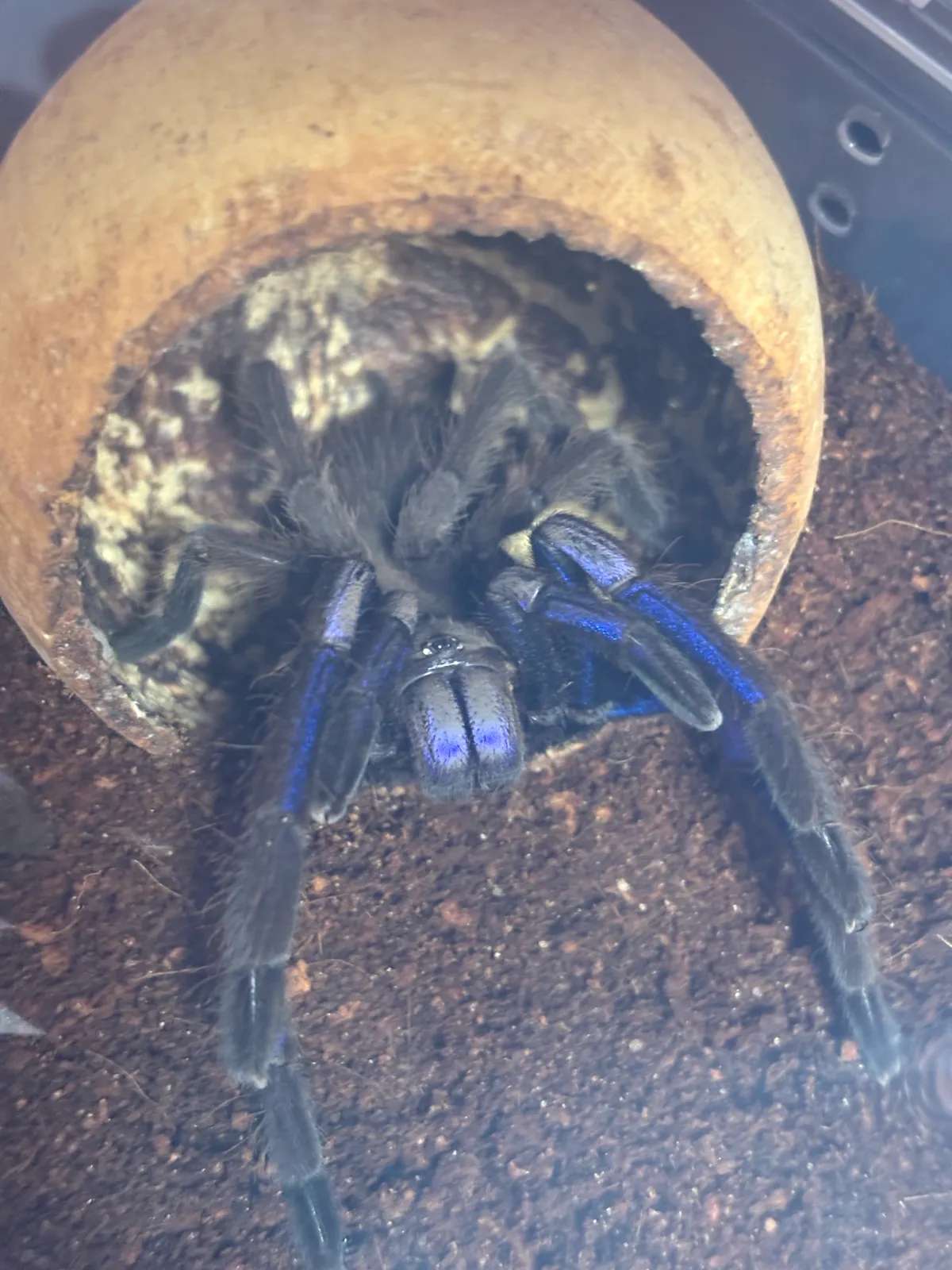
Electric Blue (Chilobrachys natanicharum) is an Old World tarantula endemic to Thailand. The World Spider Catalog accepts the species described in 2023; it was previously sold as Chilobrachys sp. “Electric Blue”. The authors report mangrove and evergreen forest in Phang Nga Province, where the spiders use both ground burrows and tree hollows. Adult females usually reach about 5–7 cm in body length and about 13–16 cm in leg span. Metallic blue setae, especially after a moult, do not change the fact that this is a fast, defensive species without urticating hairs.
Origin and distribution
Thailand — Southern Thailand (type locality area)
The species is endemic; its range is restricted to Southern Thailand (type locality area) within Thailand.
Current listings
 TRUSTED
Chilobrachys "Electric Blue" Female Tarantula 3DC
150.00 PLN
Available: 10 pcs.FemaleRebel Paradise TRUSTED
Chilobrachys natanicharum Female (7 cm)
250.00 PLN
Last piece!Female7 cmspidersworld.eu TRUSTED
Chilobrachys natanicharum 4/4.5DC male immature
80.00 PLN
Available: 3 pcs.Unsexedsemisubadult cmspidersgodeu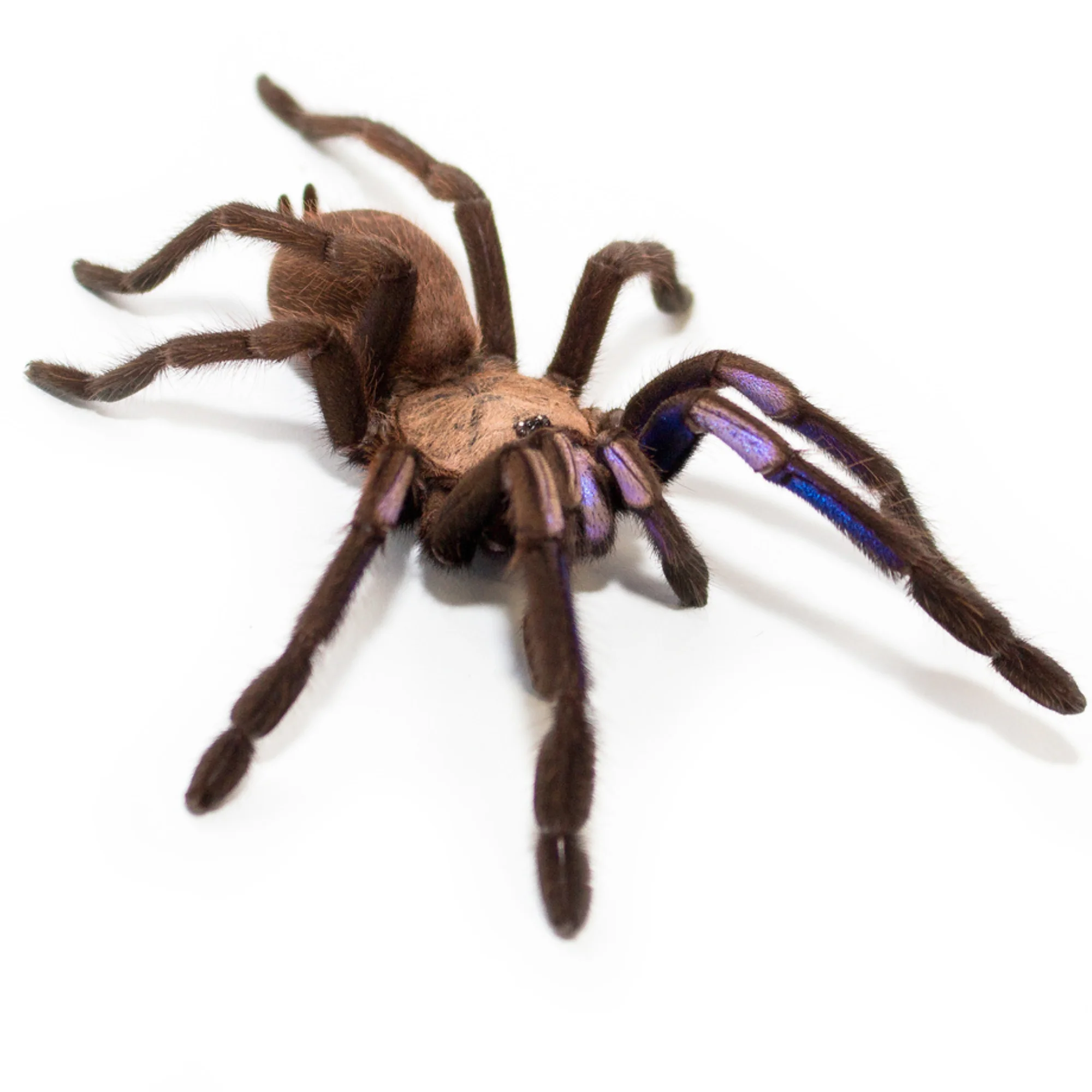 TRUSTED
Chilobrachys natanicharum (burrowing tarantula) – for advanced keepers
160.00 PLN
Available: 3 pcs.Female2,5-3DC cmreptilesbrothers.pl
Care at a glance
Size
Females approx. 5–7 cm body length; leg span approx. 13–16 cm
Enclosure type
For a burrowing species: deep substrate and a retreat option
Substrate
A thick, shape-holding layer for a burrow; the surface may breathe
Furnishings
A starter tunnel or cork and constant access to fresh water
Conditions
Lower layers moderately humid and very good ventilation
Characteristics
A fast, defensive Old World species; experienced keepers only
Care and behaviour
In the field C. natanicharum may be fossorial or associated with tree hollows, but in captivity it is safest to treat it as a species that builds a retreat in the substrate. The enclosure should offer a thick, stable layer for a burrow and should not add unnecessary height. A cork starter tunnel helps, but the spider often rebuilds the shelter with silk.
Lower substrate layers may stay more humid, but the enclosure should not be flooded or stuffy. The surface and burrow entrance should be able to dry. Standing water in a shallow dish and localized moistening of one side of the substrate are safer than frequent spraying of the whole tank. Do not treat a single temperature or humidity figure as a standard.
This is not a beginner species. Disturbed animals sprint and may bite. They have no urticating hairs; defence relies on speed and a bite. Plan maintenance with the area around the enclosure contained, and do not try to catch the spider by hand.
Good to know
Chilobrachys natanicharum has no urticating hairs. Venom of Old World Chilobrachys can be medically significant; treat a bite seriously, and this page is not medical advice. The species is not listed on the CITES Appendices, but in Thailand all Theraphosidae are controlled wildlife for import and export. Duties depend on the country and transaction type; this is not legal advice. Require legally sourced captive-bred animals.