Chromatopelma cyaneopubescens
Green Bottle Blue
5 active listings · Spiders
Category
Spiders
Origin
Venezuela — Paraguaná Peninsula (Falcón)
Lifestyle
Terrestrial
Difficulty
Beginner
Venom potency
Weak
About the species
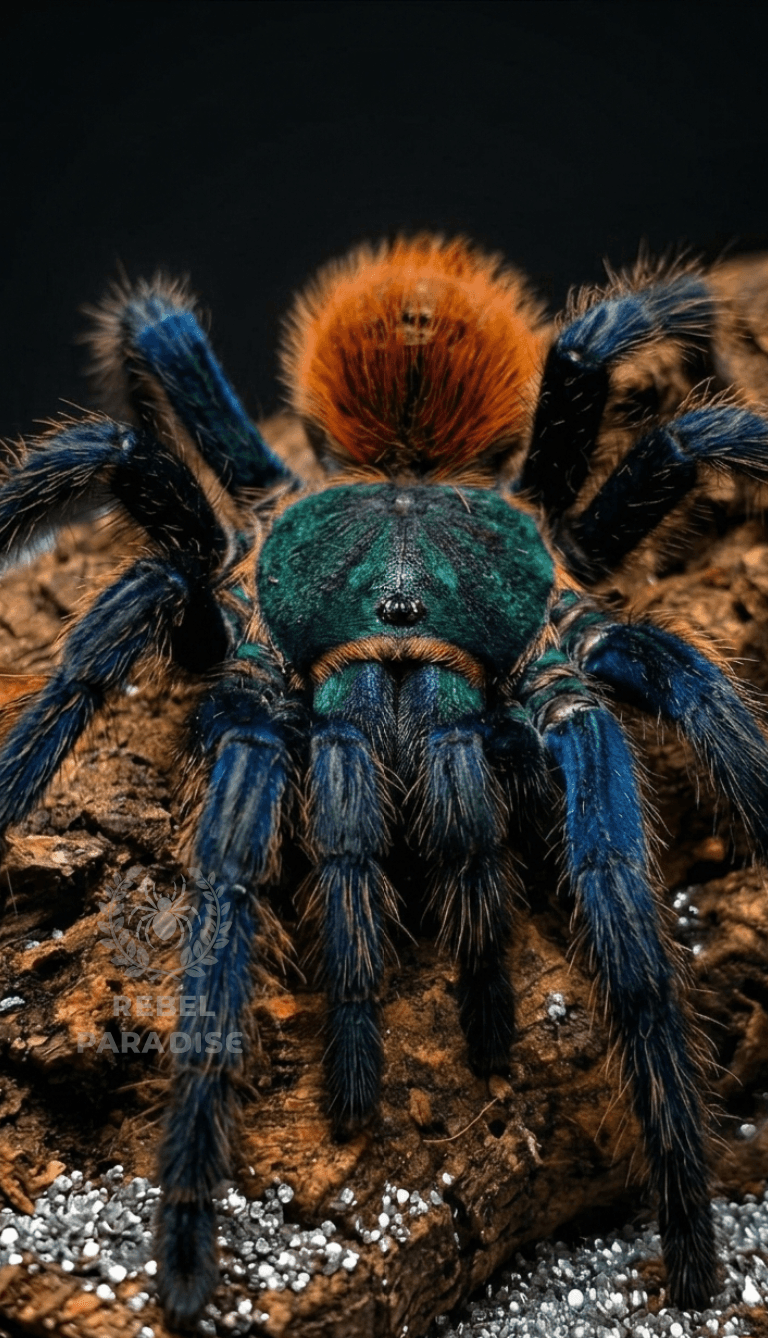
Green Bottle Blue (Chromatopelma cyaneopubescens) is a terrestrial tarantula endemic to Venezuela and currently the only accepted species in the genus Chromatopelma. The World Spider Catalog gives the distribution as Venezuela. Adults usually reach about 12–14 cm in leg span. The colouration combines metallic blue legs, a warm, often orange abdomen, and a greenish or bluish sheen on the carapace. In captivity the species is known for extensive webbing that covers the hide, substrate, and décor, despite a terrestrial lifestyle.
Origin and distribution
Venezuela — Paraguaná Peninsula (Falcón)
The species is endemic; its range is restricted to Paraguaná Peninsula (Falcón) within Venezuela.
Current listings
 TRUSTED
Chromatopelma cyaneopubescens L2 tarantula
50.00 PLN
Available: 50 pcs.UnsexedL2Rebel Paradise TRUSTED
Chromatopelma cyaneopubescens L2
49.00 PLN
Available: 8 pcs.UnsexedL2szamatanimals TRUSTED
Chromatopelma cyaneopubescens Female (4 cm) – GBB – Green Bottle Blue
135.00 PLN
Available: 8 pcs.Female4 cmspidersworld.eu TRUSTED
Chromatopelma cyaneopubescens 3 DC male
70.00 PLN
Available: 3 pcs.Malespidersgodeu TRUSTED
Chromatopelma cyaneopubescens L4
60.00 PLN
Available: 9 pcs.UnsexedL3/4spidersgodeu
Care at a glance
Size
Leg span approx. 12–14 cm
Enclosure type
Horizontal, with space for extensive webbing at ground level and on low structures
Substrate
A layer that allows webbing to anchor; the surface rather dry, the lower parts slightly more humid
Furnishings
A hide, structures for anchoring webbing, and constant access to fresh water
Conditions
Rather dry to moderate; good ventilation, without constantly wet substrate
Characteristics
Heavy webbing, contrasting colouration, and urticating hairs
Care and behaviour
Chromatopelma cyaneopubescens is terrestrial, but in an enclosure it often builds extensive webbing around the hide and low structures. The tank should provide floor space and several anchor points rather than imitate a tall arboreal setup. Substrate should allow silk to attach and, if needed, shallow reshaping around the retreat.
The species’ range lies in drier parts of Venezuela, so a rather dry surface with the option of slightly moister lower layers suits it better than a constantly humid, stuffy climate. Ventilation matters; a single rigid humidity percentage should not be treated as mandatory.
The web is often rebuilt, and the spider may remain partly in view. Despite the striking colouration, this is not a species for frequent handling. During maintenance, expect webbing to make the hide harder to reach.
Good to know
Chromatopelma cyaneopubescens has urticating hairs and may use them in defence, like other New World terrestrial tarantulas in this group. Contact can irritate the skin, eyes, and mucous membranes. The species is not listed on the CITES Appendices. Local exotic-animal rules may still apply; this page is not legal advice. Older literature sometimes uses the spelling “cyanopubescens”, but the canonical name remains Chromatopelma cyaneopubescens.