
Nhandu chromatus – Brazilian red and white tarantula
5 active listings · Spiders
- Category
- Spiders
- Origin
- Brazil
- Lifestyle
- Terrestrial
- Difficulty
- Beginner
- Venom potency
- Weak
About the species
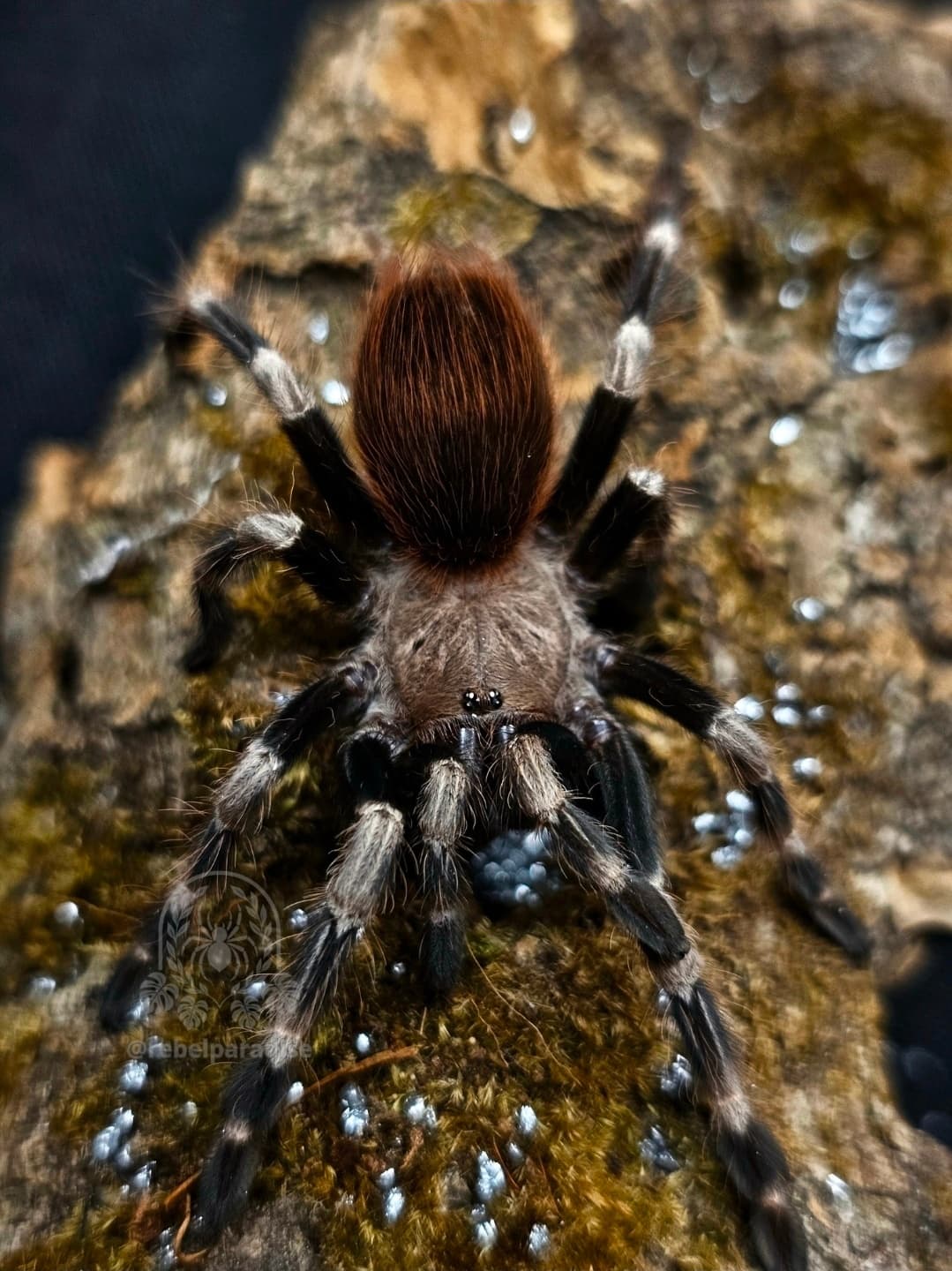
Nhandu chromatus is a large terrestrial tarantula from Brazil, described by Günter Schmidt in 2004. It has a black body, bold white stripes along the legs and long red to orange hairs on the abdomen. Schmidt openly called it the “double” of Acanthoscurria geniculata, because the two species were confused in the trade for years. In 2023 Bertani transferred it to Vitalius, so the literature also uses the name Vitalius chromatus, while the hobby and most listings still say Nhandu chromatus. It grows fast, eats eagerly and is often on display, but it is also nervous and quick to kick urticating hairs.
Care at a glance
Size
Females about 6–7 cm body length; leg span up to about 16–18 cm
Enclosure type
Terrestrial, horizontal; floor space matters more than height
Substrate
Deep layer (8–15 cm for adults), lower layers slightly moist
Furnishings
Cork hide, water dish, a few flat, heavy pieces
Conditions
Room temperature 22–27°C, moderate humidity, good ventilation
Characteristics
Fast growth, strong feeding response, urticating hairs
Current listings


Origin and distribution
Brazil
The species is endemic to Brazil.
Appearance and size
An adult female Nhandu chromatus usually reaches 6–7 cm in body length, and large specimens reach a leg span of 16–18 cm. Males are slimmer, have longer legs and, after their final moult, clear tibial hooks on the first pair of legs. The colouring is high-contrast: a black or dark brown base, white rings at the joints, white stripes along the legs and long red hairs on the abdomen and carapace.
Juveniles are brown and much less contrasting. The adult pattern develops gradually, usually once the spider reaches a 3–4 cm leg span. When buying a juvenile, a known breeding origin matters, because young N. chromatus, A. geniculata and several other Brazilian Theraphosinae look alike.
Taxonomy: Nhandu or Vitalius?
The species was described in 2004 as Nhandu chromatus. Before that, spiders of this group were sold as Vitalius cristatus or as a “different form” of A. geniculata. In his 2023 revision Bertani moved the species to Vitalius on the basis of a cladistic analysis, so the current scientific name in the literature is Vitalius chromatus.
On the marketplace both names refer to the same spider. Listings may be titled “Nhandu chromatus”, “Vitalius chromatus” or “Vitalius (ex. Nhandu) chromatus”. What matters more than the label is whether the seller knows the origin of the breeding line and keeps it separate from look-alike species.
Enclosure and substrate
This is a terrestrial spider that likes to dig and remodel its hide. An adult female does well in an enclosure with a floor of about 40 × 30 cm. Height matters less: the distance from the substrate surface to the lid should not exceed roughly one and a half leg spans, because a fall can rupture the abdomen of a heavy tarantula.
The substrate (coco fibre, fertiliser-free soil or a mix) should be 8–15 cm deep and firm enough for a burrow to hold its shape. A piece of cork bark set at an angle gives a good starting point for digging. The spider will move substrate, bury the water dish and rearrange the decor, so keep furnishings to a few heavy, flat pieces.
Juveniles can be kept in small containers with more substrate than open space. They will often dig tunnels along the walls, which makes them easier to observe.
Temperature and humidity
Nhandu chromatus copes well with ordinary indoor conditions: 22–27°C during the day and a few degrees lower at night. It does not need strong heating, and heat lamps above the enclosure are unnecessary and dry out the substrate.
Moderate humidity is enough: the surface may dry out while the lower layers stay slightly moist. Watering one edge of the substrate every few days and keeping a full water dish works well. A permanently wet, steamed-up enclosure without ventilation encourages mould and mites.
Feeding and growth
This is one of the most voracious tarantulas in the hobby. Juveniles take crickets, roaches or mealworms every 3–5 days, adult females usually once every one to two weeks. Prey should not be larger than the spider’s abdomen. Remove uneaten insects after a day, and stop feeding entirely before a moult, when the spider refuses food.
Growth is fast. Males usually mature in about 1.5–2 years, females after 2–3 years. A female can live for well over a decade, while a mature male typically lives one or two more years. After a moult, wait at least a week (longer for large specimens) before the first meal.
Behaviour and handling
Adult Nhandu chromatus often sit in the open, which makes them attractive display spiders. They are nervous, though: movement above the enclosure triggers flight, a threat posture or vigorous kicking of urticating hairs from the abdomen. Bites are rare, but the fangs of a large female can cause a painful mechanical wound.
This species is not suitable for handling. Do maintenance (water, leftovers) with 25–30 cm tongs and slow movements, ideally while the spider is in its hide. For rehousing, slide a container over the spider from the front and a card underneath.
Good to know
Nhandu chromatus has urticating hairs and may kick them at the slightest disturbance. They can irritate skin, eyes and airways, and they also remain in used substrate and on moults. Avoid touching your face during maintenance and change substrate carefully. The species is not listed in the CITES appendices; obligations may depend on the country and the transaction, and this information is not legal advice.
Frequently asked questions
Is Nhandu chromatus a good beginner tarantula?
Yes, for keepers who accept a fast, nervous terrestrial spider and do not plan to handle it. Husbandry is simple and it eats and grows well, but it readily kicks urticating hairs, so maintenance should be calm and done with tongs.
What is the difference between Nhandu chromatus and Vitalius chromatus?
They are the same species. Nhandu chromatus is the name from the 2004 description; in 2023 the species was moved to Vitalius. Both names are used interchangeably on the marketplace.
How do I tell Nhandu chromatus from Acanthoscurria geniculata?
In adults, N. chromatus has long red hairs on the abdomen and white stripes running along the legs, while A. geniculata has white transverse bands at the joints on a black background and a dark abdomen. Juveniles are hard to separate, so buy from a reliable breeding line.
How big an enclosure does an adult female need?
A floor of about 40 × 30 cm with 8–15 cm of firm substrate is enough. Floor space and a short, safe drop from the substrate to the lid matter more than height.
How fast does Nhandu chromatus grow?
Fast for a terrestrial tarantula. Males usually mature after about 1.5–2 years and females after 2–3 years with regular feeding at room temperature.
Similar species
Written by the Terra Market team ·