
Orphnaecus philippinus – Philippine tangerine tarantula
2 active listings · Spiders
- Category
- Spiders
- Origin
- Philippines
- Lifestyle
- Fossorial
- Difficulty
- Advanced
- Venom potency
- Strong
About the species
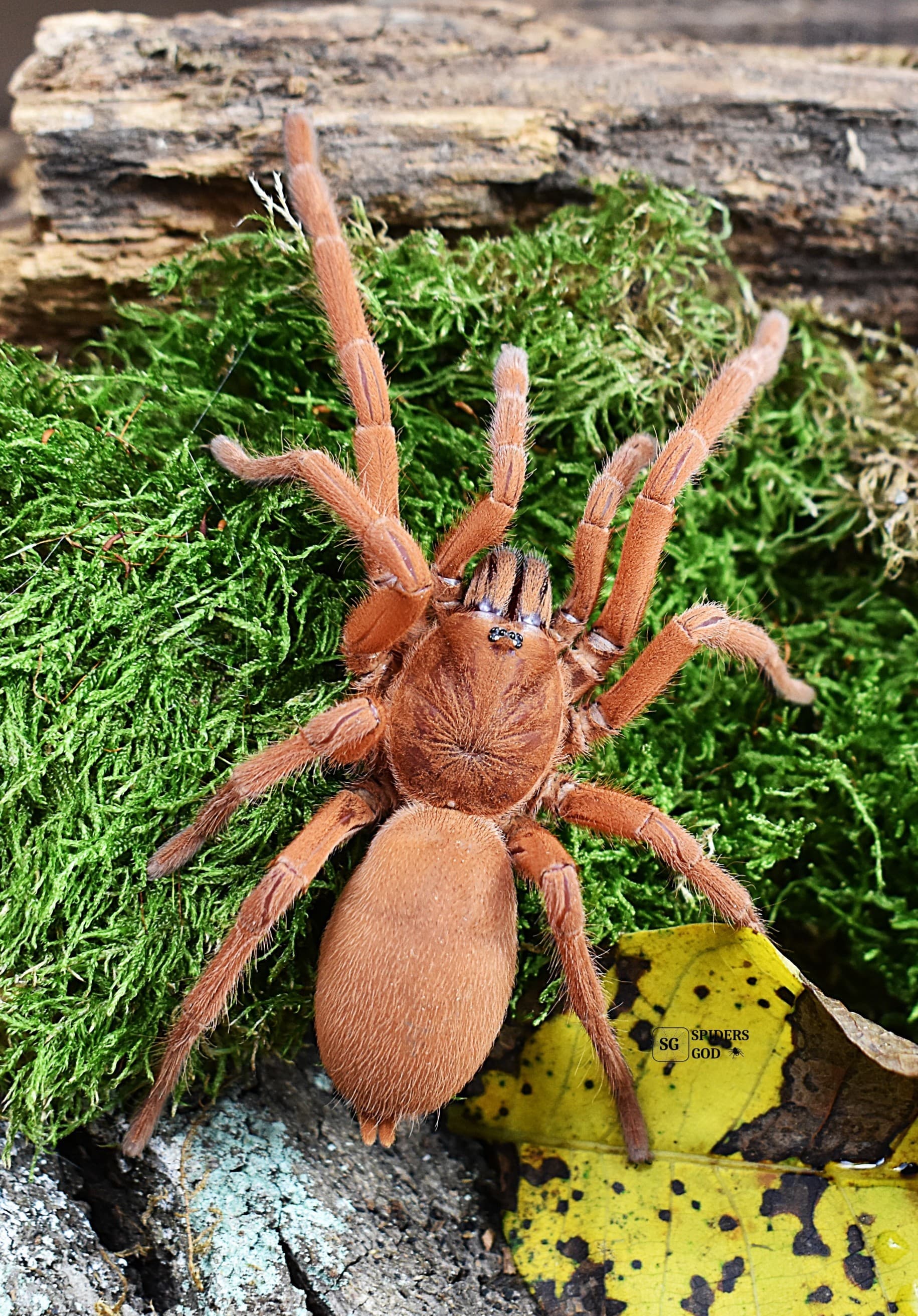
Orphnaecus philippinus is an Asian burrowing tarantula from the Philippines, known in the hobby as the “Philippine tangerine” after the orange setae on its legs and abdomen. The World Spider Catalog gives its range as the Philippines, without naming specific islands. Adult females reach a leg span of about 12–13 cm. The spider spends almost its whole life in a deep, silk-lined burrow and needs moist substrate. Like other Old World tarantulas it has no urticating hairs and defends itself with speed and biting, so it is a species for experienced keepers.
Care at a glance
Size
Females about 12–13 cm leg span
Enclosure type
Terrestrial with a very deep substrate layer
Substrate
15–20 cm, kept moist lower down
Furnishings
Cork or half-tube as burrow start, water dish
Conditions
24–28°C, moister substrate, ventilation
Characteristics
Obligate burrower, fast, defensive, potent venom
Current listings

Origin and distribution
Philippines
The species is endemic to Philippines.
Appearance and size
The carapace is brown to dark brown, while the legs and abdomen are covered in orange or tangerine setae, which gave the species its trade name. The abdomen shows a darker pattern. The colours are most intense after a moult.
Adult females reach a leg span of about 12–13 cm. Males are slimmer and longer-legged.
Origin
The genus Orphnaecus occurs only in the Philippines. The World Spider Catalog lists O. philippinus as “Philippines” without naming islands. Other species of the genus are known from Luzon, Negros, Polillo and Dinagat among others, and another species was described from Luzon in 2025.
Because several Orphnaecus species look alike, buy from a reliable breeding line.
Enclosure and substrate
This is an obligate burrower: without the chance to dig, the spider is stressed and does less well. An adult female needs a floor of about 25 × 25 cm but 15–20 cm of substrate filling most of the container. A mix of coco fibre with soil or peat holds tunnel shape well.
Cork or a half-tube pressed into the substrate gives a good start. The spider usually runs its tunnel along a wall and webs the entrance.
Temperature and humidity
The species comes from warm, humid forest, so 24–28°C is ideal. Deeper substrate layers should stay moist; pour water along the edge so it soaks down.
Moist substrate must go with ventilation. Compacted, wet substrate without air exchange encourages mould.
Feeding and growth
The spider hunts from its burrow entrance, often at night. Juveniles eat small crickets or roaches every 4–6 days, adults every 7–14 days. Offer prey at the entrance and remove uneaten insects.
Growth is fairly fast. Males usually mature in about 1.5–2 years, females later. Before a moult the spider seals its burrow and may stay out of sight for weeks.
Behaviour and safety
Orphnaecus philippinus is fast and defensive. It usually retreats into its burrow, but when surprised it rears up and may bite. It has no urticating hairs, and bites from Asian tarantulas can cause strong pain and systemic symptoms.
Do not dig the spider out without need. Use long tongs for maintenance and never handle this species.
Good to know
Orphnaecus philippinus has no urticating hairs, but it is fast and defensive, and its bite can cause strong pain and systemic symptoms. Contact a doctor in case of a strong reaction; this page is not medical advice. The species is not listed in the CITES appendices; obligations may depend on the country and the transaction, and this information is not legal advice.
Frequently asked questions
Why is Orphnaecus philippinus called the “tangerine”?
Because of the orange, tangerine-coloured setae on its legs and abdomen.
Is Orphnaecus philippinus suitable for beginners?
No. It is fast, defensive and has stronger venom than typical American tarantulas. It is a species for experienced keepers.
How deep should the substrate be?
An adult female needs 15–20 cm of substrate kept moist lower down.
Where does Orphnaecus philippinus come from?
From the Philippines. The World Spider Catalog does not name specific islands for this species.
Does it have urticating hairs?
No. Like other Old World tarantulas it defends itself with speed and biting.
Similar species
Written by the Terra Market team ·