
Neoholothele incei – Trinidad olive tarantula
4 active listings · Spiders
- Category
- Spiders
- Origin
- Trinidad and Tobago and Venezuela
- Lifestyle
- Terrestrial
- Difficulty
- Beginner
- Venom potency
- Weak
About the species
Neoholothele incei is a small terrestrial tarantula from Trinidad and Tobago and northern Venezuela. It reaches about 3 cm in body length and a leg span of about 7–8 cm. It is known for the dense web it spins throughout the enclosure, fast growth and easy breeding. The hobby keeps the typical olive-brown form with a pale pattern on the abdomen and the popular “gold” form with golden colouring. The species has no urticating hairs; when threatened it flees or takes a defensive posture. Until 2015 it was known as Holothele incei.
Care at a glance
Size
About 3 cm body length; leg span about 7–8 cm
Enclosure type
Small, terrestrial, with anchor points for webbing
Substrate
5–8 cm, lower layer kept slightly moist
Furnishings
Cork bark, dry twigs or plants, water dish
Conditions
22–27°C, moderate to higher humidity, airflow
Characteristics
Heavy webber, fast, no urticating hairs
Current listings

Origin and distribution
Trinidad and Tobago and Venezuela
It occurs naturally in Trinidad and Tobago and Venezuela.
Appearance and colour forms
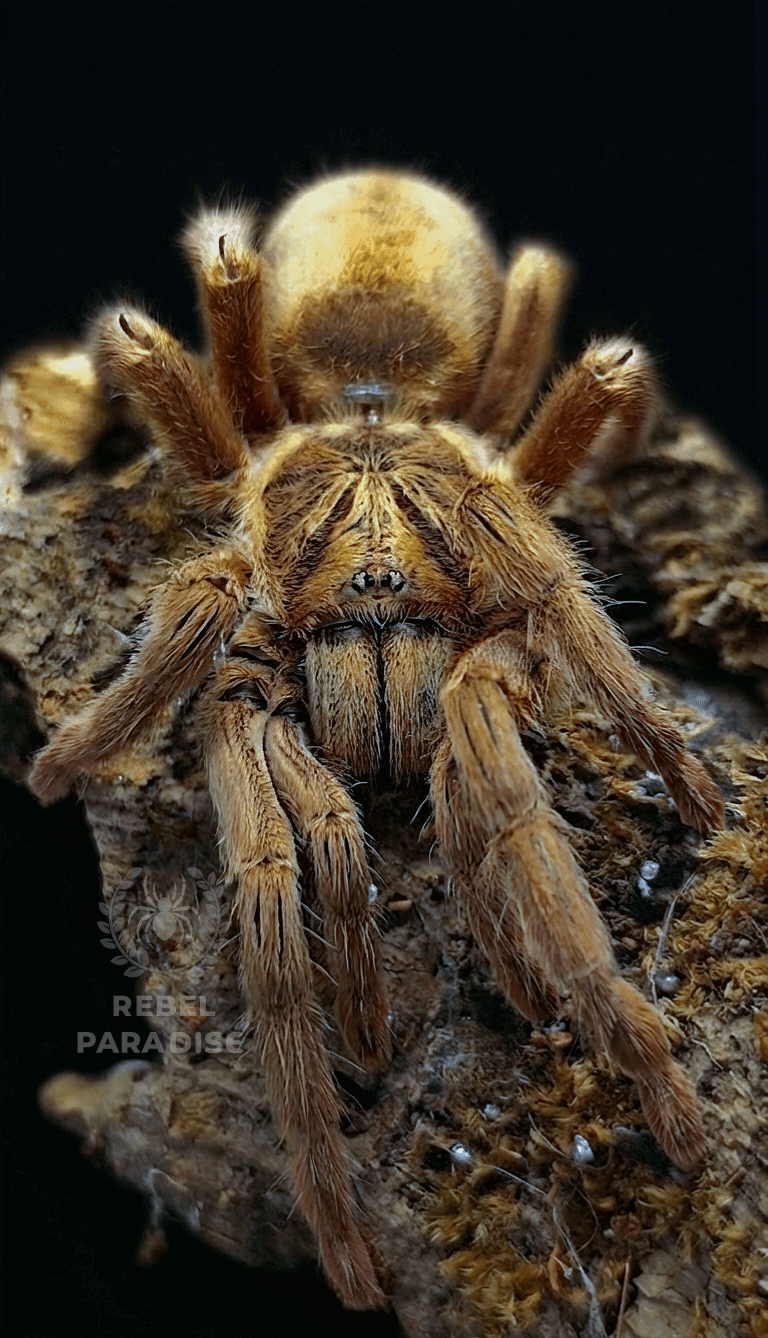
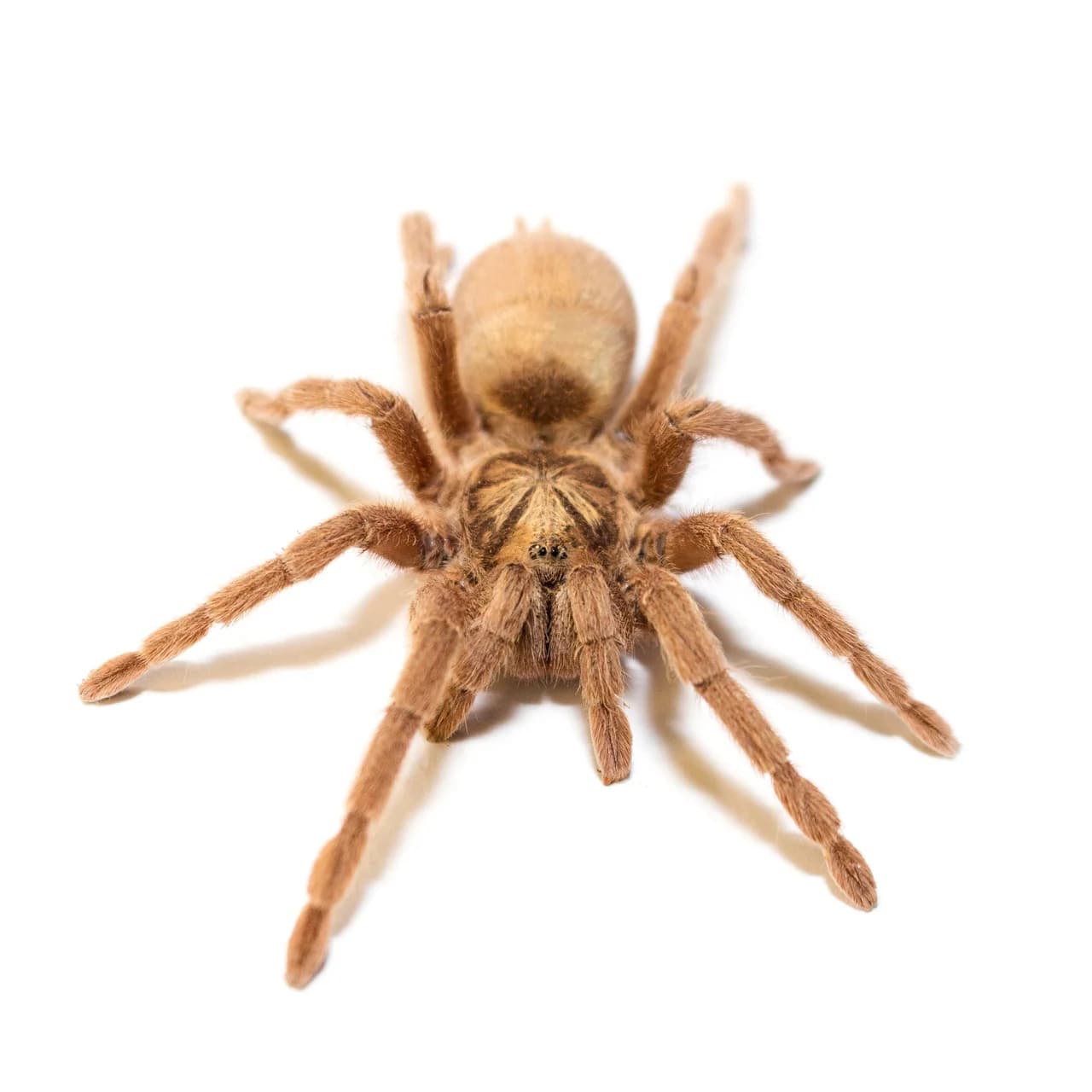
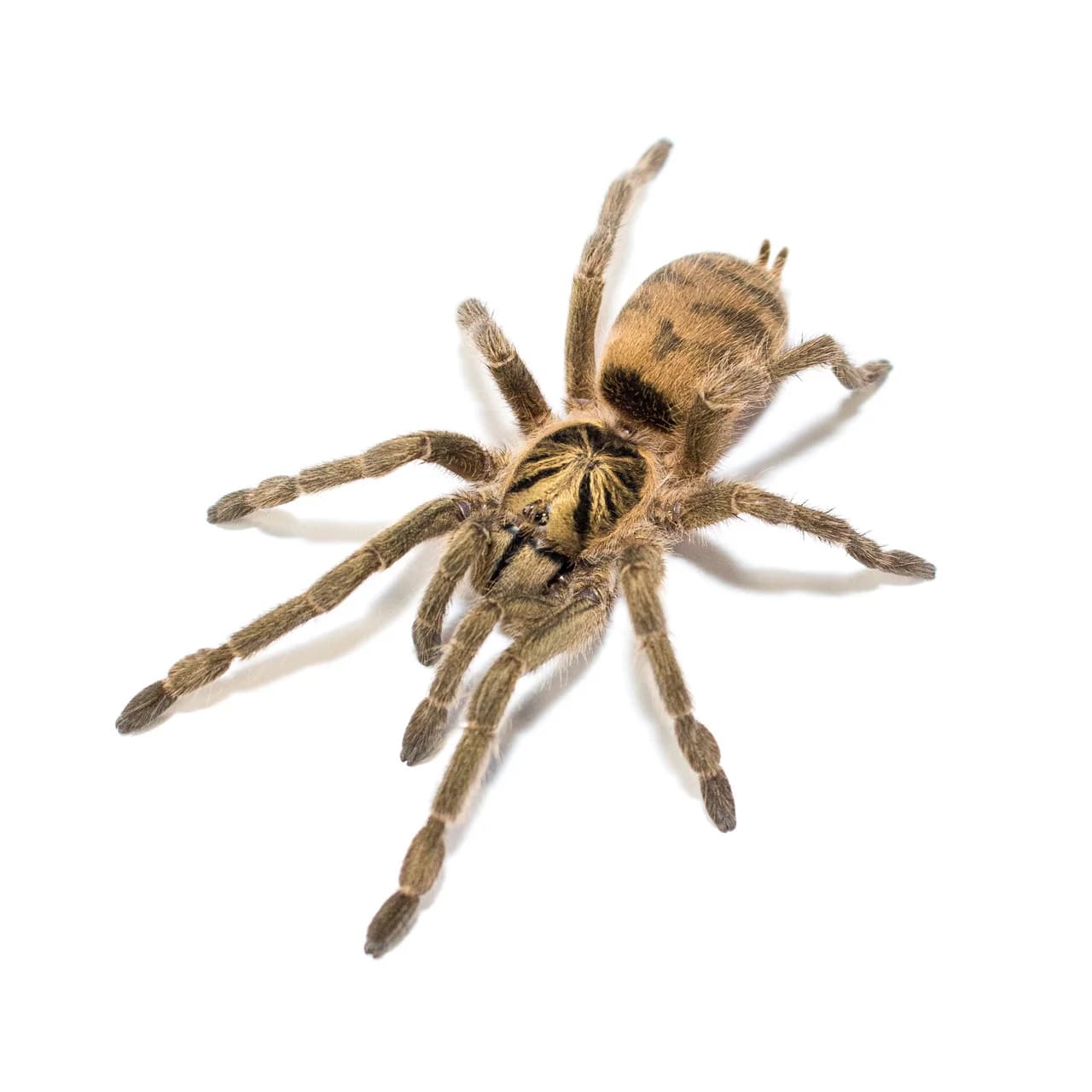
The typical form has an olive-brown body, slightly paler legs and a characteristic abdominal pattern: a dark field with pale transverse marks in a herringbone pattern. The hobby also keeps the “gold” form (Neoholothele incei gold), with a lighter, golden or orange body. It is a colour form fixed in captivity, not a separate species.
Females reach about 3 cm in body length; males are smaller with longer legs. Adult males are recognised by the swollen bulbs on their pedipalps.
Origin and name
The World Spider Catalog gives the range as Trinidad and Tobago and Venezuela. The species was described by F. O. Pickard-Cambridge in the late 19th century in the genus Holothele. In 2015 Guadanucci and Weinmann moved it to their newly described genus Neoholothele, and in 2016 Neoholothele vellardi was synonymised with it.
Older sources and listings may therefore use the name Holothele incei. The trade also uses the English name “Trinidad olive tarantula”.
Enclosure and substrate
This species does well in small enclosures. An adult female needs a floor of about 20 × 20 cm. A larger tank does no harm, but the spider will web mostly around its hide anyway, and it is harder to see in a big enclosure.
Use 5–8 cm of substrate so the spider can dig a shallow burrow under cork bark. Anchor points for the web are important: cork, dry twigs, artificial plants. Neoholothele incei quickly covers everything in dense silk, including the water dish, so place the dish against a wall where it is easy to lift out.
Temperature and humidity
The ideal temperature is 22–27°C. The species comes from humid forest, so the lower layer of substrate should stay slightly moist and the surface should not dry out completely for long. The easiest method is to water part of the substrate along one edge once or twice a week.
Humidity must not mean stale air. Ventilation holes on two sides give cross-flow, and the web itself helps protect the spider from drying out. Excess water combined with food remains caught in the web quickly leads to mould.
Feeding, growth and breeding
Juveniles eat small crickets, roaches or cut mealworms every few days, adults once a week. The spider usually grabs prey when it touches the web and leaves remains woven into the silk; remove them regularly with tongs.
Neoholothele incei grows very fast and often matures in about a year. It is one of the easiest tarantulas to breed: after a single mating, females can produce several egg sacs with dozens of spiderlings each. That is why the species is widely available and usually inexpensive.
Behaviour and communal keeping
This is a fast, skittish spider. When disturbed it usually retreats into its web, but it can also bolt out of the hide or rear up defensively. It has no urticating hairs, so its defences are flight and biting. The venom is considered mild, but a bite can hurt and cause local redness.
The species is sometimes described as one of the tarantulas that tolerate communal keeping. In practice this needs a large enclosure, siblings from one egg sac, generous feeding and acceptance of losses, because cannibalism does happen, especially around moults. For most keepers, keeping them singly is the safer choice.
Good to know
Neoholothele incei has no urticating hairs, but it is very fast and can escape when the enclosure is opened. Use tongs for maintenance and a container for rehousing. A bite is usually compared to an insect sting, although reactions vary between people. The species is not listed in the CITES appendices; obligations may depend on the country and the transaction, and this information is not legal advice.
Frequently asked questions
Is Neoholothele incei a good first tarantula?
It can be, if you accept a fast, skittish spider that is often visible only in its web. Care is simple and the lack of urticating hairs makes cleaning easier, but watch out for escapes when opening the enclosure.
What is the difference between Neoholothele incei and the “gold” form?
They are the same species. The “gold” form is a captive-fixed colour form with a golden body; the typical form is olive-brown with a pale abdominal pattern.
Can several Neoholothele incei be kept together?
It is possible but risky. It needs a large enclosure, siblings from one egg sac and generous feeding, and cannibalism happens even in well-run groups.
How big an enclosure does Neoholothele incei need?
An adult female needs a floor of about 20 × 20 cm, 5–8 cm of moist substrate and anchor points for its web.
Does Neoholothele incei have urticating hairs?
No. It defends itself by fleeing, a threat posture or biting. The venom is considered mild.
Similar species
Written by the Terra Market team ·