
Pterinochilus murinus – Orange baboon tarantula
4 active listings · Spiders
- Category
- Spiders
- Origin
- Angola and Central, East and Southern Africa
- Lifestyle
- Terrestrial
- Difficulty
- Advanced
- Venom potency
- Strong
About the species
Pterinochilus murinus is an African terrestrial tarantula, known in the hobby as the OBT (“orange baboon tarantula”) after its orange colour form. Described by Pocock in 1897 from Tanzania, it occurs in Angola and in Central, East and Southern Africa. It reaches a leg span of about 12–15 cm, grows fast and webs its enclosure heavily. Like other Old World tarantulas it has no urticating hairs and defends itself with speed and biting, and its venom is stronger than that of typical American species. It is considered one of the most defensive tarantulas in the hobby, so it is a species for experienced keepers.
Care at a glance
Size
Females about 12–15 cm leg span; males smaller
Enclosure type
Terrestrial or medium height, escape-proof
Substrate
8–12 cm, mostly dry, one corner slightly moist
Furnishings
Cork, twigs as web anchors, water dish
Conditions
24–28°C, fairly dry, good ventilation
Characteristics
Very fast and defensive, potent venom, heavy webber
Current listings
Origin and distribution
Angola and Central, East and Southern Africa
Sources support a regional range: Angola and Central, East and Southern Africa. Countries are not highlighted because the country list is not reliable enough.
Appearance and colour forms
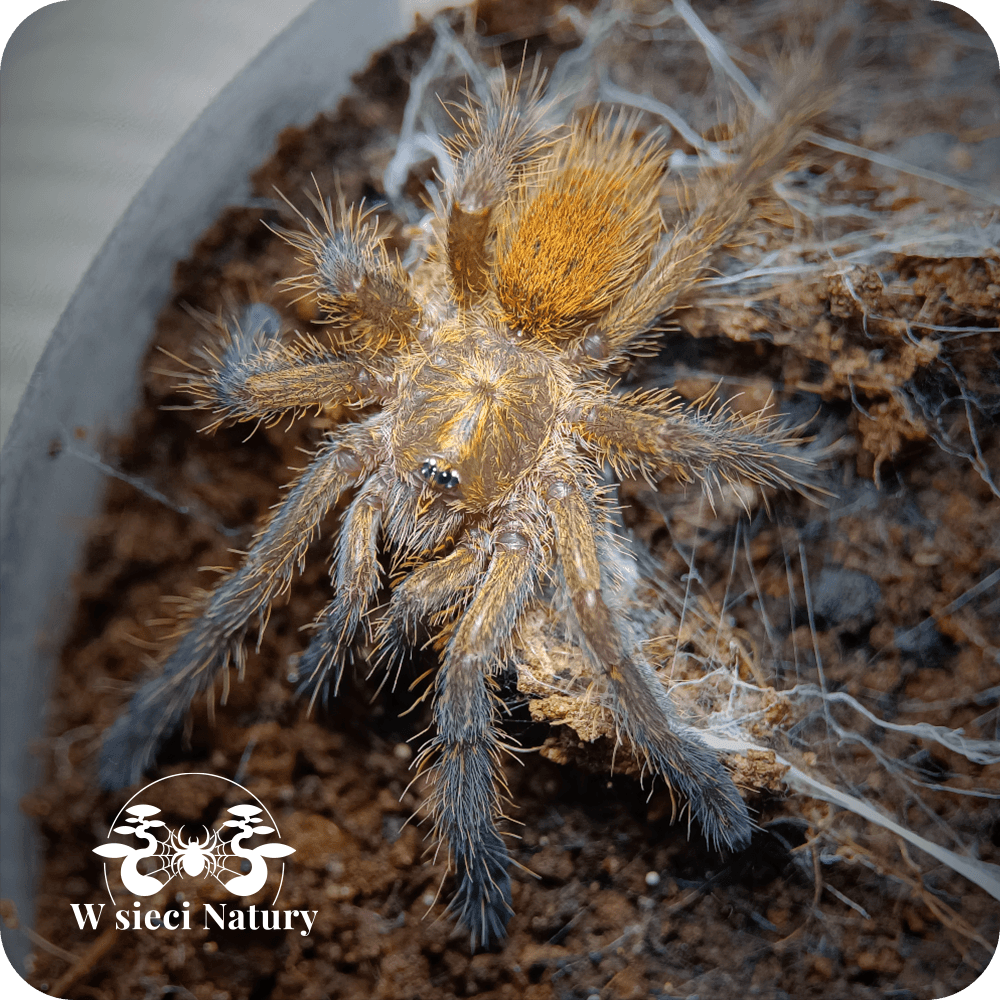
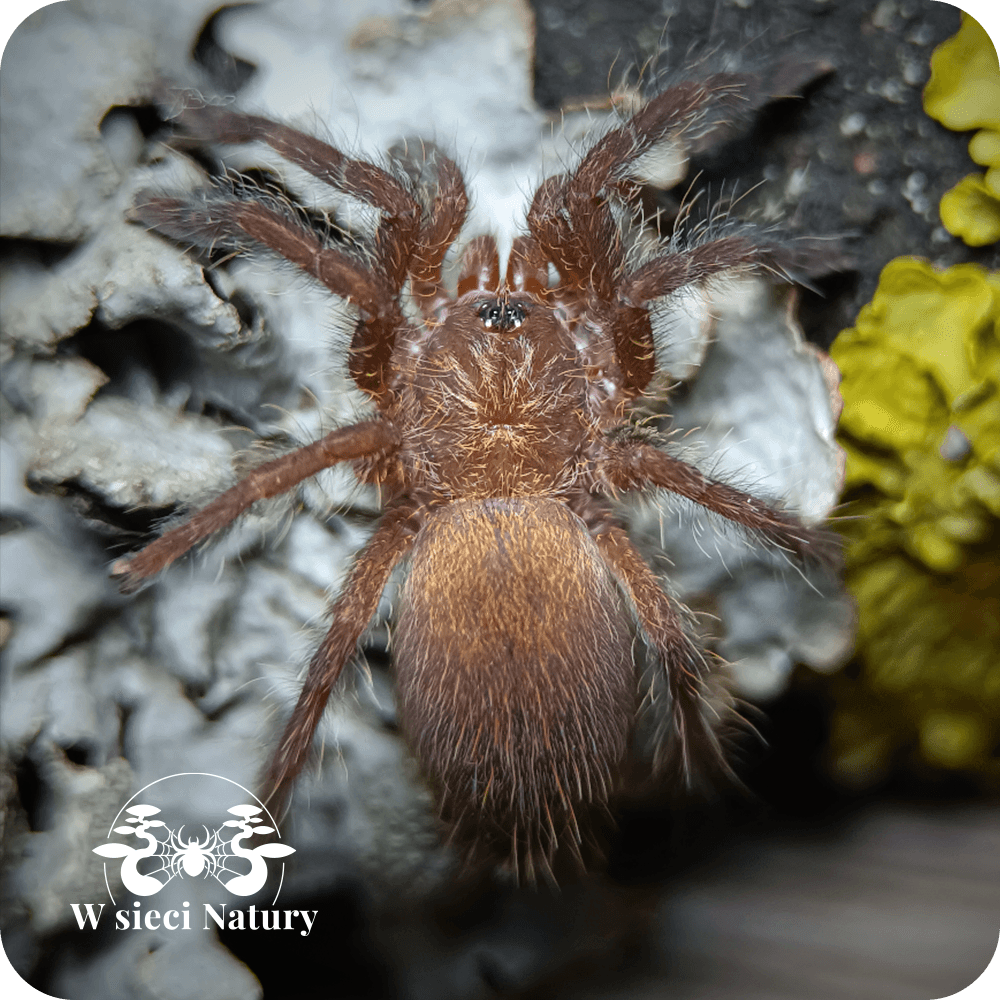
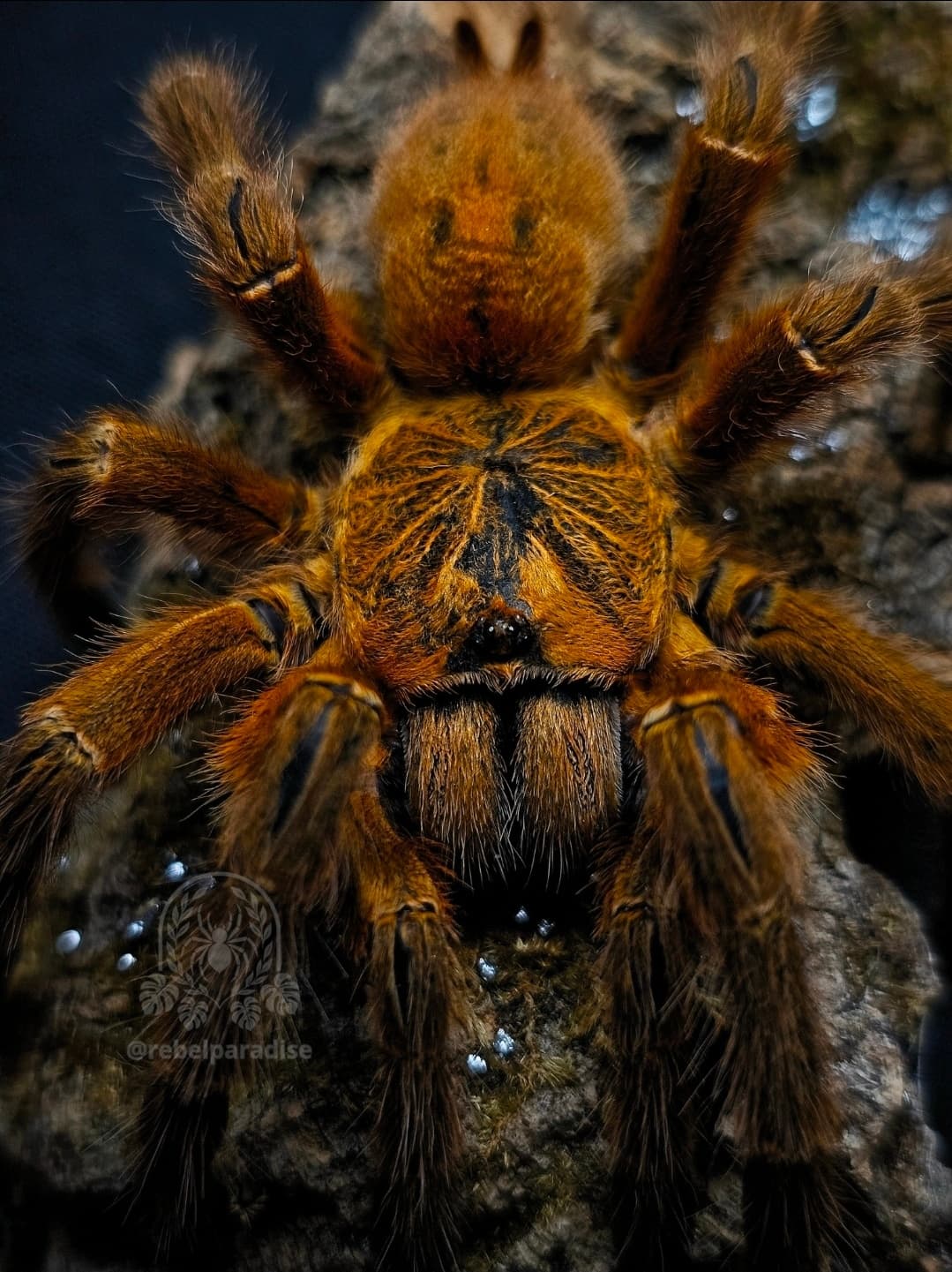
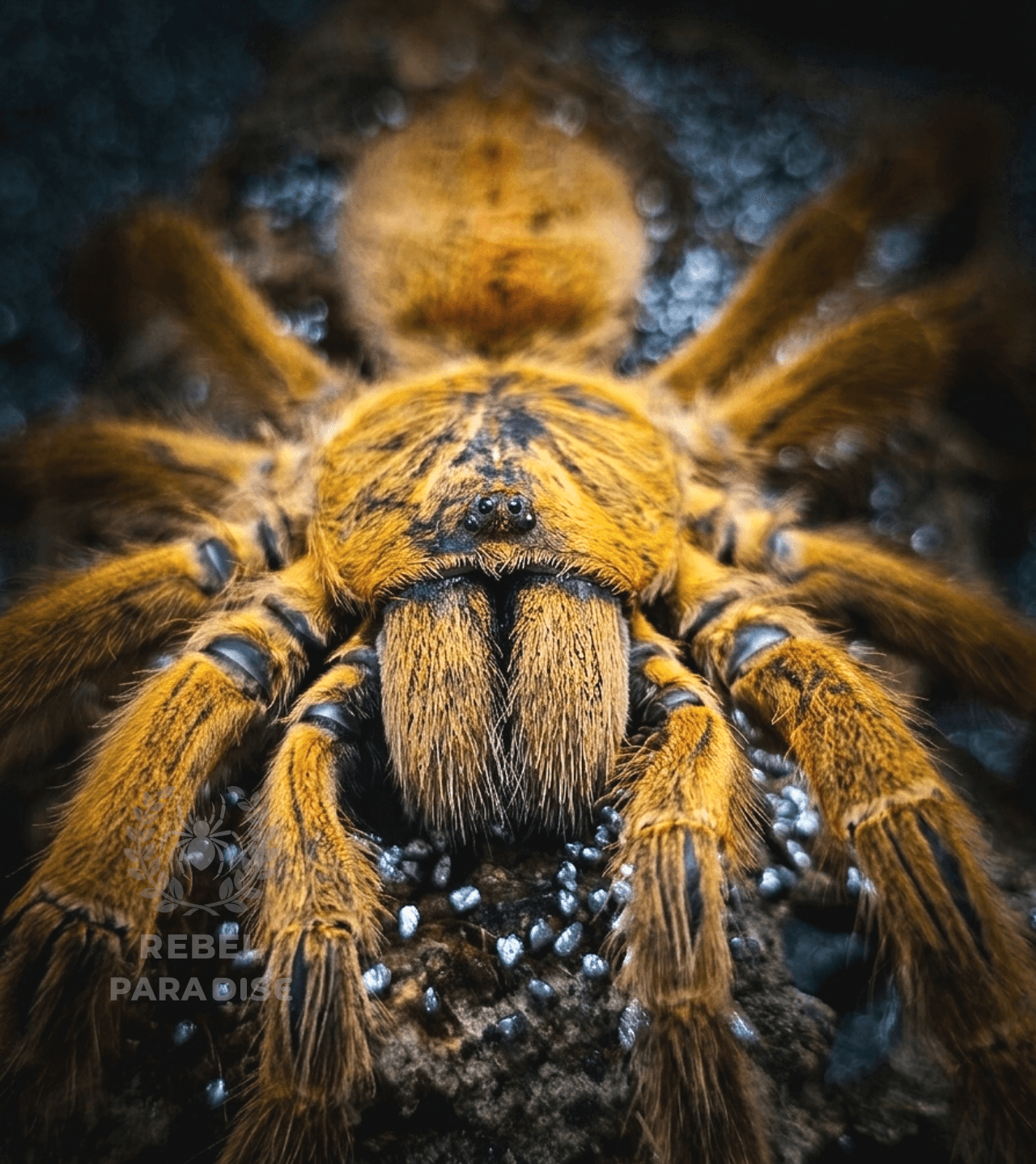
The best-known form is orange: a spider with intense orange or yellow-orange setae, a dark radiating pattern on the carapace and dark marks on the abdomen. In the hobby and in the Terra Market catalogue you will find several forms labelled with abbreviations or a locality: UMV, RCF (red colour form), BCF, TCF and Kigoma. This page collects listings of all these forms.
Colour forms are not separate species. The colouring is thought to relate to the soil type where a population lives. Adult females reach a leg span of about 12–15 cm; males are slimmer and smaller.
Origin
Pocock described the species in 1897; the type locality is in the Ugogo region (now Dodoma) of Tanzania. The World Spider Catalog gives the range as Angola and Central, East and Southern Africa. The spider lives in savanna and dry scrub, where it digs burrows under stones, roots or in soil and surrounds them with dense silk.
Because the range is so wide and poorly documented at country level, we do not show a country map.
Enclosure
An adult female needs an enclosure with a floor of about 30 × 30 cm and a height of 30–35 cm. Pterinochilus murinus uses the whole space: it digs a burrow and also builds an extensive web between cork, twigs and walls, so give it both 8–12 cm of substrate and vertical elements.
Escape-proofing is essential. The lid should have fine ventilation holes and a secure closure, and doors are best opened so you are not directly in front of the hide entrance. Within a few weeks much of the enclosure will be covered in silk.
Temperature and humidity
The species comes from dry habitats, so it handles 24–28°C and dry substrate well. A permanent water dish and one slightly moist corner of substrate are enough, especially for juveniles.
An overly humid, steamy enclosure does not suit this species. Good ventilation matters more than misting.
Feeding and growth
Pterinochilus murinus has a very strong feeding response and usually grabs prey as soon as it touches the web. Juveniles eat small crickets or roaches every 3–5 days, adults every 7–10 days. Leftovers often stay woven into the silk; remove them with long tongs.
The species grows fast. Males usually mature after about a year, females after 1.5–2 years. Females live well over ten years.
Behaviour and safety
This is one of the most defensive tarantulas in the hobby. When the enclosure is opened it often reacts with a lightning-fast escape or an immediate threat posture and bite, sometimes striking at tongs. Bites from tarantulas in this group can cause strong, long-lasting pain, muscle cramps and systemic symptoms.
Do all work with long tongs (30 cm or more), in a closed room and with a catch container ready. Rehouse inside a large clear container or bag in which the enclosure is opened. Never handle this spider.
Good to know
Pterinochilus murinus has no urticating hairs, but it is very fast and defensive, and its bite can cause strong pain and systemic symptoms. If bitten and you have a strong reaction, contact a doctor; this page is not medical advice. The species is not listed in the CITES appendices; obligations may depend on the country and the transaction, and this information is not legal advice.
Frequently asked questions
What does OBT stand for?
Orange baboon tarantula, the hobby name for Pterinochilus murinus, after its orange colour form.
What do “UMV”, “RCF”, “BCF”, “TCF” or “Kigoma” mean in listings?
They are trade labels for colour forms or localities, for example RCF is “red colour form” and Kigoma is a region in Tanzania. The catalogue also lists UMV, BCF and TCF. They are not separate species.
Is Pterinochilus murinus suitable for beginners?
No. It is very fast, defensive and has stronger venom than typical American tarantulas. It is a species for experienced keepers.
Does Pterinochilus murinus have urticating hairs?
No. Like other Old World tarantulas it defends itself with speed and biting.
What conditions does Pterinochilus murinus need?
24–28°C, mostly dry substrate with one slightly moist corner, a permanent water dish and anchor points for its web.
Similar species
Written by the Terra Market team ·