Heteroscodra maculata
Togo Starburst
4 active listings · Spiders
Category
Spiders
Origin
West and Central Africa
Lifestyle
Arboreal
Difficulty
Advanced
Venom potency
Strong
About the species
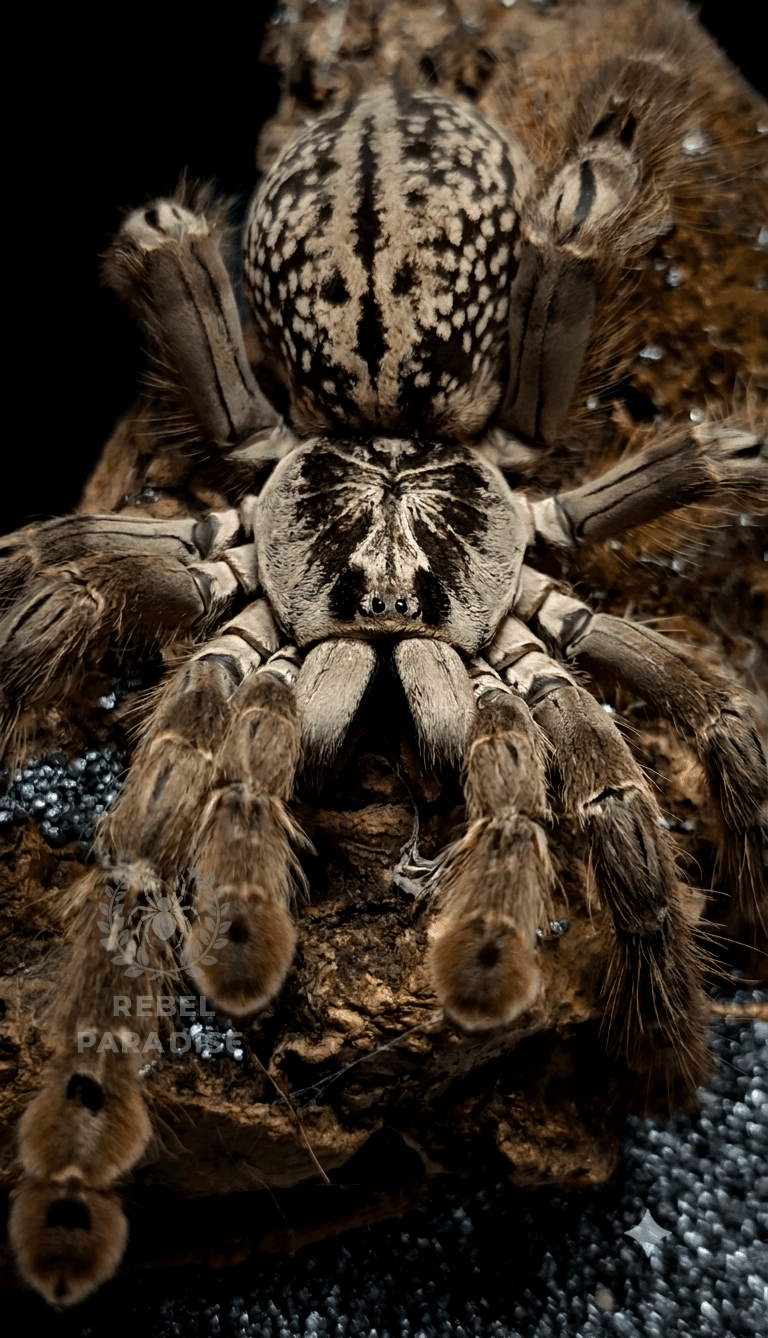
Togo Starburst (Heteroscodra maculata) is an arboreal Old World tarantula and the type species of Heteroscodra (Pocock, 1900). The World Spider Catalog gives the distribution as West and Central Africa; captive stock is often associated with Ghana, Togo, and Benin, which does not shrink the whole range. It belongs to Stromatopelminae, not the Harpactirinae baboon spiders. Adult females usually reach about 5–6 cm in body length and about 12–15 cm in leg span. Pale mottling and stout hind legs do not mean a gentle temperament: the species is very fast, defends by biting, and has no urticating hairs. This is not a beginner species.
Origin and distribution
West and Central Africa
Sources support a regional range: West and Central Africa. Countries are not highlighted because the country list is not reliable enough.
Current listings
 TRUSTED
Female Heteroscodra maculata tarantula, 2.5DC
100.00 PLN
Available: 5 pcs.FemaleRebel Paradise- TRUSTED
Heteroscodra maculata tarantula, L4
30.00 PLN
Available: 5 pcs.UnsexedL4Rebel Paradise  TRUSTED
Heteroscodra maculata L5
20.00 PLN
Available: 10 pcs.UnsexedL5spidersgodeu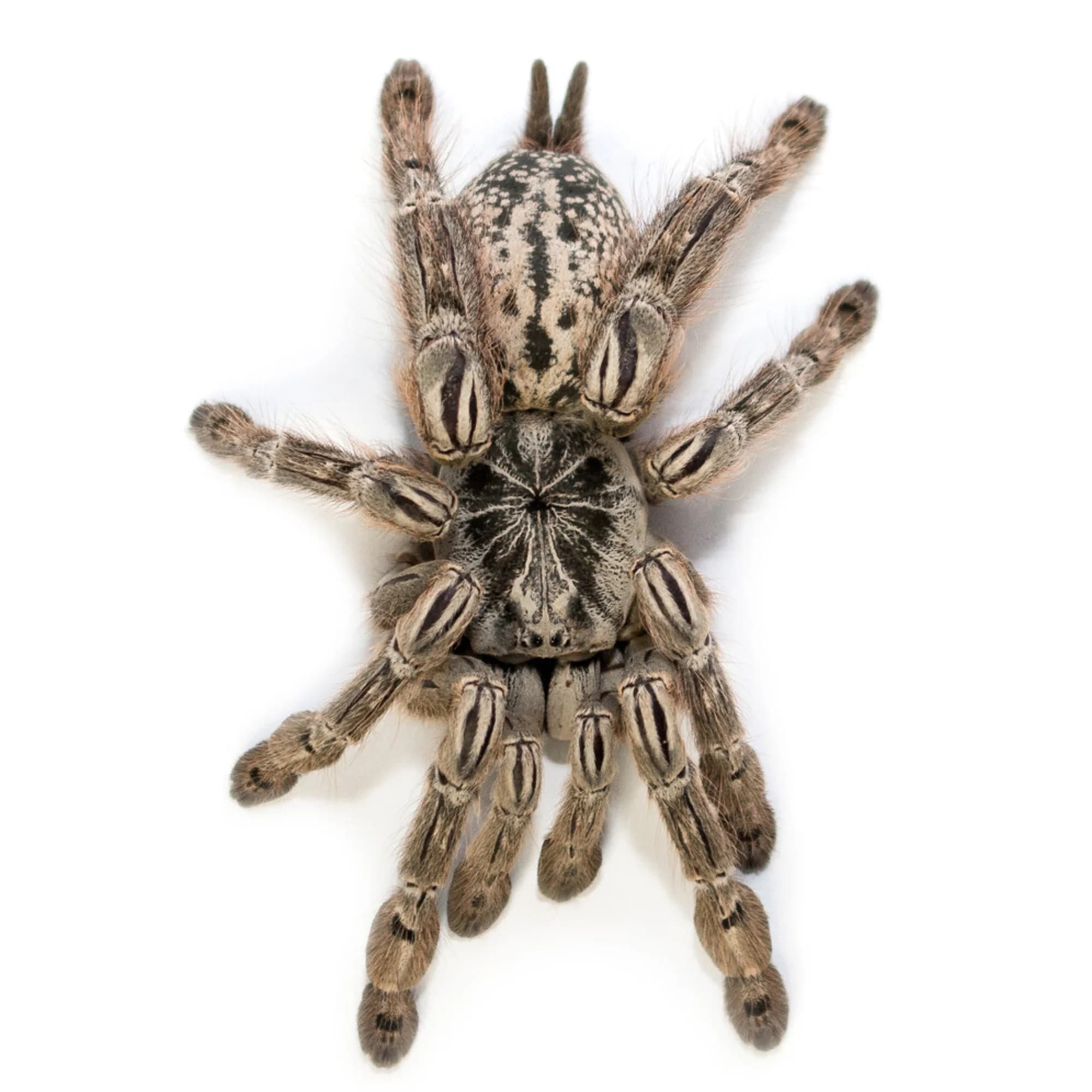 TRUSTED
Heteroscodra maculata (snowbird) - for advanced users
12.00 PLN
Available: 20 pcs.UnsexedL2reptilesbrothers.pl
Care at a glance
Size
Females approx. 5–6 cm body length; leg span approx. 12–15 cm
Enclosure type
Tall, tightly closed, for a fast arboreal species
Substrate
A moderate layer; it does not replace a web retreat
Furnishings
Vertical cork or a tube, stable branches, and constant fresh water
Conditions
Moderate humidity and very good ventilation, without stuffy vapour
Characteristics
A very fast, defensive Old World arboreal; experienced keepers only
Care and behaviour
Heteroscodra maculata builds dense web retreats in bark gaps and the upper enclosure. The tank must be tall, secure, and opened with an escape plan. Vertical cork or a tube gives a start. Juveniles may stay nearer the floor, but adults do not switch from arboreal habits to terrestrial burrows. Lid gaps are a common escape route.
Conditions should be moderately humid with clear air movement. Persistent stuffy vapour and wet walls are worse than a short drier spell. A shallow water dish and localized cork misting are safer than flooding the floor. Do not treat one humidity figure as a standard for all of West Africa.
Plan maintenance with the space around the enclosure contained. Individuals leave the retreat very quickly and may bite when they feel vibration. Do not try to “calm” the spider in the hand or treat the mottled pattern as a display ornament. It is an observation species for people who already manage fast Old World arboreals.
Good to know
Heteroscodra maculata has no urticating hairs. Venom of arboreal Stromatopelminae can be medically significant; treat a bite seriously. This page is not medical advice and does not describe sensational symptoms. The species is not listed on the CITES Appendices. Obligations may depend on the country and transaction; this is not legal advice. Require legally sourced captive-bred animals.