
Thrixopelma pruriens – Peruvian green velvet tarantula
2 active listings · Spiders
- Category
- Spiders
- Origin
- Peru
- Lifestyle
- Terrestrial
- Difficulty
- Beginner
- Venom potency
- Weak
About the species
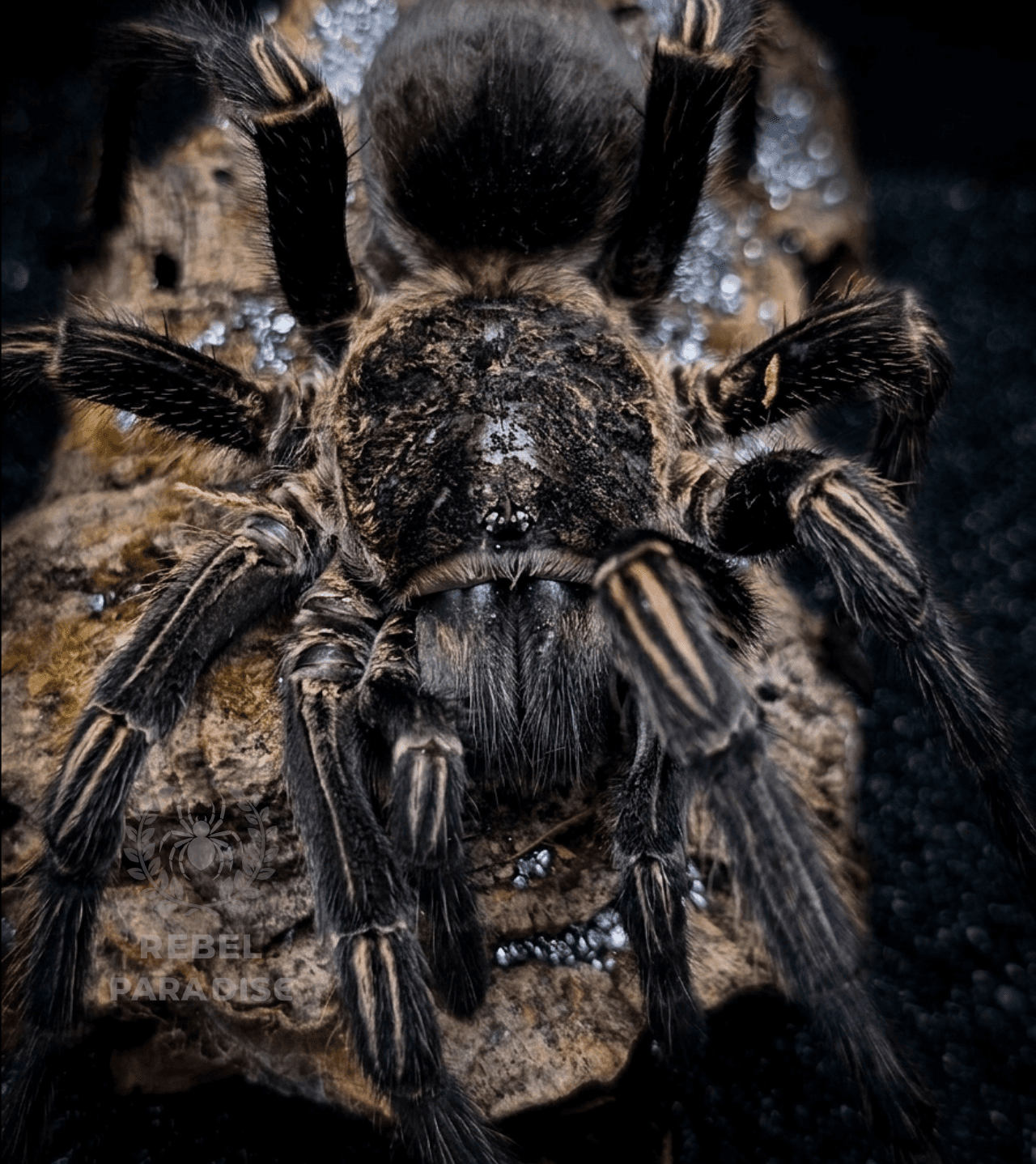
Thrixopelma pruriens is a terrestrial South American tarantula described by Schmidt in 1998. In the hobby it is called the “Peruvian green velvet” after its dark colouring with a greenish, velvety sheen. The World Spider Catalog recently moved it to the genus Ewok (Ewok pruriens) and gives its range as Peru; older sources also listed Chile. In listings and in the Terra Market catalogue it still appears as Thrixopelma pruriens. It is a calm, hardy, medium-sized spider that copes well with dry conditions, which is why it is often recommended to beginners.
Care at a glance
Size
Females about 11–13 cm leg span
Enclosure type
Terrestrial, horizontal
Substrate
6–10 cm, mostly dry, one corner slightly moist
Furnishings
Cork hide, water dish
Conditions
20–26°C, fairly dry, good ventilation
Characteristics
Calm, slow-growing, urticating hairs
Current listings

Origin and distribution
Peru
The species is endemic to Peru.
Appearance and size
The spider is dark brown to black with a subtle greenish, metallic sheen on the carapace and legs, best seen after a moult and in daylight. The setae are short and velvety, hence “velvet”. The species name “pruriens” means “itching” and refers to its urticating hairs.
Adult females reach a leg span of about 11–13 cm. Males are slimmer and carry tibial hooks after the final moult.
Name and origin
The species was described in 1998 as Thrixopelma pruriens. Its origin was long uncertain: older sources gave Chile, others Peru. Recent work revised the Chilean records, and the World Spider Catalog moved the species to Ewok and now lists Peru as its range.
Listings and the Terra Market catalogue use the name Thrixopelma pruriens. If you see Ewok pruriens, it is the same species.
Enclosure and substrate
An adult female needs an enclosure with a floor of about 30 × 25 cm. Use 6–10 cm of mostly dry substrate with one slightly moist corner. The spider uses a cork hide and sometimes digs beneath it.
Keep the gap between substrate and lid small. A hide, a water dish and a few decor items are enough.
Temperature and humidity
The species handles 20–26°C and dry conditions well. A permanent water dish is enough as a moisture source. An overly humid, stuffy enclosure does not suit it.
Good ventilation matters more than misting. Keep a slightly moister patch of substrate for juveniles.
Feeding and growth
Juveniles eat small crickets or roaches every 5–7 days, adults every one to two weeks. Adult females sometimes refuse food for long periods, especially before a moult.
Growth is slow. Females mature after several years and are long-lived, often well over ten years.
Behaviour and handling
Thrixopelma pruriens is usually calm and often sits in the open. When disturbed it is more likely to kick urticating hairs than to bite. The name “pruriens” is no accident: the hairs can itch noticeably after skin contact.
Do maintenance with tongs. Handling always risks a fall and contact with urticating hairs.
Good to know
Thrixopelma pruriens has urticating hairs that can noticeably irritate skin, eyes and airways; the name “pruriens” means “itching”. Avoid touching your face during maintenance. The species is not listed in the CITES appendices; obligations may depend on the country and the transaction, and this information is not legal advice.
Frequently asked questions
Is Thrixopelma pruriens the same as Ewok pruriens?
Yes. The World Spider Catalog moved the species to the genus Ewok. Listings still use the name Thrixopelma pruriens.
Is Thrixopelma pruriens suitable for beginners?
Yes. It is calm, hardy and copes well with dry conditions. Just be careful with its urticating hairs.
Where does Thrixopelma pruriens come from?
According to the World Spider Catalog, from Peru. Older sources also gave Chile, but those records have been revised.
Why is it called the “green velvet”?
Because of its dark, velvety setae with a greenish sheen on the carapace and legs.
What enclosure does Thrixopelma pruriens need?
A horizontal one, about 30 × 25 cm for an adult female, with mostly dry substrate, a hide and a water dish.
Similar species
Written by the Terra Market team ·